
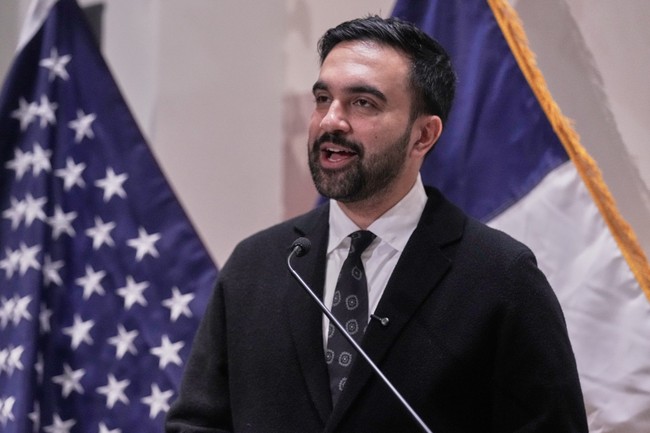
I’ll explain why Zohran Mamdani’s promise of “free” buses in New York City is a risky, unfunded political gambit, outline the obvious revenue and enforcement problems it raises, and note how a meeting with President Trump could expose those weaknesses in blunt terms.
Magic Fairies and Pixie Dust: Listen to What Mamdani Says About Funding for ‘Free’ Buses in NYC
Zohran Mamdani is the mayor-elect of New York City, and his pledge to make bus rides free is drawing sharp criticism from the right for good reason. The plan is billed as a win for riders, but the financing he mentioned on camera raises real questions about whether this is serious policy or campaign theater. Voters deserve to know who actually pays for municipal promises when the math doesn’t add up.
In an interview with PIX11 News’ Dan Mannarino, Mamdani was asked where he would find the roughly $700 million needed to fund free bus service if Governor Kathy Hochul refused to raise taxes. He floated changing the corporate tax as one source, a move that could push businesses and jobs out of the city. Raising corporate taxes in a high-cost metropolis is a blunt tool that often backfires and shrinks the overall tax base, which would make the shortfall worse over time.
Mamdani also mentioned personal income tax increases on those earning over $1 million a year as another funding lever. That sounds appealing to some politically, but it risks pushing high earners — professionals, entrepreneurs, and investors — to relocate, reducing the very revenue the city would rely on. More importantly, high-earner taxes are volatile and episodic, and they are a poor substitute for a stable funding stream for ongoing transit operations.
When pressed, the interviewer reminded him, “But she said no.” That exchange highlighted the basic problem: the plan depends on other officials agreeing to revenue changes that they have already signaled they will not support. The quote is simple and damning in a political sense; it shows the plan lacks a credible, multi-jurisdictional pathway to funding. Voters who care about reliable services should be skeptical of promises that hinge on wishful cooperation.
“The most important fact is that we fund it, not the question of how we do it, but that we do it,” he said. That line is revealing. It treats funding as a semantic afterthought and assumes that the obligation to provide a benefit is the end of the conversation. Fiscal responsibility, however, requires concrete answers about revenue sources, operational costs, and long-term sustainability, none of which are satisfied by slogans.
Critics on the right have been blunt: if you do not know how you will pay for a recurring $700 million expense, that is a problem, not a detail. It’s fair to point out the ideological gap here — some progressive plans presuppose an endless ability to reallocate money or raise taxes without consequence. Republicans argue that real-world budgeting forces trade-offs and that a city already struggling with crime and housing needs should be cautious about adding another large, unfunded program.
There are practical concerns beyond the accounting. Free buses can become unintended shelters for people without homes, creating safety and sanitation challenges for riders and drivers. If enforcement of fare rules is removed, transit agencies still must manage occupancy, hygiene, and security, which all cost money. The social-service needs that contribute to those conditions aren’t solved by free transit; they require targeted behavioral health and housing interventions funded separately.
Some of Mamdani’s critics suspect political motive: the promise could be a headline-grabbing lure to secure votes, not a fully thought-out policy. Promising generous services without solid funding pathways is a classic political maneuver that trades later fiscal pain for immediate political gain. That tactic can lead to painful adjustments later — higher taxes, cuts to other services, or both.
There is also a broader economic angle to consider. Making an essential urban service free alters demand patterns and operating budgets. If bus routes become overloaded because there is no fare barrier, service quality can decline without additional investment. That means the city would either have to spend more to maintain service or accept degraded transit for millions of commuters, which harms the local economy.
President Donald Trump is scheduled to meet with Mamdani on Friday to discuss affordability, and conservatives expect that the session will press these fiscal realities. The meeting could expose the gap between political rhetoric and administrative capacity and clarify whether Mamdani has a defensible plan for funding and enforcement. For Republican observers, it’s an opportunity to force clarity on how the mayor-elect intends to balance promises with legal and budgetary constraints.
New Yorkers who favored Mamdani might be surprised to learn how many hard choices follow from a free-bus promise, from revenue sources to service impacts and enforcement headaches. A responsible plan would identify stable funding, anticipate shifts in rider behavior, and pair transit changes with social-services strategies where needed. Without that, a popular headline could become a costly experiment for a city already wrestling with many urgent problems.
This debate is not just about transit; it’s about how elected leaders balance ambition with accountability. Critics will keep pointing out that policy promises must be matched by credible fiscal plans, and supporters will argue that expanding access is worth the effort. Either way, New Yorkers are going to see how campaign pledges translate into budget realities very quickly.
Add comment