
This piece examines the indictment accusing Rep. Sheila Cherfilus-McCormick of diverting $5 million in FEMA COVID funds and looks at her public response, the allegations against her and family members, and the political spin that followed.
The Department of Justice alleges a scheme tied to a family health-care company that received an overpayment on a FEMA-funded COVID-19 vaccination staffing contract in 2021. Prosecutors say that money was moved through multiple accounts, then funneled to relatives and associates who turned the funds into campaign contributions. The accused congresswoman pushed back immediately, framing the charges as politically motivated intimidation. That response itself drew criticism for relying on race-based accusations and conspiracy claims rather than addressing the alleged facts.
“Cherfilus-McCormick, 46, and her brother Edwin Cherfilus, 51, both of Miramar, worked through their family health-care company on a FEMA-funded COVID-19 vaccination staffing contract in 2021,” the DOJ press release shared. “In July 2021, the company received an overpayment of $5 million in FEMA funds.”
“The indictment alleges that the defendants conspired to steal that $5 million and routed it through multiple accounts to disguise its source,” it added. “Prosecutors allege that a substantial portion of the misappropriated funds was used as candidate contributions to Cherfilus-McCormick’s 2021 congressional campaign and for the personal benefit of the defendants.”
“The indictment further alleges that Cherfilus-McCormick and Nadege Leblanc, 46, of Miramar, arranged additional contributions using straw donors, funneling other monies from the FEMA-funded Covid-19 contract to friends and relatives who then donated to the campaign as if using their own money,” the statement continued.
The criminal allegations are specific: an overpayment, bank account transfers, alleged use of intermediaries and donations labeled as legitimate when prosecutors say they were not. Those are serious charges that typically require extensive evidence and time to develop. If true, the conduct would be a brazen misuse of federal emergency funds meant to respond to a national crisis. The public and constituents deserve a clear accounting, not just a political performance.
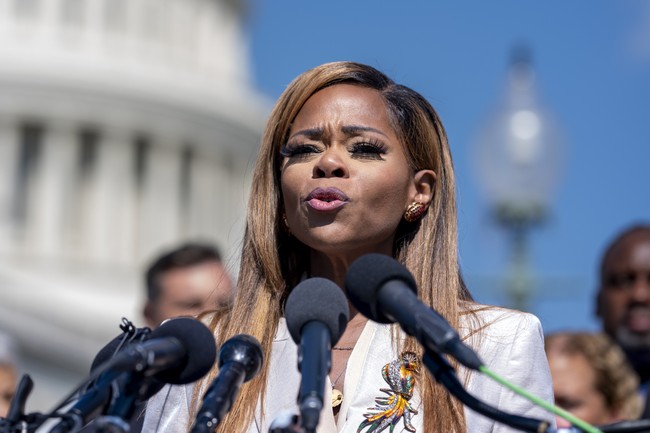
Cherfilus-McCormick’s immediate rebuttal painted the indictment as part of a wider campaign of intimidation, tying it to other congressional controversies and the so-called Epstein files. She framed the matter as an attack on minorities and vowed to fight for her district’s needs. Her remarks sought to shift focus from the detailed allegations to broader claims of bias and harassment.
CHERFILUS-MCCORMICK: Well, it’s an unjust indictment, and it seems like these intimidation tactics have been pervasive. We spent all week seeing different members getting censured, all in hopes of intimidating and kind of distracting from the Epstein files, and I look forward to my day in court so I can prove myself and actually state the truth.
But if this is what Congress is becoming, where they’re always trying to intimidate you, scare tactics, especially attacking minorities, black and brown people, then we’re going to have to keep fighting for the district, and everybody has been giving me so much support, and we are going to keep fighting until the district gets what it needs, which is fair prices, housing, and fair representation in Congress. Thank you so much.
From a Republican perspective, the political framing raises red flags. Indictments are not handy props for office politics; they follow investigations that can span years and involve subpoenas, financial records and witness testimony. Suggesting the charges were hastily manufactured to distract from other stories ignores the legal process behind federal indictments. If a defendant wants to challenge motive or timing, that’s part of the courtroom fight, not the initial public relations push.
Critics pointed out that if this were truly an intimidation tactic, it would be aimed at higher-profile targets, not a relatively obscure freshman member. That line of attack undercuts the argument that the indictment was designed to silence or distract the political class at large. The substantive allegations about money movement and straw donations need answers and documentation that go beyond claims of bias. A responsibility to constituents includes addressing such accusations with transparency.
Race-based defenses in high-profile criminal matters have become predictable political cover in some circles, and this case is no different. Accusing opponents of targeting minorities can be a shorthand to rally a base and deflect from alleged misconduct, but it does not replace evidence. Voters deserve a full airing of facts so they can judge whether there was criminal behavior, poor judgment, or both. The justice system exists to sort that out, and political theater should not be a substitute for accountability.
As the case moves forward, the focus should remain on facts, testimony and documented transfers, not on spin or outrage theatre. Constituents expecting fair representation want clear answers about pandemic-era funds intended to protect public health. The legal process will determine guilt or innocence, but in the meantime, elected officials facing serious allegations should explain the specifics to the people they serve and let the evidence speak for itself.


Add comment