
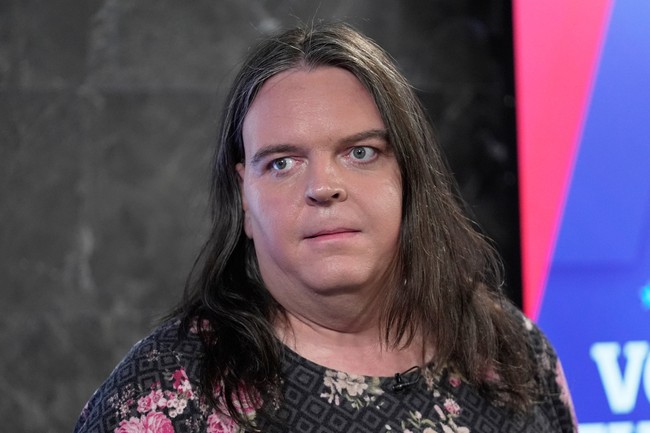
The Maine Democratic Senate replacement debate revealed a field that struggled for credibility, with one candidate’s claim of honesty colliding with promotional images from a memoir that look nothing like the person running for office. What followed on social platforms highlighted a wider problem for Democrats trying to sell authenticity while presenting a curated persona. The episode raises clear questions about transparency, representation, and political theater in a high-stakes special election. Voters deserve clear identity and honesty from anyone seeking a U.S. Senate seat.
Last night’s debate to find a successor in Maine did not go smoothly for Democrats, and the performance made the party look poorly prepared. The contenders handled tough questions in ways that left viewers more confused than informed, and the overall tone felt chaotic. That kind of spectacle hands Republicans an easy talking point about competence and judgment.
Among the candidates was Ashley Webb, who touted artistic accomplishments like songwriting and book writing as part of her résumé. When asked directly about honesty she said, “I wouldn’t lie to the people, and I wouldn’t deceive the people like we are being deceived right now.” Those words landed as a promise, but promise alone does not satisfy voters asking for concrete truth and consistency.
Soon after the debate, social media quickly circulated images used to promote Webb’s memoir, images that some observers described as heavily altered or AI-enhanced. The promotional picture is billed as part of a memoir titled “I Am Ashley” and the campaign push framed it as a personal story. But people noticed the glossy, glamorized images and questioned why they were so different from the candidate seen on the debate stage and in public appearances.
The book’s marketing language even called the memoir “more than just a memoir—it’s a spark,” which amplified the sense that branding was driving the presentation more than factual biography. The material is sold as a true account, with a subheading that reads: “A True Story of Growing up Trans in a World That Said I Couldn’t be Her.” That explicit framing makes images meant to represent the author subject to scrutiny.
The images used in promotion look like younger, idealized versions produced to be eye-catching rather than faithful representations. Critics pointed out the gap between the campaign photography and the memoir art, and that gap quickly became a meme on social feeds. Many voters saw the contrast and interpreted it as a brush-up meant to obscure the real person rather than reveal her story transparently.
https://x.com/RNCResearch/status/2077912498087289214
To borrow a pop-culture line, Webb “missed it by that much,” which describes the disconnect between promise and presentation. The campaign’s choice to use highly stylized visuals undercuts the candidate’s assertion of straightforwardness, and that fuels skepticism. People running for high office need to be careful: appearances matter and authenticity matters more.
Supporters might argue that memoir imagery can be symbolic or reflect past experiences, yet the book is categorized and marketed as a personal true story, which sets different expectations. A memoir framed as a “true story” invites readers — and voters — to expect an honest depiction, not an idealized character. When the imagery doesn’t match that expectation, it becomes a political liability.
Some defenders will claim this is a minor marketing choice, but politics is unforgiving with optics, and opponents will exploit any inconsistency. The GOP will happily magnify any impression of deception or mismatch between words and visuals, using it to ask whether the Democratic bench presents serious candidates or theatrical figures. In a tight midterm environment, messaging mistakes like this can cost credibility.
Beyond this specific campaign, the episode feeds a larger conversation about how identity and narrative are packaged for public consumption. When a personal story is turned into a glossy product, voters wonder whether they are being invited into truth or manipulated into marketing. Those doubts create space for political opponents to paint the entire party as out of touch with ordinary voter expectations.
Democrats hoping to hold competitive statewide seats should be ready for the glare. Voters will press for substance over spin, and candidates who promise transparency need to make sure their public materials match their claims. Otherwise, the spectacle becomes the story and the substance disappears.



Add comment