
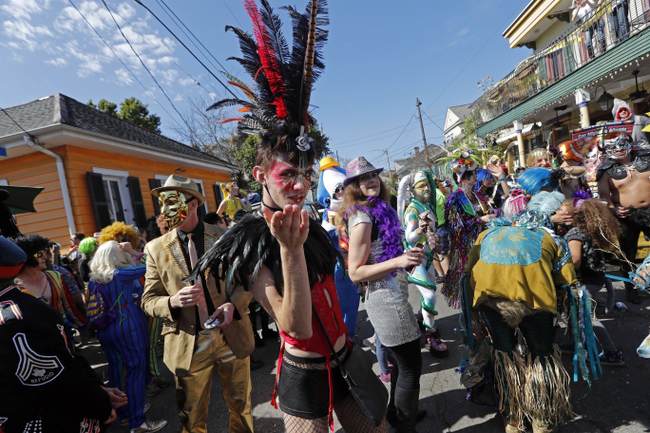
The Mardi Gras spectacle in New Orleans took an unexpected turn when wildlife agents arrested a man for walking down Bourbon Street carrying a live alligator, a real animal that was seized and handed to a wildlife biologist while authorities handled additional unrelated charges.
If you thought Bourbon Street was only about beads, brass and oversized cocktails, think again; during Mardi Gras patrols, agents with the state wildlife department encountered a person carrying a living alligator through a packed party corridor. Crowd density on Bourbon Street is intense during the celebration, with tourists shoulder to shoulder, balcony beads raining down, and bands and speakers competing for attention. Introducing a live predator into that environment created an unpredictable public safety situation that agents had to resolve quickly.
This was not a prop or a novelty item; it was a breathing, moving reptile in a crowded public space. Louisiana wildlife officers arrested the individual early Friday morning and transferred the alligator to an on-call wildlife biologist for safekeeping. Authorities emphasized that bringing certain animals into public areas without authorization can violate state regulations designed to protect people and wildlife alike.
For years the phrase Florida Man has been shorthand for outrageous animal stories, but this incident makes it clear that audacious wildlife encounters are not exclusive to any one state. Louisiana now has its own entry in the annals of bizarre behavior with an alligator being paraded down one of the country’s most famous party streets. That reality underlines why wildlife possession and transport are regulated: the risks rise fast when you add alcohol, tight crowds, and an unpredictable animal to the mix.
Mardi Gras security is a layered operation, with local police, state agencies, and wildlife authorities coordinating to keep people safe during large, unruly gatherings. Officers manage pedestrian flow, respond to medical incidents, and monitor alcohol-related problems while trying to prevent situations from escalating. A live alligator in that environment complicates all of those tasks and demands immediate removal to reduce the chance of harm.
The local report included this precise account:
Wildlife agents seized a live alligator from a man on Bourbon Street during Mardi Gras patrol. The alligator was turned over to an on-call wildlife biologist.
Officials also noted another detail plainly stated in the coverage:
The man was also arrested on unrelated charges.
Whether those extra charges stemmed from prior matters or behavior on the street, they add a layer of irony to the scene: apparently, one arrest was not sufficient for the evening’s headline. No injuries were reported, and the alligator went into the custody of wildlife professionals, presumably to a quieter, more controlled setting than a neon-lit party corridor. That outcome reflects the priority to remove dangerous animals from public festivities quickly and humanely.
Louisiana knows alligators; they’re a familiar part of the landscape and local culture, but familiarity does not equate to permissiveness when it comes to public safety. Owning, transporting, or displaying wildlife is subject to state rules for good reasons, including protecting both people and animals. Bringing a regulated species into a dense festival zone violates the spirit of those safeguards and forces authorities to intervene.
Bourbon Street may tolerate exuberance and spectacle, but it is not a legal or safe corridor for transporting wild animals. Crowd conditions during Mardi Gras make enforcement and emergency response more complex, which is why state wildlife agents were present and able to act. Their quick seizure of the alligator and the transfer to a biologist prevented a situation that could have turned dangerous as the evening wore on.
The episode also highlights how social celebrations can intersect with reckless decisions, turning what might start as a joke or a stunt into law enforcement action. Festivals encourage creativity and boldness, but they also demand responsibility from participants for the safety of the crowd. When someone crosses that line by introducing a live predator into a jam-packed public space, the response must be firm and immediate.
Authorities walked away with an alligator secured and a person in custody on multiple matters, closing a short, surreal chapter on Foley Square-level absurdity transplanted to Bourbon Street. The scene serves as a reminder that the rules around wildlife exist to prevent precisely this kind of needless risk, and that even celebrated traditions like Mardi Gras have limits when public safety is on the line.



Add comment