
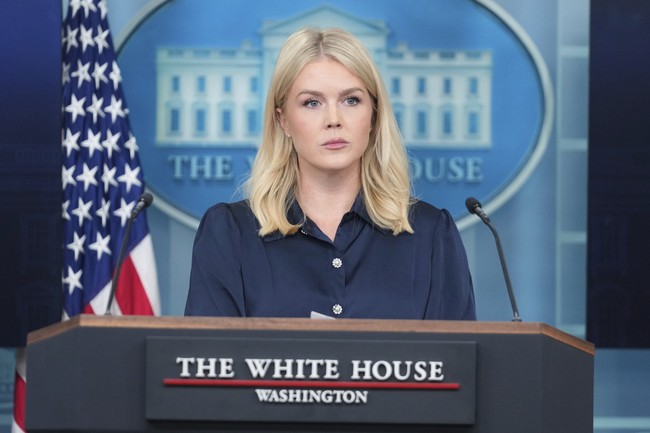
Tulsi Gabbard’s top intelligence aide, Joe Kent, resigned from his role at the National Counterterrorism Center over a policy split with the administration about Operation Epic Fury and Iran, prompting White House Press Secretary Karoline Leavitt to publicly rebut his claims as false and aligned with Democratic talking points. The exchange centers on Kent’s allegation that President Trump ordered the operation under pressure from Israel and its lobby, while Leavitt insists the president acted on compelling intelligence about an imminent Iranian threat and on long-standing national security priorities. The dispute has drawn attention to Kent’s military service and to questions about leaks, personnel moves, and how one administration official publicly challenges another’s resignation letter. This article lays out the timeline, the main claims and rebuttals, and the surrounding context without adding new sourcing or links.
Joe Kent, who served in the Army from 1998 to 2018 and experienced multiple combat deployments, submitted a surprise resignation that landed hard in Washington. In his letter he accused the president of ordering Operation Epic Fury because of pressure from Israel and its American lobby, a charge that immediately raised eyebrows across the political spectrum. Kent’s record includes repeated frontline service and personal tragedy: his first wife was killed by an ISIS suicide bombing in Syria in 2019, a fact that underscores his personal stake in counterterrorism policy. Those credentials give weight to his objections, but they do not automatically settle the factual dispute he raised about the administration’s motives.
White House Press Secretary Karoline Leavitt answered forcefully on social media, calling parts of Kent’s letter false and echoing long-standing Republican concerns about Iran’s behavior. She rejected the notion that the president acted because of foreign influence and insisted the decision followed a clear intelligence picture pointing to an imminent attack from Iran. Leavitt framed the operation as the result of a sober national security calculation that fits with the president’s decades-long stance that Iran must never get a nuclear weapon. Her tone was blunt: she characterized Kent’s line as the same talking points circulating among Democrats and some of the liberal media.
As President Trump has clearly and explicitly stated, he had strong and compelling evidence that Iran was going to attack the United States first.
Leavitt went on to list what she described as the key threats posed by Tehran: state-sponsored terrorism, pursuit of nuclear capability, and expansion of missile capabilities that could coerce the region and beyond. She argued these factors compelled a decisive response rather than restraint, saying the administration compiled evidence from many sources before launching military assets. That argument frames Operation Epic Fury as preventative and rooted in intelligence, not influenced by allies. The press secretary also emphasized her firsthand perspective on how the president makes decisions, insisting he acts solely in America’s interest.
Critics of the administration have seized on Kent’s resignation as evidence of internal dissent, while allies point to Leavitt’s response as a straightforward rebuttal from someone with daily insight into presidential deliberations. The back-and-forth highlights a broader tension: how personnel inside national security circles voice disagreement and how the White House manages reputational risk when a senior aide goes public. Kent’s allegation touched a nerve because it suggested foreign influence at the highest levels, a charge that requires careful handling by both sides in an electoral environment.
Media reporting added another layer: there were claims that the White House previously told the Director of National Intelligence that Kent should be fired over suspected leaks, a warning that allegedly was not acted upon. Those accounts, if accurate, suggest friction not only over policy but over trust and confidentiality inside sensitive agencies. The leak concerns feed into a narrative about whether staffers can reconcile operational security with public dissent, especially when national security decisions are being publicly debated.
Official says also the White House told DNI Gabbard Kent should be fired for suspected leaks, but she never did.
Supporters of the administration emphasize the president’s stated intelligence and long-term stance toward Iran as justification for Operation Epic Fury, portraying the move as part of a pattern of deterrence and decisive action. Opponents take issue with the scope and motive, questioning whether alternatives were exhausted and whether communications among officials met professional standards. Both sides are using Kent’s resignation as a talking point, but the core dispute is straightforward: Kent sees the operation as misdirected and influenced by outside actors, while the White House says it was a sober response to an immediate threat.
The episode underscores how personnel changes and public resignations can shape the narrative around big foreign policy decisions, especially in a high-stakes environment involving Iran. It also raises procedural questions about how intelligence findings are presented and how dissent is managed within the national security apparatus. For now, the public exchange between Kent and Leavitt leaves a sharp contrast in framing: one paints the president’s move as compromised, the other as necessary and wholly American-focused.


Add comment