
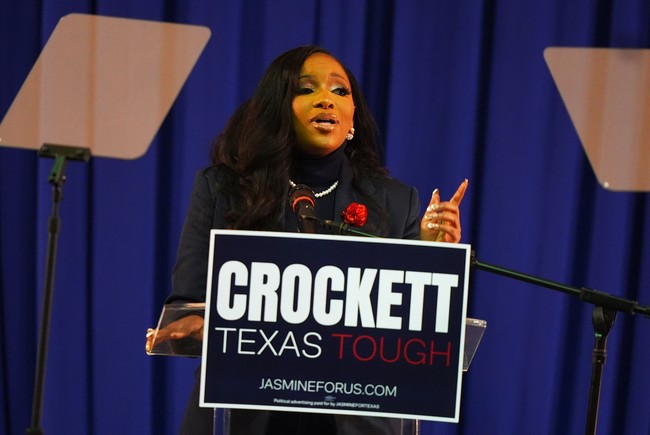
Kamala Harris has stepped into a Texas Democratic Senate primary to back Representative Jasmine Crockett, and the move is serving as a vivid test of Harris’ political clout and political judgment. The endorsement arrived in a recorded robocall and lands as Crockett appears to be leading her primary, raising questions about whether Harris’ support helps or hurts. This article examines the endorsement, the quoted robocall, the political stakes in Texas, and what the choice says about Democratic prospects going forward. Expect sharp critique from a Republican perspective and a close look at how this moment might play into upcoming election cycles.
On a Saturday that had observers shaking their heads and, in some cases, laughing, former Vice President Kamala Harris announced she was urging voters to back Representative Jasmine Crockett in the Texas Democratic primary. The endorsement came in a pre-recorded call and was meant to rally Democratic activists as early voting wrapped up. For Republicans, the moment reads like a political gift, because Crockett’s surge in the primary offers a clearer pathway for conservatives down the ballot.
The endorsement itself is straightforward and blunt in tone. “Hi, this is Kamala Harris, and I’m calling to encourage you to please go vote for my friend Jasmine Crockett in the Democratic primary,” Harris says in a pre-recorded message, which was first reported by the Texas Tribune. “Texas has the chance to send a fighter like Jasmine Crockett to the United States Senate. Jasmine has the experience and record to hold Donald Trump and his billionaire cronies accountable,” she continues. “It’s time to turn Texas blue.”
That quoted message landed at a pivotal moment. Crockett has been climbing in the polls and appears to be in strong position heading into the March 3 primary, which means Harris’ intervention serves less like a decisive boost and more like a public experiment. If Crockett wins, Democrats will have chosen a nominee Harris openly supports; if Crockett stumbles, Harris’ influence will look limited. Either way, Republicans should be watching closely and planning accordingly.
The broader context matters. The Democratic primary fight is taking place alongside a turbulent Republican contest, and whoever emerges on either side could determine whether Democrats realistically compete for a Senate pickup in Texas. For conservatives, Crockett’s rise feels like hope: her profile and rhetoric give Republicans a clearer target and a chance to define the race on steady, familiar terms. That puts pressure on GOP strategists to run disciplined campaigns and not take victory for granted.
Critics of Harris point to her 2024 presidential campaign as evidence that her political instincts are questionable. Many Republicans still see her 2024 loss as a national relief, a moment that forestalled a presidency they considered dangerous. The argument being made by conservatives is simple: Harris lacks the judgment and appeal to lift other Democrats into competitive wins, and this endorsement proves that point in miniature.
Personal attacks are common in modern politics, but the substance here is about competence and electability. Observers note that Harris has repeatedly left the door open to future runs, and some Democrats countenance another bid for national office despite the 2024 result. That prospect alarms Republicans, who argue that Democrats offer candidates more notable for headline-grabbing statements than for broad electoral appeal.
Practical politics matters more than insults. Republicans know that a strong ground game and a clear message can turn Crockett’s projected primary victory into a general election win. The advice for GOP campaigns is to treat each contest as tough, run like they are behind, and avoid overconfidence even if internal polling looks favorable. Vigilance and preparation are the best answers to unpredictable Democratic choices.
Looking ahead, the next two election cycles—this year’s midterms and the 2028 presidential race—will hinge on candidate quality and campaign discipline. Democrats nominating figures who energize their base but alienate swing voters will help Republicans. Republicans should be ready to capitalize on weak Democratic nominees without getting complacent. That combination of readiness and restraint is what wins close contests.
In the short term, Harris’ robocall is a headline event and a test of influence that Democrats hoped might change the course of a primary at the last minute. For conservatives, it reads as confirmation that Democrats often elevate candidates who excite a niche audience but struggle to broaden their appeal. The unfolding Texas race will offer a real-time answer to whether Harris’ political capital is still meaningful.



Add comment