
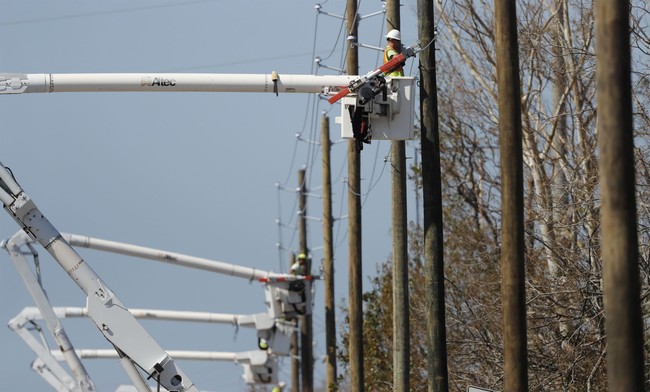
This piece examines Gary, Indiana’s lengthy power outage, the initial charge of “environmental racism,” the actual reasons for delayed restoration, community responses, and a conservative take on local leadership and public safety issues.
Gary, Indiana recently endured a blackout that stretched into double digits, drawing attention from national outlets and social media. What started as storm damage turned into a much longer crisis when restoration efforts stalled. Local residents endured days without electricity, fueling anger and finger-pointing. That public frustration created a narrative that deserves closer inspection.
The early social-media reaction was predictable: some framed the outage as another example of “environmental racism.” In a now-deleted post, an X user going by the handle @BlvckJxsus wrote (): “gary indiana has been w/o power for 11 days. gary indiana is 75% Black. yet another example of environmental racism, it is so f***ing disgusting.” That claim spread fast because it fit a familiar storyline that assigns blame without examining facts on the ground. But headlines and hot takes are not substitutes for investigative clarity.
Public-safety realities intervened. Severe storms on August 11, 2026 damaged infrastructure across Northwest Indiana and Northeast Illinois, creating widespread outages. Crews from the local utility responded, but the work slowed for reasons other than deliberate discrimination. A helpful community note explained that restoration was further delayed after utility crews were shot at on August 14, forcing a temporary pause in work.
The power outage was caused by severe storms on August 11, 2026, affecting Northwest Indiana and Northeast Illinois. Restoration in Gary was further delayed after utility crews were shot at on August 14, temporarily pausing work.
https://x.com/CBSEveningNews/status/2091351958900641796
Local reporting confirmed the danger on the ground. A utility vehicle was struck by gunfire while crews were restoring power, and authorities called in additional protection for workers. Gary’s mayor said, “Let me be clear: this type of violence is absolutely unacceptable and will not be tolerated in the City of Gary,” and pledged coordination between the city, state police, and the utility. That kind of violence makes restoration slower and riskier, and it is a fact that changes the narrative.
Beyond the shooting, on-the-ground problems compounded the delay: damaged poles, downed trees, neglected infrastructure, and blocked access can all slow repairs after a storm. In some neighborhoods, thieves and other criminal actors have made it dangerous for crews to move freely. Those conditions are not cured by blaming environmental policy or alleging bigotry as the primary cause of service disruptions.
Conservative commentator Kira Davis—who grew up in the area—laid out a list of practical issues that explain why Gary still faced outages. Her observations call attention to crime targeting utility crews, widespread theft and home invasions, neglected maintenance, and local political failures. “Our senior citizen uncle is there and refuses to leave his home because he knows if he leaves there will be nothing to come back to,” she wrote, underscoring the human cost of those conditions.
Gary is our former home town. Let me tell you why they are still without power: -People keep shooting at the NIPSCO (their power company) trucks -roving gangs of thieves and home invaders and limited police presence -infrastructure is poorly maintained; untrimmed trees are making access to power lines difficult; damaged streets and sidewalks; abandoned buildings everywhere -city leadership has been hopelessly lazy and corrupt for decades; many like the new mayor but he has clearly not prepared the city for emergency [.]
Our senior citizen uncle is there and refuses to leave his home because he knows if he leaves there will be nothing to come back to. Everyone there is at the mercy of the criminals, the weather and a chronically incompetent local government. It may also interest you to know that Gary is considered the bluest city in America with nearly total Democrat support [.]
I’m not one to defend the power companies. NIPSCO has their own issues. But the reason Gary is still offline is because most of the people there keep voting for more of the same at every turn. The city has everything it needs to be a great city. It’s on Lake Michigan, has incredible architecture and is just 30 miles from Chicago. It lost a lot of revenue when the steel mills closed but there has never been a good reason for its failure decade after decade. It’s poor leadership and a disengaged population. It’s not racism. It’s apathy and thievery [.]
That assessment pushes responsibility back onto local governance and civic engagement. When public safety collapses and officials fail to enforce the rule of law, essential services suffer. Voters who support the same local leadership for decades should be willing to accept scrutiny when outcomes are poor. Accountability is not partisan rancor; it is the mechanism that drives improvement.
The contrast between a viral, emotion-driven allegation and the blunt realities of crime, infrastructure, and governance matters for policy. Labeling every failure as systemic racism removes urgency to fix tangible problems like policing, road and utility maintenance, and community support systems. Leaders must confront criminality, secure work zones for repair crews, and invest in resilience.
Residents who want lasting change must demand better performance from those in charge. That starts with public safety and maintaining the basics that let crews restore power quickly after storms. Blaming vague, all-encompassing causes might sell on social media, but it will not turn the lights back on or stop crews from being targeted while doing their jobs.
Gary has assets that could support a comeback: location, architecture, and history. Turning those advantages into real improvement requires a mix of secure neighborhoods, competent city management, and civic involvement. Until those fundamentals are addressed, storm damage plus criminal interference will keep making outages last longer and suffering worse for ordinary residents.
The community note and local reports show the true obstacles to restoring service: weather, violence, and operational hazards. That snapshot points to practical steps rather than easy explanations, and it suggests where attention and accountability should be focused.


Home-based job that pays more than 12,000 Dollar per month by doing simple tasks on a laptop or mobile device part-time. Last month, I earned 24,863 Dollar from this job by working 4 hours per day online. Very simple jobs to do, and the earnings are insane. Everyone can now make more money online by joining the website listed below…..
𝒋𝒖𝒔𝒕 𝒖𝒔𝒊𝒏𝒈 𝒕𝒉𝒊𝒔 𝒔𝒊𝒕𝒆.. Www.PayAtHome1.Com