
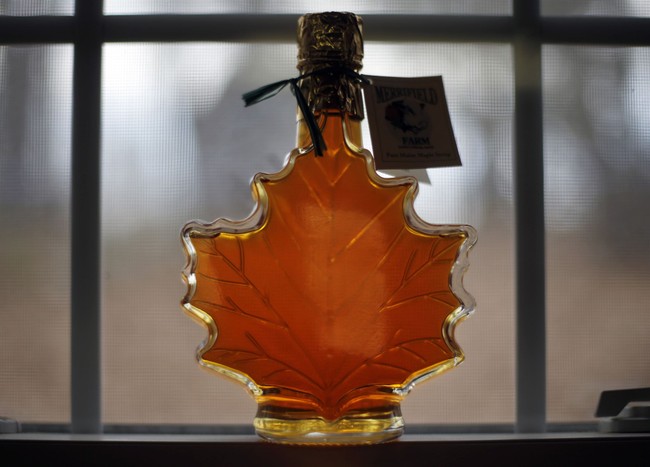
This piece remembers a childhood breakfast ritual, traces how maple syrup became a beloved pantry staple from indigenous origins through industrial production, notes regional variations like birch syrup, and shares a few wry asides about why a day devoted to maple syrup feels right.
Growing up on a Midwestern farm shaped how I think about breakfast and thrift. Weekends at my grandparents’ place meant fried eggs, bacon or ham, hot buttered toast, and Grandma’s pancakes—she always called them hotcakes—doused in sorghum molasses because it was cheaper than store syrup. She raised six kids through the Depression and could still lecture you on stretching a dollar, so no one wasted money on fancy bottles when molasses did the job.
Later on, an uncle who went fishing in Canada introduced me to maple syrup, and that changed everything. The difference was immediate: lighter, more nuanced, and undeniably better than molasses for pancakes and waffles. It’s the kind of small culinary revelation that becomes a habit, the sort of thing you defend when someone suggests spooning a lesser syrup over your breakfast.
National Maple Syrup Day was created to celebrate the amber substance people have all come to know and love.
Much of the maple syrup that most people experience today is almost always manufactured in Canada, but even the United States has its own maple syrup production area–mostly surrounding the northeastern states, such as Vermont, but also other northern states, like Michigan.
Maple syrup is a substance that’s usually made from the xylem sap of a few different varieties of the maple tree, including the sugar maple, red maple, or black maple tree, although it can be made from other species of maple as well.
Those facts are why there’s a day set aside in mid-December to tip a spatula in thanks to the stuff. The tradition goes much deeper than modern labels and supermarket aisles. Long before processed syrups and global supply chains, people in North America tapped trees and boiled sap as a seasonal practice—work that belonged to communities and families, not factories.
According to aboriginal oral traditions, as well as archaeological evidence, maple tree sap was being processed into syrup long before the Europeans arrived in the region.
Perhaps the Europeans, who eventually settled there, actually learned the refinement process from the indigenous people who had been living on that land for centuries.
It helps to remember that many everyday comforts have origins rooted in knowledge passed down through generations. The refinement of sap into syrup looked different over time, but the goal stayed the same: concentrate the sweet water into something shelf-stable and delicious. Today, modern taps, tubing networks, and reverse osmosis machines speed up what used to be a slow, tactile craft, but the end result aims to honor those original flavors.
Production is primarily a seasonal race against warm weather, with syrup makers watching temperature swings, tapping trees in late winter and early spring when nights freeze and days thaw. Those cycles matter because the sap needs that freeze-thaw action to move, and every producer, whether hobbyist or commercial, counts the runs that season will hand them. Even in an industrial setting, a syrup maker’s calendar still revolves around a narrow window of opportunity.
Not all tree syrups come from maples. In places like Alaska, folks make birch syrup that tastes different—lighter, more mineral, and less saccharine. Birch sap yields less sugar per gallon, so birch syrup costs more by volume, but it has a place at a chef’s table and on curious breakfast plates. If you’re sneaking a bottle out for company, you might want to be a little discreet about it to avoid the inevitable envy that follows.
There’s a cultural charm to maple syrup that goes beyond flavor: it connects a countertop stack of pancakes to a landscape, a season, and local labor. Whether you buy pure Canadian syrup, small-batch run from Vermont, or a specialty Alaskan birch product, you’re tasting a process and a place. That link is why a day set aside to appreciate maple syrup feels earned.
On a personal level, the syrup story folds into family stories—grandparents teaching thrift, uncles bringing back new flavors, and communities preserving practices across generations. Food memory is stubborn that way; one bite can put you back in a kitchen with the sun slanting through a farm window and the sound of a woodstove. For many of us, maple syrup does exactly that.
There’s room for a little humor, too. Call it sappy if you like, but there’s a romance to something that starts as tree sap and ends up as amber bliss on a plate. If more condiments had days, some might be less deserving, but maple syrup earns its spotlight by turning ordinary breakfasts into small celebrations.



Add comment