
The Alabama U.S. Senate contest to replace Tommy Tuberville has moved to a runoff after no candidate cleared 50 percent, setting up a June 16, 2026, head-to-head that will decide which Republican-backed vision for the state advances to the general election.
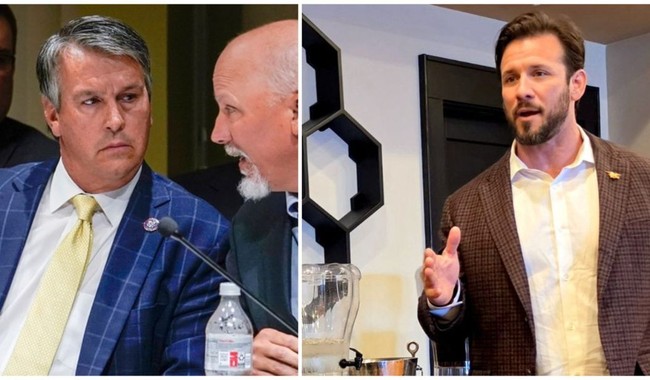
The outcome on Wednesday, as projected by Decision Desk HQ, confirmed that Republican Rep. Barry Moore and businessman and former Navy SEAL Jared Hudson will face each other in a runoff because neither reached the required 50 percent threshold. Alabama Attorney General Steve Marshall finished third and is therefore out of the race, clearing the field to two challengers vying to carry conservative priorities to the Senate. The result reflects a crowded primary where vote-splitting among similar conservative options made a runoff likely from the start.
Barry Moore comes into the runoff with the high-profile endorsement of former President Donald Trump and three terms in the U.S. House under his belt. Moore is known for his conservative record, membership in the House Freedom Caucus, and a campaign message that emphasizes loyalty to Trump-era policies and working relationships in Washington to deliver for Alabama. Jared Hudson entered the contest as a political newcomer with military credentials and a business background, promoting term limits and a robust America First agenda centered on border security and cultural conservatism.
The dynamics of this race show why runoffs are a common feature in Alabama politics: when multiple candidates split a similar electorate, advancing to a general election without a clear majority becomes difficult. Polling in recent weeks had suggested a three-way dead heat, with slight advantages shifting between Hudson and Marshall at times, which is exactly the kind of tight spread that feeds into a runoff outcome. Voters now have to choose between continuity with a proven Republican in Congress and an outsider promising to shake up the status quo with a direct America First approach.
Campaign messaging will sharpen in the weeks before June 16 as each candidate targets the specific voters who backed eliminated contenders and seeks to maximize turnout among their base. Moore will likely lean on his incumbency in Congress and Trump endorsement to assure conservative voters he can hit the ground running in the Senate. Hudson will emphasize his Navy SEAL service, business leadership, and outsider narrative to convince voters he represents the change needed to defend border security and traditional values.
Fundraising and ground operations will be decisive now that the field is narrowed to two. Runoffs reward organizational strength and the ability to mobilize voters in a lower-turnout environment, which favors candidates with established networks and disciplined campaign machines. Moore’s existing congressional infrastructure gives him advantages in name recognition and constituent outreach, while Hudson’s narrative could attract energized voters looking for a fighter who can take on the political establishment.
The policy differences between the two will focus heavily on enforcement-first immigration stances, defending religious liberty, pushing back against cultural trends viewed as antithetical to conservative values, and supporting limited government. Both candidates frame themselves as defenders of the America First agenda, but they will need to clarify how their Senate tactics and alliances will differ once in office. Voters will be watching for specifics on how each plans to translate campaign promises into legislative action.
Outside groups and national players will almost certainly weigh in as the runoff approaches, given the Senate math nationwide and the high stakes tied to the 2026 midterms. Alabama has become a spotlight state because whoever wins the Republican primary is heavily favored in the general election, making the runoff effectively the decisive contest. Republican operatives will view this as an opportunity to shore up a reliably red seat and ensure the party keeps a majority in the upper chamber.
Grassroots enthusiasm and turnout models will be tested in this compressed time frame, with campaign events, targeted advertising, and direct voter contact all cranked up to maximum effort. The June 16 date compresses decision-making and forces voters to reconsider earlier choices, which rewards candidates who can quickly articulate a compelling case to supporters of eliminated rivals. This runoff is a test of energy and message clarity as much as it is a test of policy positions.
Editor’s Note: The 2026 Midterms will determine the fate of President Trump’s America First agenda. Republicans must maintain control of both chambers of Congress.
With the runoff set, Alabama Republicans will focus on selecting the candidate they believe can best defend conservative priorities in the Senate and help secure the broader goals of the party nationwide. The coming weeks will show which message resonates most with voters who want decisive action on borders, faith-based values, and limited government representation in Washington.


Add comment