
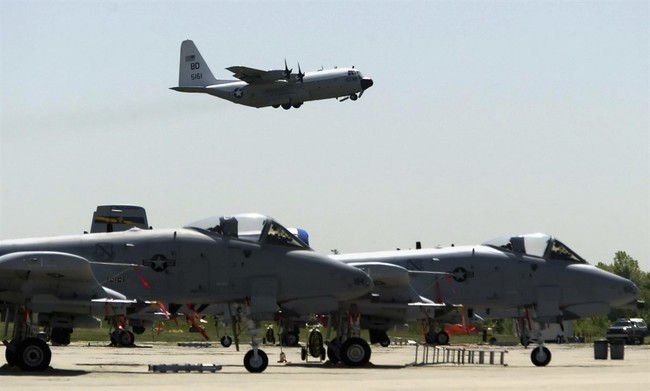
The arrival of A-10 Warthogs over the Strait of Hormuz has sharpened the focus on close air support and littoral operations, with U.S. commanders saying these aircraft are engaging Iranian fast attack craft as part of Operation Epic Fury. This piece explains the A-10’s role, the significance of air superiority in the theater, how the A-10 compares to other legacy platforms, and why cheap, effective munitions matter in sustained operations.
The A-10’s unmistakable 30mm cannon sound, the BRRRRT, signals a platform built for one job: close air support and killing hostile small craft and armored targets. It is a blunt, survivable aircraft designed in the Cold War that kept proving its worth in every conflict where it was used. Its rugged construction and mission-specific design let it operate where more delicate, expensive aircraft could not, especially in contested coastal and littoral waters.
No surprise, the chairman of the Joint Chiefs reported the A-10s are active over the Strait of Hormuz, engaging remaining Iranian speedboats in the area with a .
General Caine said:
The A-10 Warthog is now in the fight across the southern flank, and is hunting and killing fast attack watercraft in the Straits of Hormuz. In addition, AH-64 Apaches have joined the fight on the southern flank, and they continue to work on the southern side, and that includes some of our allies who are using Apaches to handle one-way attack drones.
This is classic combined-arms work: fixed-wing CAS assets like the A-10 paired with attack helicopters and allied systems create a layered response that is hard for small, fast threats to crack. But none of that works unless the U.S. and partners control the air, which commanders say is the case in the current operations. With air superiority established, slow, low-flying platforms that can loiter and provide immediate fires become force multipliers.
The A-10 and the B-52 share a single strategic advantage: they were built to endure and to do predictable, brutal jobs very well. Both are legacy platforms, products of an earlier era of design, but their continued relevance comes from matching the right capability to the right fight. They are not stealthy or trendy, but they absorb damage, stay close to the fight, and deliver effects when called upon to do so.
That toughness is literal: the A-10’s titanium-armored cockpit and redundant systems let the jet take punishment other aircraft could not survive. It was designed to fly low, slow, and near the ground to deliver precise, overwhelming fire support for troops and naval forces near the shore. In littoral environments where small boats and swarm tactics present a unique threat, that design philosophy gives commanders flexibility to respond with controlled force.
Operating an aircraft optimized for close air support in a modern operation underscores the importance of cost-effective lethality. Missiles and specialized munitions are expensive and finite; 30mm cannon shells are cheap and abundant by comparison, letting commanders shape the engagement economy in their favor. In prolonged or frequent skirmishes with low-cost threats, that arithmetic matters more than it did in high-intensity, short-duration campaigns.
Reports from the field and official updates describe the A-10’s expanded role in Epic Fury, noting how long loiter times and quick-response capability let the platform cover surface forces and deny enemy movement. The public visuals released alongside those posts included an that illustrated the aircraft’s presence and its operational posture. That kind of transparency reassures partners and signals capability to potential adversaries.
Make no mistake: the A-10 is not invulnerable, but in an environment where air defenses are degraded and sea threats are discrete and localized, the aircraft’s strengths dominate. Small arms and improvised anti-aircraft fire can be a threat, but the Warthog was built to tolerate hits, keep fighting, and get crews home. Its simplicity and ruggedness are operational advantages that cost-conscious leaders should welcome.
From a policy perspective, deploying legacy platforms that still work is both smart and fiscally responsible. Using hardened, proven systems to protect shipping lanes and maritime routes leverages existing inventory without rushing untested systems into service. In this operation, the A-10 provides a visible, effective deterrent to Iranian maritime adventurism while preserving heavier, scarcer assets for other contingencies.
BRRRRRT remains a blunt, practical answer to a specific threat set at sea: cheap rounds, reliable aircraft, and a clear mission make for an efficient mix. The presence of A-10s and supporting assets sends a simple message to adversaries that the United States has the means and will to defend its interests in the region.



This is why they should not go ahead with plans to retire the A-10 warthog. These are amazing planes