
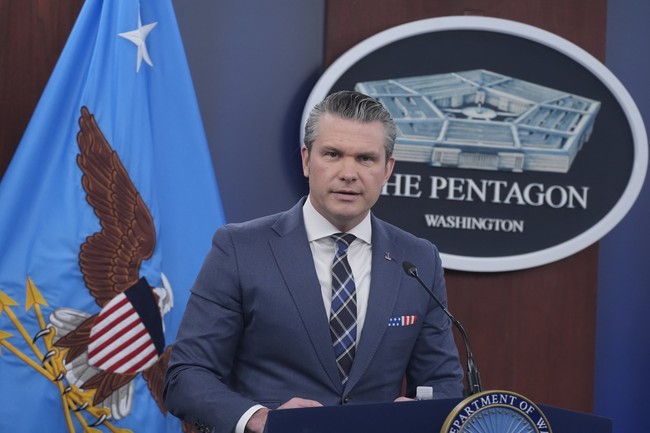
I’ll argue that coverage of Pete Hegseth at the Pentagon has been unfair and inconsistent, defend his right to public religious expression under the First Amendment, call out media hysteria over voluntary worship, note lawsuits and anonymous complaints against him, and point out hypocrisy in how outlets treat different faiths and historical practices within the Pentagon.
Back in the winter of 2024-25, critics obsessed over Pete Hegseth’s Jerusalem Cross tattoo and called it evidence of extremism. That flap collapsed quickly and quietly after former President Jimmy Carter lay in state on the same sanctuary floor where the cross insignia is inlaid. Now the critique has pivoted: Hegseth is apparently too religious for the job.
The Washington Post’s religion reporter raised alarms about Hegseth making worship more available at the Pentagon and suggested, right in the subheader, that his behavior might run afoul of the Constitution. This should surprise no one familiar with the First Amendment, which explicitly protects religious expression. To accuse someone of improper religious activity when the practice is voluntary shows a selective eagerness to police certain faiths while being protective of others.
What the critics dub problematic is, in practice, the expansion of voluntary worship opportunities and the presence of clergy from Hegseth’s tradition at Pentagon services. As reported, “Every month at the Pentagon, Hegseth hosts evangelical worship services that legal experts say are unprecedented. He has brought clergy from his small Christian denomination to preach at the Pentagon.” But the piece offers little evidence that anyone is being forced to attend or that participation is mandatory.
The legal concern raised by some is the idea of government establishment of religion or coercion. Yet the reporting repeatedly notes there is no coercion, no mandate making attendance compulsory. The real issue, it appears, is discomfort with seeing Christian worship expanded in a place where Catholic and other services have long been present. That discomfort, thinly veiled as constitutional worry, is a policy choice masquerading as legal alarm.
Americans United has filed suit seeking records tied to Hegseth-led prayer services, accusing him of abusing office and taxpayer funds to impose a preferred religion. Their statement included this charge: “Americans United earlier this week sued the Defense Department for not turning over public records requests about the Hegseth-led Christian prayer services at the Pentagon. In a release, it said Hegseth is abusing his position and taxpayer funds to impose his preferred religion.” The group stresses its concern even when services are described as voluntary, signaling that voluntary religious expression is unacceptable to them.
Alongside organizational complaints, anonymous insiders reportedly told the press they are “terrified” of the change in policy and that limits on proselytizing have vanished. The article quotes that sentiment: “A senior Army civilian who has worked in the Pentagon for decades said people who work there are afraid to talk to one another or their superiors about concerns over Hegseth’s actions. The Army civilian, who spoke on the condition of anonymity because they fear of being punished at work or fired, said limits that used to exist around proselytizing have evaporated under Hegseth.” That strikes as backward: fear of punishment for speaking out about a policy that loosens restrictions is logically inconsistent.
If long-standing Catholic daily Masses have been part of Pentagon life for years, adding evangelical services hardly seems like a constitutional leap. The reaction seems rooted less in law and more in cultural discomfort with certain forms of Christianity being visible in a federal building. Critics are quick to label and alarm, but slow to explain what actual harm has occurred as a result of more available prayer options.
Media outlets tend to construct long exposés by assembling opposing voices and then tacking on a brief statement from a Pentagon spokesperson at the end. That pattern shows up here: a long list of grievances and fears, followed by limited context from officials who could clarify rules, participation standards, and protections for service members of all faiths. Balanced reporting would examine the history of religious practice at the Pentagon and compare restrictions or accommodations across denominational lines.
The most inflammatory rhetoric in some sourced comments ties partisan rage to religious practice, invoking terms and events that have nothing to do with worship. One quoted critic warned of a split and even suggested divine disfavor over political movements. That kind of mixing of politics, religion, and fear-mongering elevates hot takes above sober analysis and risks painting routine religious practice as a national security problem.
At bottom, this episode exposes a double standard: the press lavishes protection on certain faiths while policing others, and organizations that champion separation of church and state often operate as if any public expression of mainstream Christian belief by a conservative official is illegitimate. When speech and worship are voluntary and open to all, accusations of coercion should carry real evidence, not anonymous alarm and selective outrage.

Add comment