
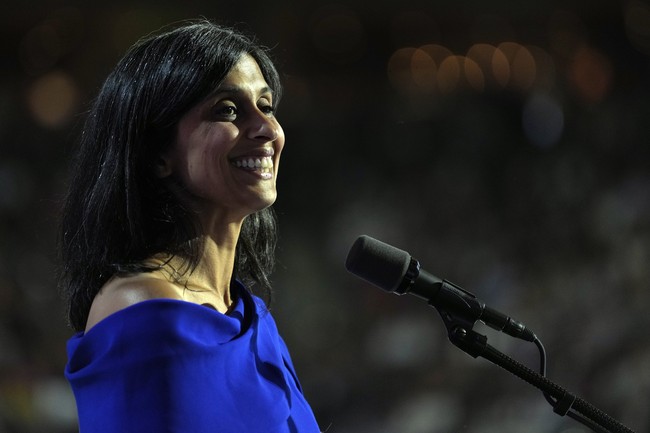
Checklist: Note the New York Times critique, show Usha Vance’s response, highlight the fashion receipt moment, cite reactions from left-leaning figures, and underscore the cultural clash over motherhood and public life.
The New York Times ran a fashionable take that treated pregnancy as a political act, and Second Lady Usha Vance answered with a short, witty clap-back that exposed the story for what it was: an overcooked outrage piece. The paper’s author zeroed in on Vance’s maternity style and suggested that showing a pregnant belly is part of a calculated pronatalist message. Vance’s reply—part humor, part reality check—turned the supposed scandal into a punchline.
Vanessa Friedman, identified as the Times’ fashion critic, framed the scene as a cultural maneuver rather than a family moment, arguing that the visible pregnancies of Vance and other conservative women were staged statements. The critic fixated on a coral dress and the simple act of mothers cradling their bellies in public, reading political intent into ordinary behavior. That leap from clothing choice to conspiracy stance revealed more about the writer’s angle than about the women involved.
“Luckily, there’s going to be a new baby for you to read to,” the second lady says to her husband, “so you’re going to have many more years ahead of you.” She is wearing a stretchy coral dress that hugs her stomach, making what she is talking about very clear.
He grins and responds, “I was not yet ready to be out of the baby phase, so here we are, about to jump right in in just a few short weeks.”
Vance’s office released a Father’s Day video where the vice president reads to kids and the couple banters about adding another child to the family, a wholesome clip by any standard. Instead of seeing everyday family life, Friedman read a political strategy memo into the footage and declared an aesthetic victory for a so-called pronatalist movement. The critique treated visible pregnancy as an ideological billboard rather than an ordinary chapter in a family’s life.
Rather than accept the mock outrage, Vance posted a brisk, sarcastic rebuttal on her official X account that nailed the absurdity in under a sentence. She pointed out the exact price of the dress—$8.75 from Old Navy—and joked about what the Times would say next about her elastic-waist pants and compression socks. That simple, precise detail undercut the idea that this was about elite image-making and turned it into a middle-America reality check.
Now that we know the political significance of my $8.75 coral maternity dress from Old Navy, can’t wait to hear what the New York Times has to say about my elastic-waistband pants and compression socks! In the meantime, enjoy my pregnancy fashion (or lack thereof) and a good story with your kids on Storytime with the Second Lady.
Vance even posted the receipt to prove the point, showing the public that comfort—not couture—was the priority in late-stage pregnancy and Washington summer heat. That small, verifiable detail reframed the whole episode: a low-cost, practical maternity dress does not equal a master plan to reshape culture. It’s a reminder that ordinary people, including public servants, live ordinary lives—even when the press insists on turning quotidian moments into ideological theater.
Friedman found allies willing to amplify the criticism, and one pundit suggested the women were intentionally presenting themselves as emblematic of a chosen female destiny. Those comments read less like careful analysis and more like a moral panic about women who choose family life. The rage directed at these mothers smells of resentment toward visible satisfaction with traditional roles rather than a reasoned critique of policy or governance.
“It almost feels like a memo went out,” said Jill Filipovic, the host of the “Week in Women” podcast. “They have quite intentionally opted to present themselves as, ‘I am really pregnant, and this is what women were chosen to do,’ and they are happy to say that both with their looks and their mouths.”
https://x.com/SLOTUS/status/2069857031327211963?ref_src=twsrc%5Etfw
Katie Miller’s Mother’s Day post added fuel to the fire when she wrote, “a reminder that peak feminism is having babies. The most radical thing a woman can do is embrace her biological destiny.” That line, quoted directly, further convinced critics that these women were making public statements about motherhood. But the comment landed more like an assertion of personal belief than a coordinated political signal.
“In honor of Mother’s Day,” she wrote, “a reminder that peak feminism is having babies. The most radical thing a woman can do is embrace her biological destiny.”
The whole episode exposes a cultural double standard: conservative women who visibly embrace marriage and motherhood are treated as political actors, while other public displays of identity often escape the same scrutiny. Critics demanded a particular aesthetic—some nostalgic version of past first-lady style—while mocking women who are simply comfortable and competent in their roles. That selective outrage says more about the critics than the criticized.
Labeling a comfortable Old Navy dress and a family video as an existential political threat is a stretch that conservatives should call out. Usha Vance’s measured humor and a posted receipt did more to puncture the narrative than a dozen rebuttals could, showing how a little common sense and a bit of levity can deflate media melodrama. In the end, visible motherhood remains what it has always been: part private life, part public reality, and not the headline-grabbing conspiracy some tried to make it.


Add comment