
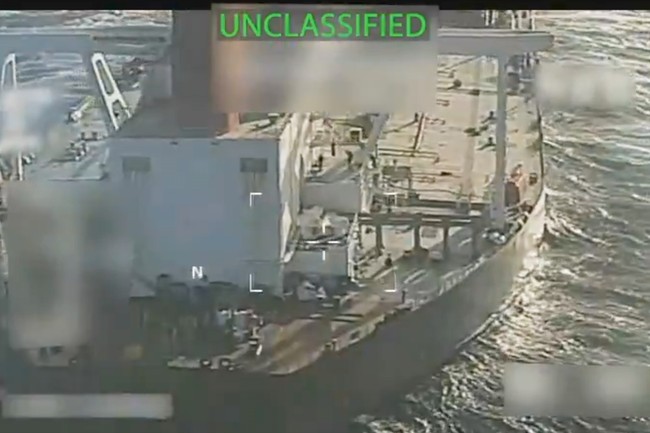
The United States legally seized the oil tanker Skipper off Venezuela’s coast, sparking outrage from several U.S. adversaries and a sharp denunciation from Cuba, which called the action “an act of piracy and maritime terrorism.” This piece examines the seizure, the regional alliances that make Venezuela and Cuba reliant on one another, and why Washington’s move fits squarely within law enforcement and pressure tactics aimed at bad actors in the hemisphere.
The Skipper seizure was framed as a lawful action backed by a warrant, not an act of war. Officials involved treated it like a law enforcement matter, even if naval assets supported the operation, which is a common practice when complex maritime interdictions are required.
Cuba’s anger was immediate and loud, with officials accusing the United States of violating international law and attempting to choke off vital supplies. Their statement called the seizure “an act of piracy and maritime terrorism” and alleged the move was intended to hinder Venezuela’s trade in natural resources with nations including Cuba.
Cuban officials have denounced the US seizure of the Skipper oil tanker off Venezuela’s coast on Wednesday, calling it an “act of piracy and maritime terrorism” as well as a “serious violation of international law” that hurts the Caribbean island nation and its people.
“This action is part of the US escalation aimed at hampering Venezuela’s legitimate right to freely use and trade its natural resources with other nations, including the supplies of hydrocarbons to Cuba,” the Cuban foreign ministry statement said.
The statement added that the US’s action “negatively affects Cuba and intensifies the United States’ policy of maximum pressure and economic suffocation”.
That rhetoric is familiar playbook from authoritarian regimes: portray any interference as unlawful aggression while ignoring the illicit networks that tie them together. Venezuela has been moving sanctioned oil through various opaque channels and partnerships, and Cuba has been a regular beneficiary of that flow in exchange for services such as medical teams and security details.
Reports indicated the Skipper was loaded with nearly two million barrels of Venezuela’s heavy crude and had offshore transfers that complicate its declared course. Internal PDVSA data spotted by investigators and open-source trackers suggested an intended stop in Matanzas, Cuba, and off-loading of tens of thousands of barrels to another vessel en route to the island.
The tanker, which was reported now to be heading for Galveston, Texas, was believed to loaded with nearly 2m barrels of Venezuela’s heavy crude, according to internal data from the Venezuelan state oil company PDVSA, according to the New York Times.
The Skipper’s destination was listed as the Cuban port of Matanzas, the outlet said. But two days after its departure, it off-loaded an estimated 50,000 barrels to another ship, which then headed north toward Cuba while the Skipper headed east toward Asia.
About 80% of Venezuela’s oil exports, or 663,000 to 746,000 barrels daily, goes to China, according to estimates. But Cuba has long relied on Venezuelan oil exports in return for medical expertise, sports instructors and security personnel who surround the Venezuelan president, Nicolás Maduro – and are considered loyal and effective in providing personal protection.
Those on-the-water maneuvers — ship-to-ship transfers, dodgy GPS entries, and circuitous routing — are the kind of tricks used to skirt sanctions and obscure the true recipients. American interdictions are often the result of long investigations that track payments, cargo manifests, and vessel movements. If a warrant was issued, it means the legal threshold was met.
Let’s be blunt: authoritarian regimes running illicit trade routes do not get a veto over U.S. law enforcement. When those ships cross legal lines or help prop up corrupt leadership that threatens stability, the U.S. has a responsibility to act. That action will always draw predictable protests from those losing supplies and income.
There’s a geopolitical reality beneath the theater of accusations. Cuba depends heavily on Venezuelan energy while Venezuela leans on Cuban personnel and services that shore up Maduro’s grip. Washington’s pressure aims to strain that exchange and force recalculations by both parties about their continued cooperation.
From a policy perspective, enforcing sanctions and intercepting trafficked resources is part of a broader strategy to limit revenue streams to regimes that undermine regional security. Tactical law enforcement seizures are a tool within that strategy, and they are very different from military invasions or declarations of war.
Given the lines of evidence and the broader pattern of sanctioned shipments moving through complex maritime setups, the U.S. response looks like a lawful, deliberate step to disrupt an illicit economy. Cuba’s protests are loud but predictable; they reflect annoyance more than legal clarity.
Ultimately, the seizure sends a message: maritime routes will be policed when they are used to skirt sanctions and fund authoritarian cooperation. Washington will keep using legal tools to target networks that enable hostile regimes to trade their way around restrictions, and that reality is not likely to change anytime soon.


Add comment