
The White House press secretary laid out a clear picture of U.S. strategy after Operation Epic Fury, arguing military strikes weakened Iran and the current U.S. response has shifted to economic pressure and a naval blockade. This piece walks through her comments, the administration’s objectives, and the likely consequences for Iran’s leadership and economy while keeping quoted remarks intact.
On Fox News, Karoline Leavitt framed recent actions as decisive and effective, saying the strikes left Iran fractured and their leadership in disarray. The administration is presenting the cease-fire extension as tactical breathing room to see whether Iran’s fractured leadership can assemble a coherent response. The goal, Leavitt says, is to force Iran to surrender its enriched uranium and to prevent any nuclear weapon capability.
First, Secretary Leavitt described .
Secretary Leavitt said:
As far as the formal negotiations, humanitarian issues are of great concern to this president, but with respect to the negotiations that are ongoing, he’s made his redlines very clear. Iran can never obtain a nuclear bomb to threaten the United States and our allies, and they must turn over the enriched uranium that’s in their possession. While it is very far into the ground, thanks to the success of Operation Midnight Hammer, it’s important to the president that they hand that enriched uranium over. He’s made that quite clear to them. And now, we’re waiting to hear back from the Iranian regime. The fact that they cannot send a unified message yet, which is why the president decided to extend the cease-fire, just shows how effective Operation Epic Fury truly was. Because there’s a lot of internal division over there, the president understands that, and so we await their response.
The administration insists the kinetic phase weakened Iran’s conventional forces and left key leaders exposed or incapacitated. Leavitt suggested the new Supreme Leader is likely wounded and that Iran’s internal power struggles are real leverage for the U.S. The White House is betting that economic pressure and isolation will finish what strikes began without escalating into a wider war.
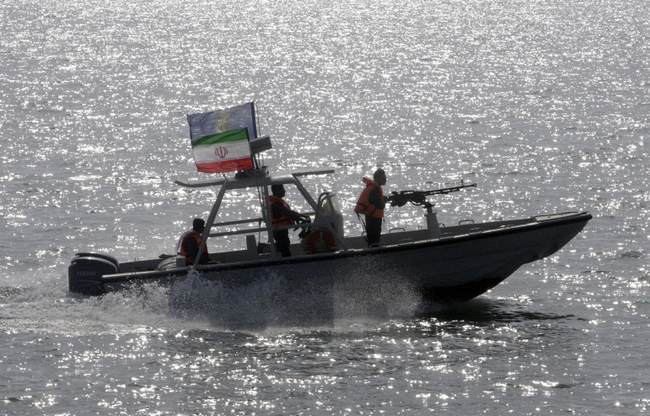
Leavitt also addressed Iran’s claim to have seized international vessels, dismissing those actions as little more than piracy carried out by speedboats and residual elements of a once-formidable navy. From the administration’s vantage point, Iran no longer controls its maritime approaches and the U.S. naval posture is preventing normal oil exports. That economic strangulation, she insisted, is deliberate and central to ongoing policy.
Here’s that conversation:
Martha McCallum: Does the president view that as a violation of the cease-fire?
Karoline Leavitt: No, because these were not U.S. ships. These were not Israeli ships. These were two international vessels, and for the American media who were sort of blowing this out of proportion, and to discredit the president’s facts, that he has completely obliterated Iran’s conventional navy, these two ships were taken by speedy gunboats. Iran has gone from having the most lethal navy in the Middle East to now acting like a bunch of pirates. They don’t have control over the Strait. This is piracy that we are seeing on display, and that the United States has imposed continues to be incredibly effective, and to be clear, the blockade is on ships going to and from Iranian ports. And the point of this is the economic leverage that we maintain over Iran now, while there’s a cease-fire with respect to the military and kinetic strikes, Operation Economic Fury continues, and the crux of that is this naval blockade. We are choking their economy, we are strangling their main source of revenue, they can’t pay their own people, they are losing $500 million every single day, Kharg Island is completely full of oil because they can’t transport it to and from. So, the president, the cards are in his hands, the United States maintains control over this situation, he has all of the leverage, and, again, that’s why he’s maintained a little bit of flexibility with the extension of the cease-fire as we await a unified response from the Iranians to the president’s very clear proposal.
The phrase “Operation Economic Fury” captures the shift: when direct strikes have done their job, squeeze the regime financially and politically. The blockade targeting exports is intended to cut revenue streams and deny the regime cash to prop up its security forces and patronage networks. If the numbers Leavitt cited are accurate, Iran is losing vast sums daily and finding itself unable to move oil off key islands and terminals.
Inside Iran, the regime faces two connected problems: leadership legitimacy and resource depletion. If senior figures are injured or dead and the Revolutionary Guard doubles down on a fight-to-the-end posture, the country could splinter further. That internal fracture is precisely what the U.S. is exploiting, leveraging continued blockade pressure to force concessions without committing to unlimited kinetic escalation.
From a Republican perspective, this approach reads as smart and disciplined: use decisive force to break the enemy’s conventional capability, then apply economic tools to finish the job. It avoids the prolonged occupation model and relies on American strength, alliances, and targeted pressure to achieve strategic goals. The White House frames this as a clear alternative to past administrations that talked a lot and acted little.
That said, the risks are real. Economic pressure can harm civilians and create humanitarian dilemmas that complicate political objectives. The administration says humanitarian concerns matter, but it also insists on strict redlines like surrendering enriched uranium. How the United States balances leverage with moral responsibility will shape whether the pressure campaign collapses the regime or breeds new instability.
For now, the U.S. holds the upper hand in both military posture and economic choke points, and the public messaging emphasizes patience and control. The next moves will depend on whether Iran’s leaders can present a unified response and whether the economic squeeze forces meaningful concessions. Meanwhile, the naval blockade and sanctions remain the visible instruments of that strategy.


Add comment