
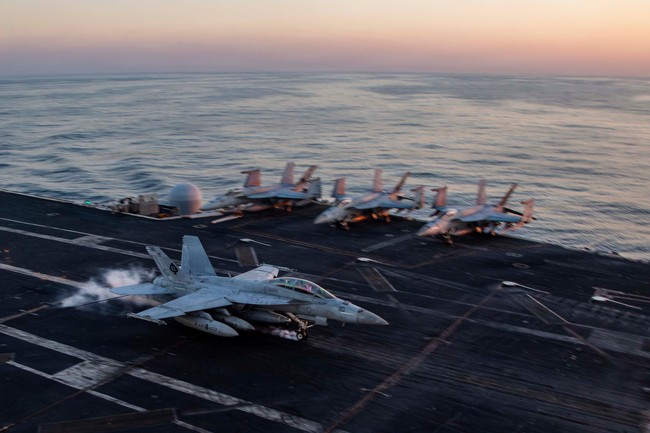
The article reports on coordinated U.S. and Israeli strikes that struck Tehran targets, including Mehrabad Airport, describes dramatic imagery of fires and destroyed aircraft, quotes President Trump’s warning that Iran could face “complete destruction and certain death,” and examines the tactical and strategic implications for the IRGC, regional proxies, and U.S. munitions production.
U.S. and Israeli forces carried out strikes on Tehran-linked military infrastructure and at least one major airport, hitting what commanders identified as a hub used to arm regional proxies. The action followed a public escalation in rhetoric from Washington, and the strikes produced large fires and visible destruction at facilities linked to Iran’s military capabilities. Officials say a number of Iranian military aircraft were destroyed, and imagery shows extensive damage at Mehrabad. The scale of the attack signals a deliberate push to degrade the regime’s ability to project force across the region.
Missiles rained on Iran Saturday after President Trump warned that the nation could face “complete destruction and certain death.”
The US and Israeli strikes centered on Tehran’s regime targets, such as military capabilities, leadership and nuclear program, as well as the sprawling Mehrabad International Airport.
Footage captured a massive fireball and plumes of black smoke billowing from the airport, which housed the headquarters for Iran’s national carrier.
https://x.com/AlArabiya_Eng/status/2030248800023932953?ref_src=twsrc%5Etfw%7Ctwcamp%5Etweetembed%7Ctwterm%5E2030248800023932953%7Ctwgr%5E88f8bcd873a54c0de2e91a78a192e4a8f7701944%7Ctwcon%5Es1_&ref_url=https%3A%2F%2Fftnnews.com%2Ftravel-news%2Faviation%2Fmehrabad-airport-in-flames-as-escalating-iran-israel-conflict-disrupts-regional-air-travel%2F
Israeli statements claim the operation destroyed multiple Iranian military aircraft that the Quds Force had been using to ferry weapons to Hezbollah and other proxies. The IDF described the airport as a central logistics hub for arming and funding those groups. If those assessments hold, the strikes aimed to choke the supply lines Tehran has relied on for years to destabilize neighboring countries. The attacks also appear designed to degrade command-and-control nodes tied to the IRGC and its covert operations abroad.
President Trump emphasized a hard line publicly, saying the United States was “Under serious consideration for complete destruction and certain death, because of Iran’s bad behavior, are areas and groups of people that were not considered for targeting up until this moment in time.” That language signaled a widening of potential target sets and an intent to impose swift, punishing costs. In Washington and allied capitals, the messaging was clear: conventional restraints on targeting are being reevaluated in response to sustained Iranian provocations.
Iran did respond with its own strikes against neighboring states, even as its political leadership issued a limited apology for some actions. The mixed signals suggest fractures or competing chains of command inside Tehran, with political officials perhaps unable to fully rein in military actors. That kind of disarray can create both opportunity and risk: fragmented control complicates de-escalation and raises the chance of miscalculation. At the same time, every drone or missile the IRGC launches is one less they have available, and attrition matters in high-intensity exchanges.
On the operational side, the United States has ramped munitions production and logistics to support sustained operations, a capability that historically has favored Washington in extended fights. Increased sortie rates, combined with allied targeting of logistics and command nodes, can produce disproportionate effects on an adversary’s ability to sustain power projection. Meanwhile, Iran’s inventory and the IRGC’s training are being tested under intense pressure, and shortages will begin to show in the field if strikes continue.
Satellite before-and-after imagery circulated after the strikes, showing cratered facilities and damaged runways at the targeted airport. Those images underscore a simple fact of modern conflict: precise effects can be translated into strategic leverage when logistics and leadership nodes are degraded. The Iranian regime’s ability to move men and materiel to proxies like Hezbollah depends on intact air and ground hubs, and knocking out those nodes reduces Tehran’s reach. The visible scale of damage also serves as a political message to Tehran’s domestic audience and to regional states.
Analysts caution that a regime under sustained pressure can respond in unpredictable ways, and the IRGC’s ideological commitment raises the possibility of protracted resistance. The prospect of a long fight remains real if Iranian hardliners choose to double down rather than negotiate. That risk, however, is balanced by the overwhelming industrial base and logistical depth that the United States and partners bring to bear in a campaign of this type.
For now, the strikes mark a sharper stage in U.S.-Iran confrontation, intended to blunt Tehran’s ability to wage proxy war and constrain its nuclear and missile ambitions. The coming days will show whether the damage imposed is enough to force a change in behavior or whether the conflict escalates further. Military actions of this scale rarely leave regional dynamics unchanged, and the political fallout will be measured in both kinetic and diplomatic arenas.
Public reactions and follow-up strikes will determine whether this operation becomes a turning point or the start of a longer campaign. The United States and Israel appear determined to maintain pressure until Tehran’s strategic capabilities are meaningfully reduced. That approach bets on sustained operational tempo and precise strikes to create leverage, while relying on allied political pressure to shape a post-conflict environment. The situation remains fluid and dangerous, with consequences that will reverberate across the region.


Add comment