
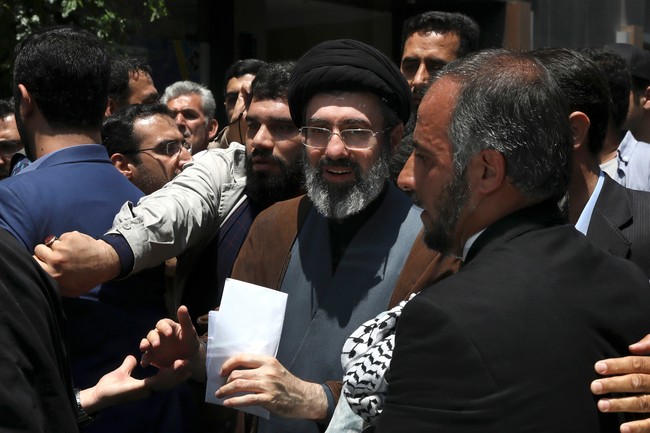
This piece reports on unconfirmed accounts that Mojtaba Khamenei, widely discussed as Iran’s likely successor to Ayatollah Ali Khamenei, was wounded in an Israeli strike, examines what that could mean for Tehran’s leadership and regional stability, and notes American and Israeli pressure on Iran amid ongoing strikes and political reactions.
Reports circulated over the weekend that Mojtaba Khamenei, the son believed to be the favored successor to Ayatollah Ali Khamenei, may have been wounded in an Israeli air attack. Information remains murky and unverified, but the claim has already prompted speculation about succession, security, and the regime’s next moves. From a Republican perspective this development, if true, underscores the necessity of decisive action against regimes that sponsor terrorism and threaten American interests.
Some coverage suggested he may have gone into hiding. “He has likely gone into hiding as both the US and Israel continue to rain missiles on the Islamic Republic.” That line captures the immediate tactical picture: Tehran under sustained pressure by Western-aligned forces, and the regime scrambling to protect key figures. Hardline elements within Iran, including the Revolutionary Guard, reportedly back Mojtaba, but his position is not unchallenged.
“Mojtaba is favored by Tehran’s influential Islamic Revolutionary Guard Corps to succeed his father, but some in the 88-member Assembly of Experts – tasked with choosing the next supreme leader – have reportedly raised issues over passing the torch to the longtime ayatollah’s son.” That internal debate matters because it exposes fractures in a system that presents an image of monolithic control. The Assembly of Experts is the formal mechanism for selecting the next leader, and any dispute there could alter Tehran’s steadiness during a crisis.
“The slain supreme leader’s son has been known for his staunch adherence to his father’s hardline conservatism and anti-Western sentiments that have been a hallmark of the Islamic Republic.” That ideological continuity threatens more of the same Iranian behavior: proxy warfare, support for terrorism, and hostility toward Western allies. For Republicans who prioritize American security, the prospect of another hardline Khamenei at the top is unacceptable and demands firm policy responses.
There was also the quoted claim about a U.S. reaction: “President Trump condemend (sic) Motjaba’s likely appointment as “unacceptable” for the US and vowed that it would not bring an end to the war.” The misspelling and phrasing do not change the substance: U.S. leaders have made clear they view a continuation of that regime’s ideology as incompatible with regional stability. Republican policymakers argue that showing resolve is the clearest deterrent against further aggression from Tehran and its proxies.
The human dimension is unavoidable even while discussing geopolitics. Reports mentioned Mojtaba’s wife and her background, and observers pointed out that family ties in Tehran’s elite often function as power networks rather than genuine political legitimacy. Still, the core issue is not private lives but the policies and influence of the regime, which have long posed direct threats to American interests and to allies like Israel.
If Mojtaba is seriously being considered as successor, the international community will have to weigh how to respond to a possible transfer of power that looks like more of the same. Republicans will likely press for continued pressure, targeting leadership figures and the institutions that back them, to degrade Tehran’s capacity to fund proxies and develop destabilizing capabilities. The goal is practical: protect Americans and allies, deter aggression, and prevent Iran from consolidating new avenues to project power.
Intelligence gaps will slow confirmation, and propaganda efforts from various sides will complicate the public picture. In the meantime, Israeli and U.S. actions have signaled a willingness to strike high-value targets tied to Iran’s network; that posture is intended to create costs for Tehran’s leadership and reduce safe havens. From a conservative standpoint, measured force and clear objectives are necessary to achieve real security gains rather than endless negotiations that leave the threat intact.
For now, once again, the .
Events are still unfolding and claims require verification, but the possibility of a wounded heir apparent in Tehran raises immediate questions about succession, cohesion, and how Western-aligned forces will shape the next chapter. The core concern remains preventing Iran from exporting violence and ensuring the safety of America and its partners.


Add comment