
I’ll explain the personnel change at the White House, name the incoming staff secretary and timeline, summarize the outgoing staffer’s new role, outline what the staff secretary does, and note why this matters for policy flow into the Oval Office.
President Trump has announced a staffing shift in the Oval Office: Will Scharf is moving from White House staff secretary to White House counsel, and Ben Moss will step into the staff secretary role. The transition is set to take effect in early September, with Moss beginning as Assistant to the President and White House Staff Secretary on September 2. This is an internal promotion from deputy to the principal operational post in charge of documents heading to the president.
We first learned that Will Scharf would leave the staff secretary post a few days ago when his new role as White House counsel was made public. Scharf’s move takes him into the administration’s legal leadership just as the president names his successor to manage the daily paper flow and gatekeeping for presidential actions. The announcement underscores the administration’s practice of promoting experienced internal staff into higher responsibilities.
Trump took to his Truth Social account on Thursday with the announcement on who will take his place starting Sept. 2 . “I am pleased to announce that, effective September 2nd, Ben Moss will become Assistant to the President and White House Staff Secretary, replacing our new White House Counsel, Will Scharf,” he said. “Ben has been tremendous as Deputy Staff Secretary and, before that, as Policy Director to the Vice President.”
https://x.com/RapidResponse47/status/2093089103428362639
The president also praised Scharf: “Will did a truly outstanding job as Staff Secretary, and will no doubt be an amazing White House Counsel.” Scharf’s new role as counsel was first announced earlier in August with an effective start date at the beginning of September. The personnel shuffle keeps institutional knowledge at the center of the White House operations while aligning legal and operational functions closely.
Trump provided a concise bio for Ben Moss in his post, noting Moss’s prior roles in government and law. “Ben started in Government as General Counsel to JD Vance in the United States Senate, after serving as a Law Clerk to a Highly Respected Federal Appeals Court Judge, and a lawyer in private practice,” the president wrote. “He was a top student at the University of Chicago Law School, one of the best Law Schools in the Country and, more importantly, he is a Patriot who loves our beautiful Country.”
“He will do a great job as Staff Secretary. Congratulations Ben!” is how the announcement closed, highlighting both Moss’s credentials and the administration’s confidence in his abilities. Moss’s background as Senate counsel and a policy director provides the kind of institutional and policy experience often valued in this gatekeeping role. That mix of legal and policy training is useful when deciding what reaches the president’s desk.
The administration has stressed that the staff secretary role is more than administrative support; it determines what papers, memos, and orders arrive at the Oval Office and in what form. The next paragraph is a direct explanation of that function and is preserved verbatim to reflect the importance of the office:
The Staff Secretary isn’t just an administrative role it is the central nervous system of Oval Office paper flow.
Ben Moss moving up from Deputy Staff Secretary to full Staff Secretary (as Will Scharf transitions to White House Counsel) locks in an operational gatekeeper who controls every memo, executive order, action paper, and briefing doc that reaches the President’s desk. Given Moss’s background as JD Vance’s former domestic policy director and Senate counsel, his elevation signals a tight institutional alignment between the Vice President’s policy pipeline and the Oval Office’s final sign-off mechanics.
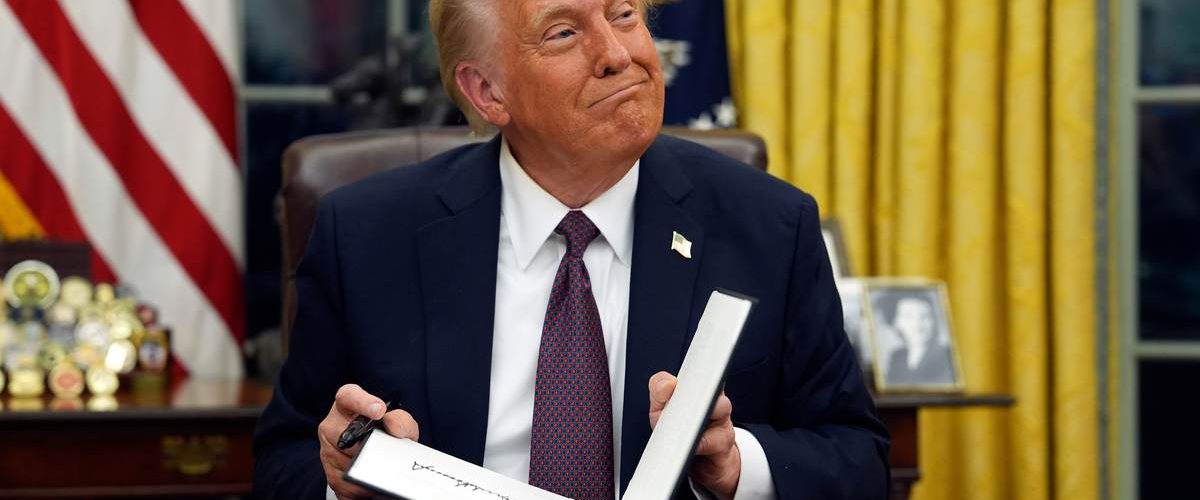
Readers may have already seen Moss operating in his deputy capacity at recent public events, including the Oval Office signing for a presidential order that drew attention. His presence there as deputy helped familiarize staff and observers with the person who will now manage the flow of critical documents. That practical familiarity reduces friction as he steps into a role that demands immediate oversight of daily White House workflow.
Operationally, the staff secretary’s control over briefing materials and executive paperwork means that Moss will play a pivotal role in how items are prioritized and presented to the president. For anyone watching White House staffing, that makes this promotion a consequential one, since a staff secretary shapes the information and timing the president receives. Expect continuity in day-to-day operations alongside whatever policy priorities the administration advances in the months ahead.



Add comment