
President Donald Trump traveled to Dover Air Force Base to oversee the dignified transfer of six U.S. Army Reservists killed in a March 1 drone strike, joining families, cabinet members, and military leaders in a solemn ceremony that underscored the cost of the conflict and the administration’s commitment to honoring the fallen.
The arrival at Dover was deliberately orderly and respectful, with Air Force One touching down in the early afternoon and the president moving straight to the Charles C. Carson Center for Mortuary Affairs. He was accompanied by Secretary of War Pete Hegseth and a delegation from the White House and the War Department, reflecting the gravity of the moment. The gathering focused on ceremony and support for grieving relatives.
Present at the transfer were top officials and family members standing together to acknowledge sacrifice and service. Those in attendance included First Lady Melania Trump, Vice President JD Vance, Second Lady Usha Vance, Attorney General Pam Bondi, Chief of Staff Susie Wiles, Director of National Intelligence Tulsi Gabbard, Chairman of the Joint Chiefs General Dan Caine, Special Envoy Steve Witkoff, and Secretary of the Army Dan Driscoll. Their presence signaled national attention and respect for the unit and the families.
The six service members honored were Sgt. 1st Class Nicole Amor, Capt. Cody Khork, Chief Warrant Officer 3 Robert Marzan, Maj. Jeffrey O’Brien, Sgt. 1st Class Noah Tietjens, and Sgt. Declan Coady. All were Army Reservists assigned to the 103rd Sustainment Command based in Des Moines, Iowa, a unit that provides critical logistics like food, fuel, water, ammunition, and transport in theater. Their deaths came after a coordinated drone strike on a command center in Kuwait.
Families and military leaders gathered on the tarmac as each transfer occurred, following long-established protocols that ensure dignity and privacy. The Charles C. Carson Center has managed these transfers since 1955, coordinating military mortuary affairs to bring service members back to U.S. soil. The ceremony itself is ceremonial and restrained by design, built to give families a measure of closure while maintaining military tradition.
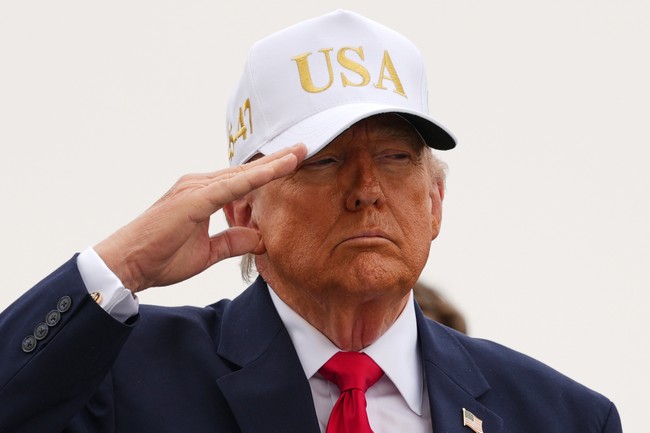
At the ceremony, President Trump stood in full view of the transport aircraft and led a salute alongside Vice President Vance, SecWar Hegseth, Chairman of the Joint Chiefs General Caine, and Secretary of the Army Driscoll. He wore a white Commander-in-Chief USA baseball cap and moved through the ceremony with visible solemnity. The procession emphasized the administration’s duty to honor service and to ensure fallen troops are treated with the utmost respect.
Support for the fallen extended beyond the tarmac. Local base personnel, chaplains, and military staff coordinated with the families to manage the logistics and to provide private space for mourning. The 103rd Sustainment Command’s role in theater made these losses particularly felt across the logistics and support community. Commanders and colleagues were on site to share memories, salute, and stand with the families.
A public statement echoed the nation’s grief while listing the names of the fallen and invoking faith for comfort. “Today, we honor six American heroes who made the ultimate sacrifice in service to our nation.” Capt. Cody Khork Sgt. 1st Class Noah Tietjens Sgt. 1st Class Nicole Amor Sgt. Declan Coady Maj. Jeffrey O’Brien Chief Warrant Officer 3 Robert Marzan May God hold them in His eternal embrace and comfort their grieving families, and may God forever bless the United States of America.
Earlier the same day, at a summit in Florida, President Trump referenced his plans to attend the Dover ceremony and framed it as a solemn duty. He spoke plainly about the sadness of the situation and the need to support the families of those killed. His remarks linked the public duties of leadership with private acts of compassion toward bereaved loved ones.
I’ll be going, right after this, I’ll be leaving for Dover, very sad situation, to greet the families of the heroes coming home from Iran. Coming home in a different manner than they thought they’d be coming home. But they’re great heroes in our country, and we’re going to keep it that way. Always, when it comes to war, there’s always that, but we’re going to keep it to a minimum.
As the dignified transfer concluded, the president and other officials left the tarmac and the routine of military coordination resumed. Air Force Mortuary Affairs Operations will continue to manage the next steps, ensuring each family receives the notifications and arrangements required. The ceremony at Dover remains one of the few public moments when the nation collectively acknowledges the human cost of conflict.
The events at Dover reaffirmed a key message: leaders must balance national security actions with solemn care for service members and their families. For the families who lost loved ones, the ritualized transfer is one step in a long process of mourning and remembrance. On the tarmac, amid uniforms and flags, the country witnessed both sacrifice and the formal gratitude owed to those who serve.
Add comment