
President Trump has forced Venezuela into a corner by leveraging control over sanctioned oil shipments, pressuring Caracas to cut ties with hostile actors and partner exclusively with the United States, while U.S. forces have seized sanction-violating tankers to reinforce that leverage.
This is a decisive, noninvasive squeeze that aims to convert Venezuelan oil reserves into an economic and diplomatic tool rather than a military campaign. The plan reportedly offers Venezuela the chance to turn over 30 to 50 million barrels of sanctioned oil for the benefit of the U.S. and the Venezuelan people, a windfall worth over a billion dollars if executed. Republicans who favor firm, strategic pressure see this as a smart way to undercut malign influence from China, Russia, Iran, and Cuba without putting American boots on the ground.
Officials briefed on the matter say the administration has been explicit with Caracas: meet specific conditions before you resume commercial pumping at scale. That list includes cutting out foreign partners that have propped up the regime, and funneling oil cooperation toward the United States. This approach leverages economic vulnerability rather than immediate military force, which is an important distinction for policymakers and voters concerned about escalation.
“The Trump administration has told Venezuela’s interim president Delcy Rodriguez that the regime must meet the White House’s demands before being allowed to pump more oil, according to three people familiar with the administration’s plan.
First, the country must kick out China, Russia, Iran, and Cuba and sever economic ties, the sources said. Second, Venezuela must agree to partner exclusively with the U.S. on oil production and favor America when selling heavy crude oil, they added.
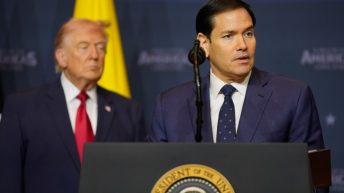
According to one person, Secretary of State Marco Rubio told lawmakers in a private briefing on Monday that he believes the U.S. can force Venezuela’s hand because its existing oil tankers are full. Rubio also told lawmakers that the U.S. estimates that Caracas has only a couple of weeks before it will become financially insolvent without the sale of its oil reserves.
Sen. Roger Wicker captured the tactical edge neatly, emphasizing control over ships and tankers rather than a ground invasion. “The government does intend to control the oil, taking charge of the ships, the tankers, and none of them are going to go to Havana,” he said, stressing that the full tanks mean Caracas has limited time to respond. That time pressure is the leverage the administration is banking on, and it aligns with a conservative preference for decisive, limited-action solutions that maximize pressure while minimizing U.S. risk.
“The government does intend to control the oil, taking charge of the ships, the tankers, and none of them are going to go to Havana,” Wicker said. “And until they start moving — we hope to the open market — there are no more tankers to fill, because they’re totally full.”
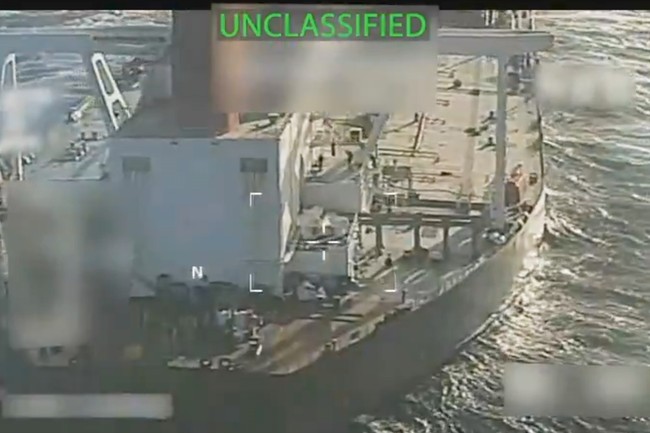
To back up the policy, U.S. forces have already taken direct action against vessels violating sanctions, seizing ships tied to illicit shipments. Two tankers, the Bella 1 and the Sophia, were intercepted after being flagged for sanctions concerns, including alleged smuggling ties to entities linked with Hezbollah. Those seizures demonstrate the administration is prepared to enforce financial and maritime rules to cut off lifelines feeding the regime and its backers.
The operation around Bella 1 reportedly involved an attempted reflagging and outside players trying to intervene, but U.S. forces acted on a warrant and moved quickly. Reports indicate the Bella 1 had been sanctioned for alleged smuggling related to a company tied to Lebanese militant networks and that it resisted an attempted boarding before being diverted. The result was a legal seizure that underscores how sanctions enforcement can be paired with naval and law enforcement coordination to choke off illicit trade.
The second seized vessel, the Sophia, was also described as either last docked in Venezuela or en route there, reinforcing the picture that ships tied to sanctioned networks were attempting to move oil in ways that violated U.S. policy. Secretary of Homeland Security Kristi Noem noted both vessels’ links to Venezuelan ports and commended the personnel who executed the seizures. Taken together, the moves show a layered strategy: diplomatic pressure, economic leverage, and enforcement action all aligned to force a change in Caracas’s behavior.
From a Republican perspective, this approach checks several boxes: it protects American energy interests, punishes cooperation with hostile regimes, and uses targeted, enforceable actions instead of open-ended wars. It also offers a pathway for Venezuelan citizens to see tangible benefits if their government chooses to turn away from malign partners and toward legitimate commerce. This kind of pressure campaign, backed by real-world enforcement, is exactly the kind of assertive, principled policy many conservatives support when confronting adversaries and their proxies.


Add comment