
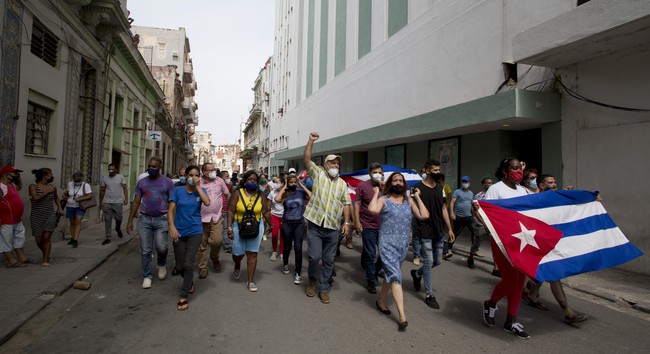
President Trump has declared a national emergency over Cuba and ordered a tariff system targeting countries that supply oil to the island, signalling a tougher posture aimed at choking off the regime’s energy lifeline. The move follows Maduro’s ouster from Venezuela and reflects a broader strategy of pressuring hostile actors tied to Cuba. This article lays out what the order does, why the administration says it’s necessary, and what Cuba faces as its already limited domestic resources are squeezed. Expect diplomatic friction, potential economic hardship on the island, and a clearer message to countries still supplying oil to Havana.
On Thursday, the White House announced a fresh set of measures targeting communist Cuba. Cuba has lost a major source of oil now that Nicolás Maduro is no longer in place, and President Trump is turning the . The new actions are meant to cut off the supplies keeping the regime afloat and to force other governments to choose between business with Cuba and relations with the United States.
The administration released a fact sheet describing the president’s actions and the tools now at Washington’s disposal. The order creates a tariff mechanism to penalize countries that directly or indirectly provide oil to Cuba, and it empowers cabinet officials to put the plan into effect. It also leaves room to adjust or lift measures if affected nations take significant steps to align with U.S. security and foreign policy goals.
Today, President Donald J. Trump signed an Executive Order declaring a national emergency and establishing a process to impose tariffs on goods from countries that sell or otherwise provide oil to Cuba, protecting U.S. national security and foreign policy from the Cuban regime’s malign actions and policies.
- The Order imposes a new tariff system that allows the United States to impose additional tariffs on imports from any country that directly or indirectly provides oil to Cuba.
- The Order authorizes the Secretary of State and Secretary of Commerce to take all necessary actions, including issuing rules and guidance, to implement the tariff system and related measures.
- The President may modify the Order if Cuba or affected countries take significant steps to address the threat or align with U.S. national security and foreign policy objectives.
Put simply, the policy’s core objective is to cut off oil to Cuba. Without affordable imported fuel, the island’s fragile economy and logistics networks strain badly, from power generation to transport and basic services. The administration frames the move as defending national security by targeting Cuba’s networks and partners rather than an attack on the Cuban people themselves.
Cuba’s own proven oil reserves are small—about 124 million barrels—which represents a sliver of global reserves. That domestic supply does not come close to meeting the island’s needs, and Cuba has long depended on imports to run its economy. With Washington threatening tariffs on suppliers, Havana faces a stark choice: find new, covert supply lines, accept severe shortages, or change behavior to avoid isolation.
The order also calls out Cuba’s ties to adversarial powers and hostile groups, pointing to intelligence and defense cooperation that worry U.S. officials. The administration alleges that Cuba hosts foreign intelligence facilities and has deepened military and intelligence exchange with rivals. Those claims form part of the rationale for treating Cuba as a national security threat worthy of emergency measures.
In the order, Trump said Cuba aligns itself with and provides support for “numerous hostile countries, transnational terrorist groups, and malign actors adverse to the United States,” naming Russia, China, Iran, Hamas and Hezbollah.
The administration said Cuba hosts Russia’s largest overseas signals intelligence facility, which the order states attempts to steal sensitive U.S. national security information. The order also says Cuba continues to deepen intelligence and defense cooperation with China.
According to the order, Cuba “welcomes transnational terrorist groups, such as Hezbollah and Hamas.”
Cuba was once a popular retreat for American travelers and the backdrop for figures like Ernest Hemingway, but decades of authoritarian rule have hollowed out living standards. The island’s vintage cars and patched infrastructure are often cited as visible signs of economic decline, while state institutions have failed to deliver on basic prosperity for most citizens. The regime’s endurance has come at the cost of personal freedom and economic dynamism.
People continue to take desperate risks to leave the island, building makeshift rafts or seeking irregular routes to reach Florida. That exodus is a practical indicator of how badly many Cubans view life under the current government. It also shapes U.S. public opinion and policy choices: steps that squeeze the regime’s lifelines get public sympathy because they aim to weaken authoritarian control, not to punish ordinary people.
How effective the new order will be depends on how tightly the United States can persuade or coerce suppliers to stop. Communist regimes can sometimes survive severe pressure, but recent developments in the region have shown that when crucial external support evaporates, governments face real vulnerability. Cuba’s leaders will now have hard decisions to make about whether to change course or double down and face further isolation.
Thanks to President Trump and his administration’s bold leadership, we are respected on the world stage, and our enemies are being put on notice.

Add comment