
I’ll recap the White House Medal of Honor ceremony, profile Maj. James Capers Jr.’s valor in Vietnam, note the other recipients and the actions honored, and highlight the role of President Trump in finally delivering long-overdue recognition.
Nearly six decades after a grueling Vietnam patrol in which he refused evacuation until every teammate was safe, Maj. James Capers Jr. received the Medal of Honor at the White House. The ceremony recognized Capers’ extraordinary leadership and sacrifice after he dragged himself through the jungle with broken legs and shrapnel wounds. His refusal to leave his men behind became the defining act that eventually earned the nation’s highest military decoration.
The White House ceremony also honored two other warriors for actions that demonstrated extreme courage under fire. Retired Army Maj. Nicholas Dockery was recognized for his actions in Afghanistan, and Marine Corps Col. John W. Ripley received a posthumous award for heroism in Vietnam. The event underscored the long memory of military service and the importance of ensuring valor is acknowledged, even if recognition is delayed.
Capers was a second lieutenant with 3rd Force Reconnaissance Company, 3rd Reconnaissance Battalion, when his nine-man Team Broadminded set out on a four-day patrol from March 31 through April 3, 1967. Their mission was straightforward and dangerous: locate a North Vietnamese regimental base camp deep in hostile terrain. They ran into the enemy and were hit by an ambush that inflicted severe casualties and left Capers gravely wounded.
https://x.com/USArmy/status/2067621326987170122
Despite broken legs and massive blood loss, Capers never stopped directing his men and calling for supporting fires. He moved the battered patrol toward an extraction point, prioritizing the safety of his team over his own survival. He refused evacuation until every member of his patrol was aboard, insisting that the body of the unit’s military working dog also be taken on board.
When the overloaded helicopter struggled to lift, Capers repeatedly tried to disembark so the aircraft could safely fly the rest of his men to safety. He saved seven fellow Marines and continued to serve as a leader even while near death. The depth of his commitment is a vivid example of the Marine creed and an illustration of selfless leadership in combat.
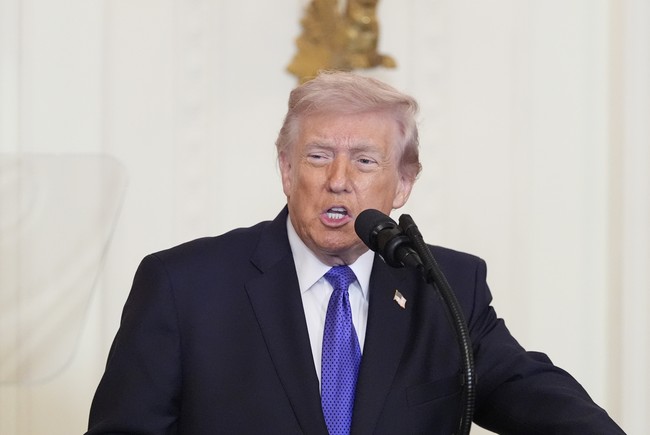
At the White House, President Trump noted that Capers had been recommended for the Medal of Honor back in 1967, but the paperwork was never completed because his commanding officer, his staunchest advocate, was killed in action before the award could be processed. That delay left a wound in official recognition that this ceremony finally addressed. For conservatives who value honoring service promptly and completely, the moment represented a corrective to decades of bureaucratic neglect.
Maj. Nicholas Dockery earned his Medal of Honor for a sustained defensive action on Oct. 2, 2012, in Kapisa Province, Afghanistan, one of the conflict’s most dangerous areas. Ambushed by a well-armed Taliban force using machine guns and rocket-propelled grenades, his platoon faced a brutal, prolonged firefight. Dockery repeatedly exposed himself to enemy fire to reach trapped soldiers, administer lifesaving care, and extract wounded teammates to safety.
The official account of Dockery’s actions highlights his leadership across four hours of intense combat in confined urban terrain. He repeatedly risked his life to protect others, directed air assets under fire, and helped evacuate wounded soldiers from exposed positions. Lawmakers later ensured his deeds received legislative support to move the award forward, reflecting the conviction of those who served with him.
The Medal of Honor remains the nation’s highest military decoration, reserved for actions that go above and beyond the call of duty at the risk of one’s life. Awarding it corrects the historical record and sends a clear signal about what our country values in its warriors. Recognitions like these matter to veterans, families, and the broader public because they honor the very best examples of sacrifice and leadership.
Capers, born in 1937 on a South Carolina cotton farm, enlisted in the Marines at 18 and rose to make history as the first African American to lead a Marine reconnaissance company and to receive a battlefield commission in that role. He had previously been awarded the Silver Star and received public honors for his long service. His story connects humble beginnings to exceptional service, and the Medal of Honor ceremony finally placed his actions on the record.
President Trump delivered the award with emphasis on the long wait and the righteousness of finally acknowledging Capers’ sacrifice. The public moment was not only about a single man but about a promise kept by the nation to its defenders. For many watching, the ceremony served as a reminder that honoring courage is both a moral duty and a national priority.
🔥 EPIC! PRESIDENT TRUMP just dropped this message for legendary Marine James Capers Jr. at the Medal of Honor ceremony — and a STANDING OVATION erupted across the entire room He deserves it! “The nation kept you waiting FAR TOO LONG! So I say to you, congratulations. You MADE IT!” 🇺🇸
The awards presented at the White House acknowledged decades of bravery across multiple conflicts and reaffirmed the importance of formally recognizing those who risk everything for their comrades. These ceremonies restore honor where it has been delayed and confirm that service and sacrifice remain central to the nation’s identity. That message resonates with veterans, families, and citizens who expect their country to remember and reward true heroism.

Add comment