
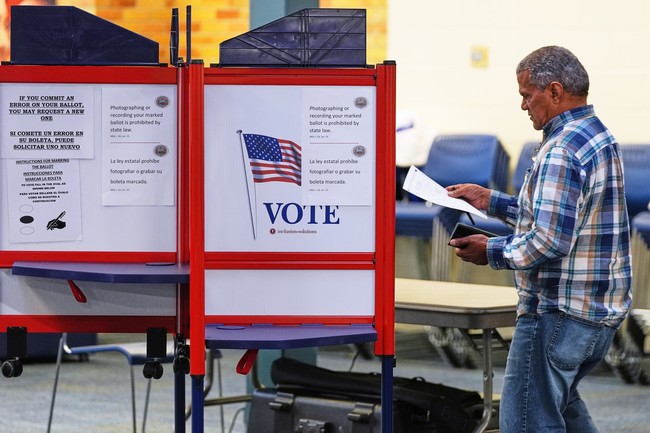
The New Jersey episode over thousands of non-citizens on voter rolls has exposed a breakdown between a vendor and state election officials, raised fresh doubts about automatic registration systems, and pushed scrutiny onto California where the same contractor has a major DMV contract.
New Jersey officials acknowledged more than 6,600 non-citizens were listed on voter rolls, and reports say nearly 400 cast ballots in a one-year span. The governor blamed a vendor, while the vendor insists its role was limited to transmitting data and that state election staff were responsible for verification. This public tug of war has plenty of political heat and policy consequences for other states using automatic registration tied to DMV systems.
The governor framed the problem as a technology failure inherited from the prior administration and singled out IDEMIA, the firm that provides the motor vehicle and registration systems. Officials say the issue existed for years before it was corrected and that the state is moving away from the vendor’s software. The political fallout is predictable: critics demand accountability, and elected leaders trade accusations about who should have caught the problem sooner.
From the company’s perspective, systems pass information to the Division of Elections, and those officials must adjudicate eligibility. The firm emphasized that it transmits data through motor vehicle channels but does not make final determinations about who is eligible to vote. That distinction matters because it shifts the burden of verification back to state election administrators, who are supposed to check citizenship status before approving registrations.
https://x.com/RNCResearch/status/2079619905880519082
“IDEMIA’s role is to transmit information through the motor vehicle system. The voter registration information is transmitted to the New Jersey Department of State, Division of Elections, which is ultimately responsible for verifying eligibility to vote,” the company said in a statement. “Information submitted by IDEMIA must still be validated and adjudicated by the Division of Elections.”
Conservative commentators and Republican officials point out that the records show thousands of applicants self-identified as non-citizens yet were still approved to register. Those approvals appear to have been made by human reviewers in the Division of Elections rather than being automatic errors caused solely by the vendor’s software. That raises troubling questions about process, oversight, and the standards used by election officials when adjudicating registrations.
Sherrill publicly called the situation unacceptable and pointed fingers both at the prior administration and at the vendor for releasing flawed software. Her statement said a preliminary review implicated the software, while others have highlighted the Division of Elections’ responsibility to validate each submission. Both lines of critique feed into Republicans’ broader argument that weak verification and lax procedures invite errors that erode confidence in election integrity.
The controversy did not stay confined to New Jersey. The same vendor has a long-term contract to modernize California’s DMV operations, including issuing driver licenses and identification cards. That contract extends for more than a decade, and the prospect that similar data flows could affect California’s voter rolls has prompted fresh scrutiny and unease among those who favor tighter checks on registration data.
Federal scrutiny has also intensified, with the Department of Homeland Security and the Trump administration raising concerns about potential non-citizen registrations in multiple states. Officials have suggested that some states may need to adopt stronger verification procedures to qualify for federal funding tied to election security improvements. That leverage is now squarely in play as lawmakers debate stricter standards for registration systems.
Homeland Security leaders have signaled they will condition grants on implementing mandated security enhancements tied to the SAVE America Act and similar measures. That approach reflects a Republican preference for federal incentives to force states to tighten identification and verification. Supporters argue that without mandatory improvements, vulnerabilities in registration systems will persist and provide fodder for partisan attacks on election legitimacy.
Democrats have downplayed the scale of the problem, calling non-citizen voting rare and emphasizing work done by election officials to maintain accurate rolls. Still, the episode gives Republicans ammunition to press for concrete reforms: mandatory ID checks, clearer accountability when third-party systems feed registration databases, and faster corrective action when issues surface. Those policy battles are now likely to intensify in statehouses and in Congress.
Public confidence depends on clear responsibilities, consistent verification, and timely transparency when irregularities arise. This scandal highlights how gaps between vendors and election authorities can create confusion about who is responsible for keeping ineligible people off the rolls. The debate now moves beyond blame to policy choices about how to prevent a repeat in other states that rely on automatic registration tied to motor vehicle systems.



Add comment