
This article explains how President Trump responded to media reports about a so-called “decoy” plane used during his July trip to Turkey, placing the controversy in the context of security decisions made by the Secret Service and the military, and it reproduces his exact remarks and the wider description of events as they were reported.
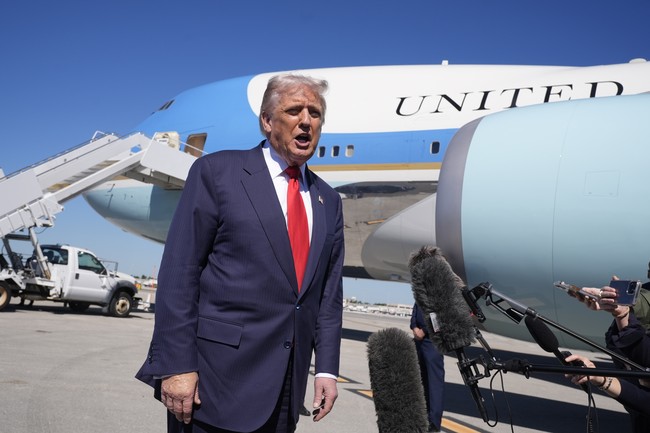
President Trump answered questions on the Joint Base Andrews tarmac after returning from Geneva, Ohio, where he attended the Patriot Games finals. Reporters pressed him about a story that said he left the usual Air Force One aircraft in Turkey and boarded a smaller, different plane because of a credible assassination threat. The episode sparked a media uproar focused on whether press pool members were put at undue risk when they remained on the original aircraft.
The basic facts are straightforward: while preparing to depart Turkey on July 8, Trump was moved off the primary Air Force One and onto a separate military aircraft after security officials raised a threat assessment. Members of the press pool and some staff who had been on the primary plane continued on that aircraft, which some outlets described as a decoy. That description set off a wave of hand-wringing in political coverage about reporters’ safety and demands for answers from the White House.
Beyond the theatrics, the president pushed back on the narrative that the move was a needless risk to journalists. He said he followed the guidance of career protectors who do threat assessments for a living. Trump emphasized that decisions like this were coordinated with the Secret Service and military, and that he defers to their judgment in high-risk moments.
When a reporter asked why the primary plane was considered too dangerous for the president but not for the press, Trump answered with a straightforward point most people miss: the aircraft he left may have been the more logical target. That flips the simplistic decoy argument on its head by pointing out the obvious operational reality of who a potential attacker would try to strike.
TRUMP: “Well, I go by Secret Service. I go by the military. They said, ‘Sir, we’d like you to do this.’ I said, ‘Whatever you want.’”
REPORTER: “Why was it too dangerous for you to fly on Air Force One, but not too dangerous for the press?”
TRUMP: “Well, I think actually the plane that I flew on was at greater risk. I think it was at greater risk because that would be the plane, I think, that they would be more likely to go for it.”
Press questions continued, including a direct query about the possibility of a shoulder-fired missile. The president reiterated his trust in the professionals charged with his protection and downplayed personal fear. Those short exchanges show how security choices are presented to the public: not as showmanship but as the product of assessments and trade-offs.
REPORTER: “Were you worried about a shoulder-fired missile?”
TRUMP: “No. I wasn’t worried about anything. I just do what they tell me. They’re very good. Secret Service is very good, and the military is very good.”
Here’s the video of him making the comments:
President Trump just gave his first public explanation for the unusual Air Force One switch during his trip to Turkey last month.
https://x.com/overton_news/status/2087353123341734250
Trump said the decision was made by the Secret Service and the military, and that he simply followed their instructions.
The reported circumstances were like something out of a spy-thriller novel.
Trump secretly boarded a third, smaller U.S. military aircraft, with an airport catering truck reportedly being used as cover while an older Air Force One remained as a decoy.
The move came as the administration was dealing with what was described as a credible threat from Iran.
Trump was asked about the decision and made clear that the choice of aircraft wasn’t his.
TRUMP: “That’s up to Secret Service. I just follow what they’d like to do.”
“So I go by Secret Service and the military. They wanted me to go in a different flight, a different plane, equal safety, but they wanted me to do it. So I do it. I do what they say…”
“I think actually the plane that I flew on was at greater risk. I think it was at greater risk because that would be the plane, I think that they would be more likely to go for it.”
REPORTER: “We’re you worried about a shoulder-fired missile?”
“Uh, I don’t worry about anything to be honest. Whatever it is. You know my attitude? Whatever!”
It’s important to note the nature of the aircraft the press described as a decoy: the primary Air Force One is a heavily modified platform full of secure communications and defensive systems meant to keep a president functioning under attack. Calling it a simple decoy misses why such aircraft exist and how layered presidential security is designed to work under threat.
Media coverage leaned into the drama, framing the episode as a scandal about who knew what and who was endangered. But the key point, as the president said, is that the decision was not his alone. It was the result of security authorities weighing risks and making a call that prioritized the president’s survivability while accepting certain operational compromises for others on the ground.
The tarmac exchange underscores a recurring friction: reporters demand transparency while security teams must limit disclosures to protect lives. That tension will resurface whenever credible threats appear, and how outlets cover those moments can shape public perception of both leadership and the professionals who keep leaders safe.
Home-based job that pays more than 12,000 Dollar per month by doing simple tasks on a laptop or mobile device part-time. Last month, I earned 24,863 Dollar from this job by working 4 hours per day online. Very simple jobs to do, and the earnings are insane. Everyone can now make more money online by joining the website listed below…..
𝒋𝒖𝒔𝒕 𝒖𝒔𝒊𝒏𝒈 𝒕𝒉𝒊𝒔 𝒔𝒊𝒕𝒆.. Www.PayAtHome1.Com