
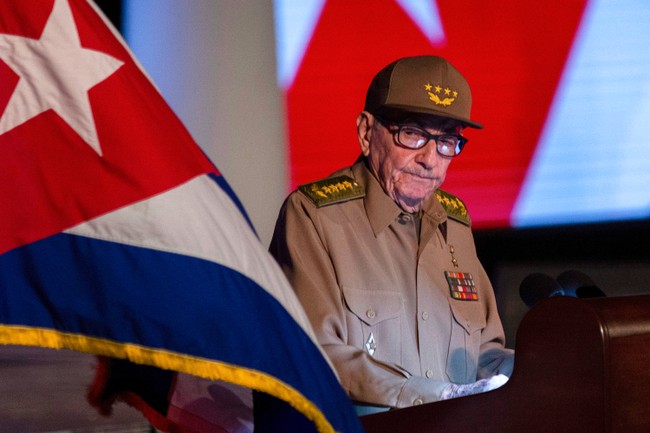
This article reviews the latest U.S. sanctions announced by Secretary of State Marco Rubio that target Cuban economic actors tied to the Castro regime, describes how GAESA functions as the financial engine for the government, names a Castro family member now designated, and explains why these measures matter for weakening the island’s ruling apparatus and opening the door for a freer, more prosperous Cuba.
The United States has moved to tighten economic pressure on the Cuban regime through fresh sanctions aimed at entities that feed the government’s purse. Secretary of State Marco Rubio announced designations that reach into the structures that keep the current system afloat. These actions are part of a broader strategy to choke off revenue streams used to fund repression and maintain regime control.
At the center of the designations is Grupo de Administración Empresarial S.A., widely known as GAESA, which operates like the regime’s corporate heart. GAESA oversees a wide range of businesses, from logistics to finance, and it funnels profits into state coffers and security operations. Targeting GAESA is not symbolic; it goes after the mechanism that turns commerce into political power for the castro-led government.
Rubio designated five entities generating revenue for the current Cuban regime, including three associated with the previously designated Grupo de Administración Empresarial S.A. (GAESA), and one member of the extended Castro family.
“Today, I am designating five Cuban entities generating revenue for the Cuban regime, including three associated with the previously designated Grupo de Administración Empresarial S.A. (GAESA), and one member of the extended Castro family pursuant to President Trump’s Executive Order (E.O.) 14404 of May 1, 2026, “Imposing Sanctions on Those Responsible for Repression in Cuba and for Threats to United States National Security and Foreign Policy,” Rubio said in a statement.
“GAESA continues to operate as the financial muscle behind the Cuban regime’s repressive security apparatus. Two of the entities designated today are GAESA-linked financial institutions associated with moving money on the regime’s behalf, and one is a GAESA-linked logistics company that executes the regime’s bidding across the island,” Rubio continued.
The designations also singled out people connected to the regime, including a member of the Castro family. Naming individuals matters because personal financial pressure can deter behavior and complicate networks that protect dictatorship insiders. Sanctions focused on people close to the leadership can isolate those who enable repression and reduce their ability to move and hide assets.
The economic context matters: Cuba’s traditional backers and revenue sources have weakened, leaving the regime more exposed. Venezuela’s ability to supply fuel and cash has been inconsistent, and Russia is not the Soviet Union with limitless assistance. That means strategic U.S. pressure can have an outsized effect if it disrupts the remaining flows that keep the security apparatus alive.
“I am also designating two additional entities generating revenue for Cuba through the exploitation of the island’s mineral and metal reserves, including Cuba’s state-owned GeoMinera. Finally, I am designating the wife of Alejandro Castro Espín, who himself was previously designated pursuant to E.O. 14404. These entities and actors fund, facilitate, or benefit from the regime’s malign activities, both in Cuba and across our hemisphere,” Rubio’s statement concluded.
Cutting off revenue from mineral and metal extraction strikes at long-term wealth extraction that the state relies on. When state-owned enterprises like GeoMinera are constrained, it influences how the regime finances projects and security forces. These designations are carefully targeted to hit revenue sources while aiming to avoid broad civilian harm.
From a Republican perspective, using economic tools and sanctions is an effective, measured way to pressure authoritarian regimes without deploying U.S. troops. Policy should squeeze the regime’s ability to oppress while leaving pathways open for the Cuban people to benefit from a post-regime transition. Holding the line on accountability also signals to other bad actors that support for repression carries consequences.
The timing is significant: the current Cuban leadership is under strain from internal shortages and international isolation, and this is an opportunity to heighten pressure while diplomatic leverage exists. If GAESA and similar entities face sustained disruption, the regime will have fewer resources to fund security operations that suppress dissent. That could shift incentives inside the country and among regime backers.
Secretary Rubio’s Cuban heritage and political background add a personal dimension to the policy, emphasizing both practical leverage and moral clarity. The United States is signaling a preference for freedom and prosperity over repression, and these measures aim to make that preference consequential in real economic terms. Weakening the regime’s financial backbone increases the odds that a freer, more open Cuba could emerge.
Editor’s Note: Thanks to President Trump and his administration’s bold leadership, we are respected on the world stage, and our enemies are being put on notice.


Add comment