
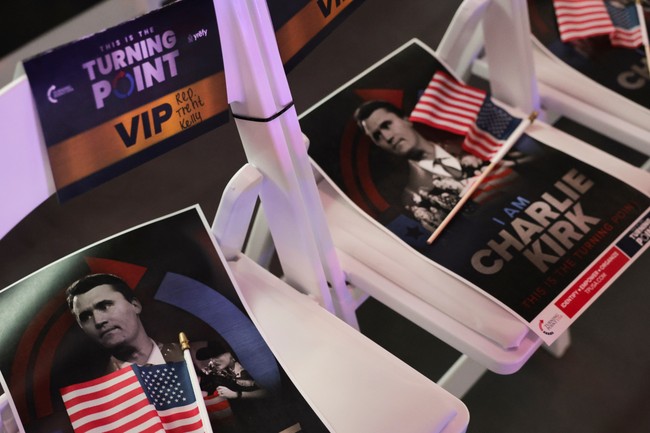
After Charlie Kirk’s assassination, a new NBC News poll shows a sizable number of Democrats now acknowledge that “extreme political rhetoric used by some in the media and by political leaders was an important contributor.” This piece breaks down the poll findings, looks at generational drivers of political violence, examines how the left responds, and considers what this means heading into the 2026 midterms.
News of the killing of Turning Point USA co-founder Charlie Kirk shocked the country and sparked intense debate about the role of rhetoric in political violence. The NBC News poll of 1,000 registered U.S. voters, conducted from October 24 to 28 with a margin of error of 3.1 percentage points, finds 54 percent of Democrats saying extreme rhetoric was an important contributor. That same poll shows 73 percent of Republicans and 53 percent of independent voters agreeing, while 28 percent view the act as primarily the work of a disturbed person and just four percent attribute it equally to both factors.
These numbers are a stark reminder that many on the left are being forced to reckon, at least partially, with the consequences of heated, dehumanizing language that has become routine in parts of the mainstream. For years conservative voices warned that a culture of demonization makes political opponents targets rather than fellow citizens. Now some Democrats appear willing to admit the rhetoric matters, even if that admission is partial and uneven.
Polling in recent weeks also highlighted a troubling trend among younger Americans: a rising tolerance for political violence under certain conditions. Earlier surveys found one in three people under 45 saying there are circumstances where political violence is acceptable, and nearly a quarter of the broader public indicating some justification for violent action in specific situations. Those figures are alarming because they suggest a generational shift in norms around civility and the use of force in politics.
One big reason for that shift is the educational environment many young people move through. From early grades through college, curricula and campus culture often push ideological conformity rather than teaching students how to weigh competing arguments. When someone has only been exposed to one acceptable political narrative, encountering an opposing view can feel like a personal attack and provoke extreme responses rather than reasoned debate.
At the same time, leadership matters. Too many prominent voices on the left offer moralizing statements after violent incidents, then quickly pivot to talk about violence “on both sides” as if that evens things out. That kind of whataboutism dilutes accountability and leaves ordinary voters unclear about who is responsible for escalating tensions. Republican lawmakers, including Sen. Eric Schmitt, have publicly called out this double standard and pushed for clearer condemnations of left-wing violence.
There is also an institutional incentive for parts of the Democrat coalition to sustain heated rhetoric. Mobilizing a far-left base ahead of a difficult election cycle creates pressure to keep emotions high rather than tamp them down. That short-term tactic may win rallies but it also increases the risk of real-world harm and fuels public anxiety about safety and stability in political life.
Voters are taking note. The Public First poll reported that a majority expect political violence to increase, and a worrying share fear a political assassination could occur in the next five years. Those fears are not abstract. When voters believe the political arena has crossed a line into physical danger, they change how they engage at the ballot box and in civic life, often retreating or doubling down in defensive ways.
For conservatives, the moment is one to insist on responsibility and clarity. Pointing out ideological indoctrination in schools and calling out inconsistent condemnations of violence are not attacks on free speech. They are defenses of civic order and the basic right to disagree without fear of physical harm. If the left wants to reduce the risk of more tragedies, leaders there must stop equivocating and stop celebrating rhetoric that dehumanizes opponents.
Finally, the political calendar matters. With the 2026 midterms approaching, strategies that prioritize short-term turnout over long-term stability threaten to make violence more likely, not less. Voters deserve a political culture where persuasion, debate, and elections determine outcomes rather than threats or assaults on opponents. The poll numbers show some on the left are beginning to admit rhetoric plays a role. The rest of us should demand they follow that admission with concrete changes in tone and behavior.

Democrats promoted the Summer of 2020 Riots and Antifa which IS a Domestic Terror Organization so this is a day late and a dollar short of having any merit or meaning at all!
Pound Sand Democrats you are the BAD GUYS!!!