
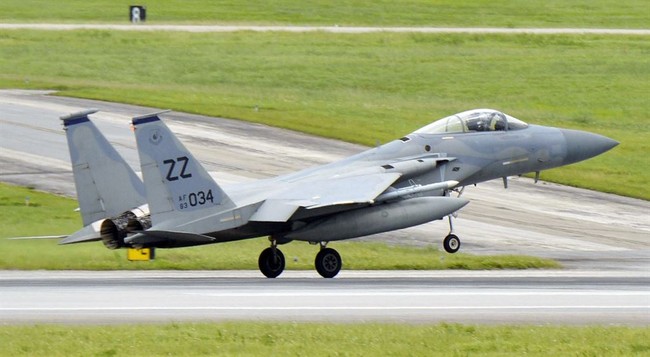
The Air Force is moving to expand production of the F-15EX fighter, pushing Boeing toward full-rate output and a fleet that could reach 268 jets under the Pentagon’s latest plans, with possible further increases in the late 2020s if demand holds.
The F-15 has been a mainstay of U.S. air power since 1974, prized for speed, payload, and adaptability rather than stealth. The F-15EX is a heavily modernized evolution of that legacy, keeping the proven airframe while adding modern systems and weapons carriage that aim to keep it relevant in contested airspace. The Air Force and the Department of Defense are now coordinating with Boeing to raise production rates and increase procurement to meet current strategic needs.
Recent budget planning signals a sharp uptick in planned buys, moving procurement well past earlier, lower estimates. The Pentagon’s fiscal outlook envisions buying many more of the jets, including test articles and aircraft covered by prior one-time appropriations. That shift reflects both confidence in the upgraded design and a desire to field large numbers of capable fighters quickly.
The Pentagon’s latest budget request for the air force would more than double the planned procurement of F-15EX strike fighters to 268 examples — moving Boeing to full-rate production of the revamped Cold War jet in the next year.
Boeing has a long-established goal of ramping F-15EX deliveries to two monthly, or 24 jets annually. For several years that outcome was uncertain, as the US Air Force’s acquisition plans fluctuated drastically.
The air force at one point cut its original procurement target of 144 aircraft to 80, then revised the figure up to 104.
The Pentagon’s fiscal year 2027 budget request would surge F-15EX acquisitions to as many as 268 aircraft, including Lot 1 test aircraft and 21 jets funded under the FY2025 one-time budget reconciliation package known as the One Big Beautiful Bill.
Boeing has been aiming for a steady cadence of two jets a month, or 24 a year, and the budget request appears designed to push the company to that rate and beyond. Forecasts inside the document even contemplate larger production runs later in the decade, with buy numbers rising in 2029 and the early 2030s. If the demand materializes, Boeing itself has said it could scale to higher annual outputs, which would compress delivery schedules and expand fleet size more rapidly.
Notably, FY2027 budget projections suggest Boeing could soon expand F-15EX production beyond 24 aircraft annually. The spending request submitted by the air force calls for purchasing 28 jets in 2029 and 36 in both 2030 and 2031.
Boeing has previously said it could increase F-15EX production to 36 aircraft annually if sufficient demand materialises.
That kind of ramp would make the F-15EX a practical backbone for the Air Force’s conventional fighter inventory while other programs mature. The service faces slow delivery schedules on some stealth platforms and long development timelines for proposed jets, so leaning on a high-performing, upgradeable legacy design offers speed and capacity. The F-15EX’s large payload and range let it carry more weapons and sensors than many alternatives, which is a clear advantage in massed operations.
Beyond raw numbers, the F-15EX brings updated avionics, mission systems, and networking to the table, designed to work with both manned and unmanned partners. It features modern controls, an advanced AESA radar, and electronic-warfare suites intended to help it survive in contested environments. Those capabilities, paired with a heavy weapons load and long loitering ability, give commanders flexible options across a range of missions.
Reusing and modernizing proven platforms is a familiar and often smart approach for the military, stretching development dollars while delivering reliable capability. The Air Force’s history shows many examples where upgraded older airframes continued to deliver value decades after their first flights. The F-15EX could follow that path, offering quantity, capability, and some cost predictability in a volatile procurement environment.
Here, have a look at one of these cutting-edge birds in flight:
Personnel and procurement officials still face choices about fleet composition, modernization mixes, and how to balance stealth investments with high-capacity fighters. But the current direction favors a larger, more quickly fielded F-15EX presence as a complement to other air superiority assets. Continued funding and industrial commitment will determine whether Boeing pushes past 24 jets per year and how fast those additional aircraft reach operational units.



Add comment