
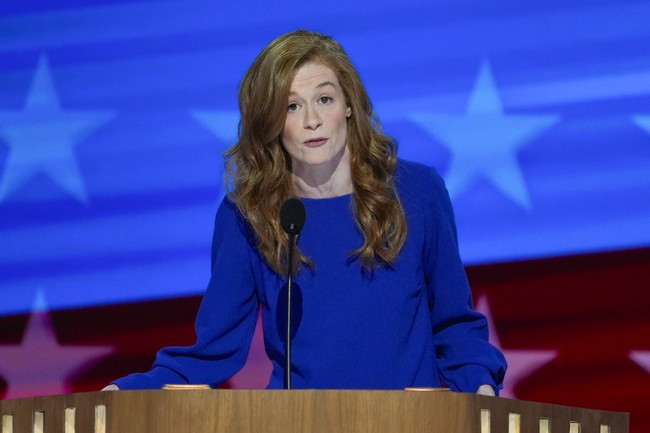
Michigan politics never sits still, and the sudden exit of State Sen. Mallory McMorrow from the Democratic U.S. Senate primary has cranked the drama up another notch as Republicans prepare for November and watch how Democrats sort themselves out with just weeks before the primary.
Michigan can swing wildly and that unpredictability is part of why this Senate seat matters. Sen. Gary Peters stepping aside opened a wide path and Democrats immediately dove into a bruising fight to pick someone who can hold the line in November. For Republicans, an early Trump endorsement gave former Congressman Mike Rogers a clear lane to consolidate support, but the real war has been on the other side of the aisle.
State Sen. Mallory McMorrow dropped out of Michigan’s high-stakes U.S. Senate race Sunday, leaving a one-on-one battle with 30 days to go before the Aug. 4 Democratic primary election.
McMorrow of Royal Oak informed multiple supporters of her decision earlier Sunday, according to two sources with knowledge of the development who were not authorized to speak publicly about it. Her departure effectively made it a two-candidate primary contest between U.S. Rep. Haley Stevens of Birmingham and former Wayne County health chief Abdul El-Sayed of Ann Arbor.
McMorrow’s campaign released a video and a statement after The Detroit News reported her decision, which came as El-Sayed has gained some momentum in polling and Stevens has benefited from millions of dollars in TV advertising.
Her exit simplifies the immediate primary math: Haley Stevens and Abdul El-Sayed now go head-to-head with less infighting among moderates and progressives. That dynamic matters because whoever wins that fight will face Mike Rogers in the fall in a state that can be maddening for Republicans when a national figure isn’t on the ticket. Michigan tends to favor Democrats in presidential-off years, so picking a nominee who can actually compete statewide is essential.
Mallory released a statement that showed gratitude to her supporters and staff, and it acknowledged the plodding reality of running a campaign without corporate PAC money. The message was unmistakably heartfelt and positioned her as someone who tried to run a grassroots operation against better-funded rivals. That kind of messaging can play well locally, but it may not translate into the broad statewide coalition needed in November.
“Today, I’m announcing that I am suspending my campaign for United States Senate,” she said. “And I’m doing it with a deep, deep sense of gratitude. For our thousands of volunteers, for everyone who donated what you could — building a campaign with zero corporate PAC dollars.
“For my staff, who built this team up from nothing. I thank you.”
Republican Mike ‘ campaign had some fun with his DIVA DOWN .
Rogers narrowly lost his 2024 race to Elissa Slotkin by roughly 20,000 votes, so he isn’t an unfamiliar name statewide. That prior performance shows he can compete, but it also reminds Republicans that margins in Michigan are thin and turnout determines everything. The question now is whether the Democratic nominee can mobilize the coalition that pulled Slotkin across the finish line or whether voters will swing back toward a GOP candidate in a midterm environment.
Michigan’s electoral behavior has patterns worth noting: when a national heavyweight is on the ballot, Republicans can ride coattails, but in off years the state often tilts Democratic. With no presidential race to drive turnout in 2026, the governor of the turnout game will be the campaigns themselves. That puts a premium on candidate quality, message discipline, and ground game execution—areas where Republicans believe they can close the loop if they avoid complacency.
Watching the Democratic primary unfold—now a cleaner head-to-head between Stevens and El-Sayed—will offer clues about which direction the party is leaning. Is Michigan Democrats’ answer more establishment and TV ad heavy, or will they back a candidate with a sharper progressive edge and energy? The choice could determine not just the primary winner but how competitive the general election looks come November.
There’s a debate scheduled for July 7 that should sharpen contrasts between Stevens and El-Sayed, and voters will get a last look at the Democratic options before the August 4 primary. For Republicans, this is an opportunity to size up an opponent and refine attacks and outreach plans accordingly. The party’s focus now is on keeping momentum, avoiding overconfidence, and reminding voters of pocketbook issues that resonate across Michigan towns and suburbs.
Michigan’s political weather can flip fast, just like its literal weather, and campaigns have to adapt. Republicans will keep an eye on fundraising, ad buys, and any shifting polling, while also polishing the case that a conservative approach will deliver better results for economic stability and public safety. That message will be tested against whatever nominee emerges from the Democratic primary in a state that rarely offers easy victories.
https://x.com/RFSWarRoom/status/2073824474391068972


Add comment