
Speaker: House to Pass SAVE Act ‘One More Time’ in a Reconciliation Bill
The House speaker says Republicans will push the SAVE America Act again by folding it into a reconciliation bill that only needs 50 Senate votes, focusing on proof of citizenship and photo ID to tighten election integrity and acknowledging some provisions may be scaled back to get the measure across the finish line.
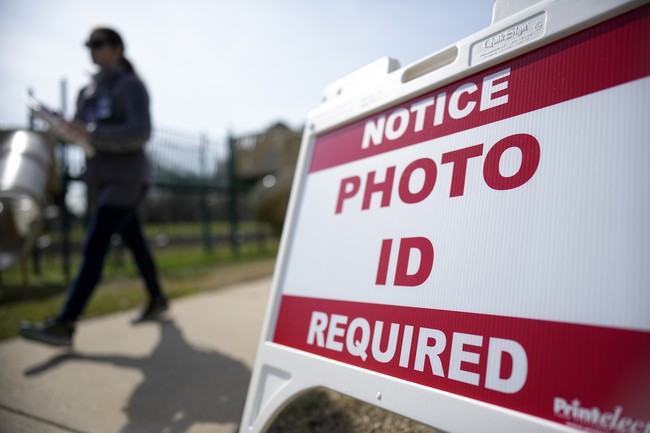
On Fox News Sunday, Speaker Mike Johnson outlined the plan to reintroduce the SAVE America Act as part of budget reconciliation, framing it as the clearest path to federal standards for voter registration and in-person voting. He emphasized the procedural reality in a narrowly divided House and the need to consolidate support before heading back to Washington after district work. The proposal centers on requiring proof of citizenship for registration and a photo ID at the polls, measures Republicans argue restore trust in elections. The speaker made clear this is a top priority for House leadership and the White House alike.
After describing why reconciliation is the tactical route, the speaker explained the House’s fragile margin and how a few defections can upend plans. He said some Republicans recently blocked the procedural rule needed to advance legislation, prompting a temporary pause in business. That push-and-pull underlines why leadership wants to bring everyone together and try again with a path that limits the Senate filibuster’s impact. The urgency is political as well as practical for the party aiming to secure coherent federal standards.
Watch:
We have the smallest margin in US history. I functionally have a one-vote margin on most days. And so, we worked through everybody’s uh preferences on legislation. And this week uh a handful of Republicans took down the rule, the procedure rule to advance legislation. I just decided it was best to send everybody home to go celebrate July 4th in their districts. We’ll come back and gather everybody together. The big urgency is to get Save America passed. The president has that as a top priority, and so do I. We passed it three times in the House. We’re going to try one more time on a budget reconciliation bill, and I think that will be the way to get it through the Senate and finally to the president’s desk. So that’s forthcoming.
The speaker also acknowledged the political trade-offs involved in negotiating the bill’s final language, signaling realism about what can survive a Senate test. He noted the parts of the plan that are more controversial and that some items might be trimmed to keep the core reforms intact. That willingness to pare back reflects a strategy focused on passage rather than ideological purity. For many Republicans, getting federal ID and citizenship verification in place is the main victory.
Yes, he would like to add the prohibition of mail and balloting except for exceptions like if somebody’s deployed overseas or they’re ill or can’t get to the polling place. But he understands that one is a is a bigger reach. If we can get proof of citizenship and photo ID to vote, that eliminates so much of the problem, all the fraud and everything that everybody’s concerned about in our elections, particularly, frankly, in these blue states. Look at California. They’re still counting ballots from an election that happened a month ago. It’s crazy, and everybody understands that.
Democrats predictably oppose these measures, calling them discriminatory and likening them to historical disenfranchisement tactics. From a Republican standpoint, those objections miss the point that modern civic life already depends on verified identity for countless transactions. Requiring a photo ID to vote is framed not as exclusion but as standard practice to protect the integrity of ballots. The debate is less about access and more about predictable, verifiable processes that prevent fraud.
The timeline for implementation is tight if the goal is to affect the upcoming election cycles, and the speaker and allies concede immediate changes will be uneven across states. Blue-leaning states likely would move slowly or resist enforcement, which strengthens the argument for a federal floor to ensure nationwide standards. Even if a full rollout takes time, enacting statute now sets the rules that will govern future years and requires states to begin aligning procedures. That gradual enforcement is still valuable to those who prioritize long-term election confidence.
Republicans pushing the SAVE America Act argue this is the single most important legislative effort of the session because it addresses the root of voter confidence. They point to examples of delayed counting and inconsistent state rules as evidence that current systems erode trust. By creating a consistent baseline—proof of citizenship for registration and a photo ID for in-person voting—Congress would close loopholes and standardize practices across the nation. For supporters, it’s about restoring predictability and accountability to the process of choosing leaders.
The House will press forward, trying to stitch together consensus enough to pass reconciliation and send a bill to the president. This approach acknowledges political realities while keeping the core reforms front and center. The coming weeks will test whether Republican leaders can hold the caucus together and whether the Senate will accept a reconciliation route. Meanwhile, advocates on the right will keep pushing the message that secure, verifiable voting is essential to healthy democracy.
Editor’s Note: Republicans are fighting for election integrity by requiring proper identification to vote.


Add comment