
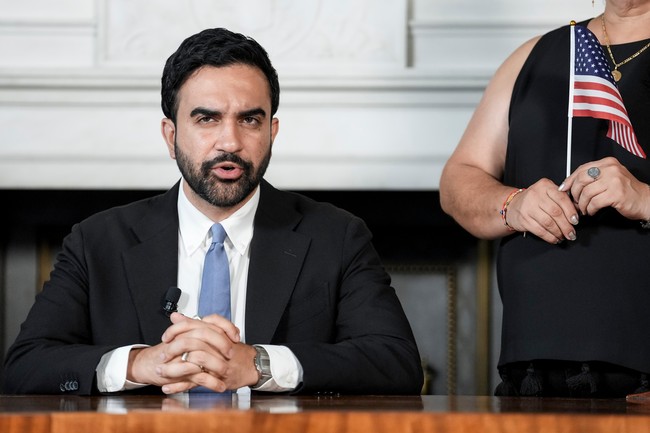
Mayor Zohran Mamdani’s new “Immigrant Enclaves” map has sparked anger by listing many neighborhood enclaves while completely omitting Little Italy, and Italian American groups are calling it intentional cultural erasure rather than a simple oversight.
The mayor’s map highlights Little Palestine, Little Pakistan, and Little Yemen, but leaves out Little Italy entirely, a omission that Italian American advocates call glaring and insulting. For many residents and business owners, Little Italy is more than a tourist strip; it is a living testament to generations of Italian immigrants who built neighborhoods, churches, and small businesses across New York.
The Italian American Civil Rights League publicly denounced the map as “cultural erasure” and rejected any suggestion this was a clerical mistake. “This is cultural erasure,” said Mike Crispi, President of the Italian American Civil Rights League, in a statement. “Little Italy is sacred ground. It is where Italian immigrants came with nothing, worked like hell, opened shops, raised families, built churches, fed the city, and helped make New York what it is.”
Local anger is not just sentimental; it reflects a broader political complaint that city leadership prioritizes trendy causes while dismissing long-established ethnic communities. Critics argue the omission is symptomatic of an administration that embraces certain identities for optics while ignoring traditional immigrant contributions that shaped the city’s character.
That frustration turned political quickly, with opponents framing the map as a reflection of Mayor Mamdani’s larger priorities. Some critics pointed to past incidents—like public remarks and photos disparaging historic monuments—to argue there is an ideological pattern at play rather than a mapping mistake.
https://x.com/nypost/status/2074996954816250204
The Italian American Civil Rights League demanded a prompt correction, a public apology, and formal recognition of Little Italy and other longstanding Italian-American neighborhoods in future city materials. They emphasized that Italian Americans are not props for fundraising or tourism, but a community with roots, institutions, and a history of civic contribution.
Angry reactions online and in neighborhoods included starker commentary, with some mocking the omission by suggesting the map might label City Hall with a politically loaded nickname. Whether hyperbolic or sincere, those comments underline how symbolic recognition matters to communities who feel sidelined.
Critics also warned the omission could presage further actions targeting traditional commemorations and statues, pointing out past controversies over monuments and public memory. Those concerns reflect a larger cultural fight over which histories get preserved and which are reduced or erased by official narratives.
Mamdani’s team defended the map as a tourist guide meant to highlight a range of vibrant cultures and insisted it was not intended as a comprehensive catalog of every community. They said the immigrant enclave series began under the previous administration and that additional neighborhoods would be added in future updates.
That explanation didn’t sit well with opponents who see a pattern of prioritizing new or politically favored constituencies while neglecting long-established communities. They argue that a city-led initiative celebrating immigrant history should include the neighborhoods that literally built New York, not just selective examples chosen for political fashion.
The debate taps into deeper tensions about assimilation, immigration enforcement, and civic recognition, with critics noting that large numbers of noncitizens live in the city and that city policy often resists measures aimed at integration. For many opponents, symbolic recognition on a city map is more than a label—it signals respect and inclusion in the public story of the city.
Mamdani has a history of provocative gestures related to controversial monuments, which opponents say feeds distrust about his respect for traditional immigrant narratives. Those who object to the map are calling for concrete steps: restore Little Italy to the map, apologize publicly, and ensure future efforts are inclusive and historically grounded.
The controversy shows how something as simple as a municipal map can become a flashpoint in a larger cultural and political debate over who counts in New York’s public memory. For residents who trace their family roots to Italian neighborhoods, the omission feels like a denial of contribution rather than an accidental oversight.



Its not an oversight its an American erasure to install division groups like Palestine; Pakistan; Yemen territory that will eventually take over the rest of NYC and NY. As it turns Communistic. The arrogant Liberals in NYC did themselves harm by thinking they were so “smart” to vote in Mamdami. They will need to be really smart and fight what he is trying to do to NYC which is destroy its very real American history! The free everything is just the initial delusional campaign trick. NYC fell for it.. just a dumb move.
That piece of garbage is serving Satan outright and mark my words he has already bought his own Erasure!
The people he was spawned from in ancient times, his ancestors, did zip, nada, nothing to created the culture and modern conveniences or advancements that he now utilizes like all modern civilization!
The camel jockeys and desert dwelling banshees like “Ali Baba and the Forty Thieves” of OLD only knew how to steal, blunder and murder to get what they wanted; just like this Clown Act is doing with Satan hoisting him up to this position!
Y’all better grab that bastard up by the seat of his dress & throw his ass out of the country, should have never been elected !
Interesting…
…were the Hasidic Jewish enclaves listed
Read where it said Italian immigrants came with NOTHING and built homes churches and neighborhoods!!! Unlike the Somalis the Pakistanis and all the others who came to steal from America and Americans!!!! Italians Irish polish all came to Ellis island where they had assimilate to our laws our language!!! We the people didn’t build them places to live in Minnesota, they built their own homes found jobs raised families!!!! See the difference!!! Worked hard to get here or steal from America which do you prefer!!!
Exactly 100% Correct! These 100% Ungrateful despots that arrived during the Obama and Biden Fraud administrations only came to rob, plunder, ruin or destroy! It’s in their DNA to do so and if the system was doing its job they would immediately have been determined to be ineligible even under legal immigration let alone as “Illegal Invaders!!!” Obviously those in charge weren’t following the US Constitutional Tenets of Law!
All of my European ancestors that emigrated here contributed to this great country with their own blood, sweat and tears to assimilate and love this nation under God for giving them a chance! Many of them did back breaking work as stone masons, iron workers on skyscrapers or other equally difficult and extremely dangerous employment! All of them came here back in the day generations ago for completely opposite reasons from the false or nefarious pretenses or purposes of these Invaders!
This is not a mistake on his part. He only want to recognize the Muslim population, no matter what country. This is his way of erasing US history. That is his and all the other communist who have gotten themselves in power. The question I have is why did his family leave Uganda to come here. Was it for a better life or was there a plan all along to change our country. He is a spoiled rich kid and loves being in power.
Elaine I couldn’t agree with you more! And all of your questions are of vital importance in pointing out the truth about these characters!
I’ll be bold enough as I’m also certain I see what lies beneath the surface with them; and it’s all dark and nefarious! This Creepy character is living proof of that assessment!
I also know that there is a very sinister evil force at work using these minions for destruction of all that is good!
How can the people of New York be so stupid as to vote for a communist to run their city? The fell for the “free stuff” BS