
This article reports on the remarkable survival and ongoing recovery of Solange Tremblay, a veteran flight attendant who was ejected from her jump seat during the LaGuardia runway crash, outlining the injuries she suffered, the treatments she faces, eyewitness accounts of the incident, and statements from her family describing the event as miraculous.
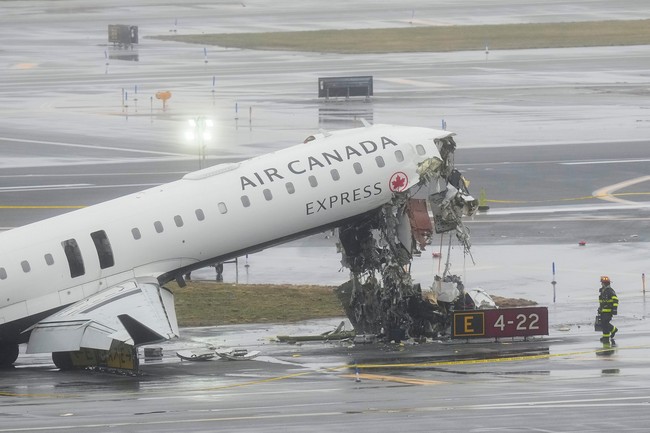
The LaGuardia crash left the nose of the aircraft destroyed and tragically killed two young pilots, yet the story that captured public attention was the survival of a senior flight attendant. Solange Tremblay, who had decades of experience, was reportedly thrown from the wreckage and found still attached to her jump seat on the tarmac. That image of her alive, despite the violence of the collision, became a focal point for many watching the aftermath unfold.
Initial reporting described Tremblay’s ejection as extraordinary given the complete destruction of the cockpit, and aviation experts pointed to the design of a four-point harness jump seat as likely responsible for preventing even worse outcomes. The force of the crash, however, left Tremblay with severe and complex injuries that will require extensive medical care. Her daughter has been vocal about the toll this will take on the family as they navigate surgeries and rehabilitation.
“During the crash she was… ejected over 320 feet from the wreckage. She was found still strapped in her jump seat lying on the tarmac,” her daughter, Sarah Lepine, said in a GoFundMe page to support her mother’s medical treatment.
Accounts repeated by those close to Tremblay emphasize both the physical devastation and the narrow margin by which she survived. Witnesses and relatives described seeing her conscious after the impact, an astonishing detail given where she was seated and the condition of the plane. Emergency responders moved quickly, yet her injuries required immediate and ongoing surgical intervention.
On impact, Solange Tremblay, the senior flight attendant on board, was ejected more than 320 feet from the wreckage. She was found on the tarmac, still strapped to her seat. She was conscious for all of it.
Her daughter Sarah Lépine called it “a total miracle.” Aviation safety experts agreed, saying her survival was extraordinary given the complete destruction of the cockpit just feet from where she was sitting. Her four-point harness jump seat, designed to withstand extreme crash loads, likely saved her life.
But Solange’s fight is far from over. Her injuries are severe: two shattered legs with open fractures requiring multiple surgeries and metal plates, a fractured spine, skin grafts needed for the flesh she lost sliding across the tarmac, and complications that led to a blood transfusion. She still faces several more surgeries and intensive rehabilitation to learn how to walk again.
The medical picture is sobering: two shattered legs with open fractures, a fractured spine under observation for possible surgery, and significant tissue loss that will need grafting. Surgeons have already inserted metal plates and performed initial procedures, but doctors warn that more operations are planned to reconstruct damaged bone and soft tissue. A blood transfusion was necessary after complications arose from her first surgical interventions.
Family members have organized support and shared updates about the course of treatment, describing both progress and setbacks with raw honesty. They report Tremblay remains in a New York hospital and faces an uncertain timeline for recovery as specialists decide on additional spinal procedures. Rehabilitation is expected to be long and grueling, with the primary goal of restoring mobility and managing chronic pain.
Public reaction has mixed grief for the lives lost and relief that someone pulled from the same wreckage survived against the odds. Eyewitness descriptions emphasize the destruction around where Tremblay sat, amplifying how improbable her survival appears when measured against the wreckage. That contrast has prompted conversations about crashworthiness, seat design, and the unpredictable nature of survivability in aviation disasters.
Her daughter’s accounts have been shared widely and repeatedly because they put a human face on the logistics and statistics of a crash. Those firsthand observations—calling her mother’s survival a miracle and detailing the injuries—help people understand the personal stakes behind emergency response and airport safety procedures. The family’s transparency gives a clearer sense of what comes after the headlines: a long regime of surgeries, therapy, and recovery efforts.
Amid the hospital rooms and surgical plans, those close to Tremblay have expressed gratitude for her survival while acknowledging the difficult road ahead. The combination of severe orthopedic damage, potential spinal surgery, and the need for skin grafts means that full recovery will demand time, skilled care, and resilience. For now, medical teams continue to stabilize and plan the next stages of treatment while family and friends provide support.



Add comment