
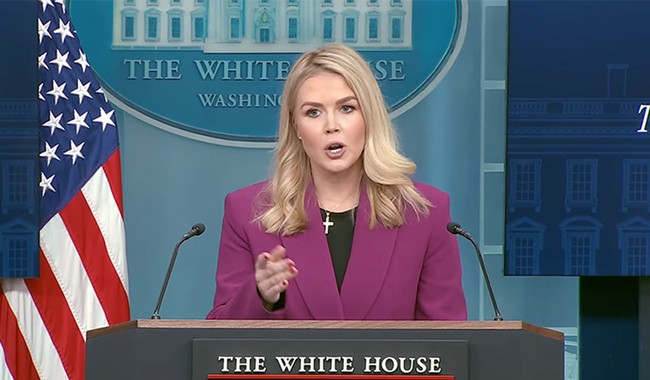
The story covers Election Day bomb threat hoaxes in New Jersey and New York, the official responses that found no credible danger, and White House press secretary Karoline Leavitt’s strong rebuttal of Zohran Mamdani’s claim that President Trump was responsible for intimidation tactics targeting voters.
Reports from Election Day described multiple polling locations in New Jersey temporarily closing after receiving emailed threats, creating confusion and forcing some voters to move to other sites. State authorities acted quickly to secure the affected locations and investigate the messages, calming concerns as law enforcement found no credible danger. Local officials emphasized voter safety and worked to restore access as efficiently as possible. The incidents disrupted voting but, by official accounts, did not represent an organized, real danger to anyone on site.
In parallel, New York also saw reports of threats to polling places, prompting similar law enforcement responses and rapid assessments of security. Some local authorities characterized the messages as likely hoaxes after on-site checks and follow-up investigations. The pattern of emailed threats in multiple jurisdictions raised questions about motive and authorship, but so far investigations point to false alarms rather than actionable plans. Officials urged voters to remain calm and continue to exercise their right to vote.
When Zohran Mamdani publicly linked these threat reports to President Trump, Karoline Leavitt stepped up at the White House briefing to push back hard. She responded directly to a question and did not mince words about the accusation, calling it unfounded and politically motivated. Her message framed the claim as an example of partisan reflex rather than careful fact-finding. Leavitt insisted the administration had nothing to do with those threats and criticized the tactic of immediately blaming political opponents.
“I think they are completely irresponsible, and they are based on zero evidence. And I think this is just another example of how the Democrat Party unfortunately stands for nothing. All they stand against is President Donald Trump. And I think it’s quite sad to see that we have someone at the top of the ticket on an Election Day today saying such things about the president, when he obviously had absolutely nothing to do with those threats,” Leavitt said in response to a question from Fox News’ Jacqui Heinrich.
The exchange highlights a political culture that too often turns crises into instant blame games, with both sides quick to assign motive without waiting for facts. From a conservative perspective, it felt like a reflexive attempt to score political points on the fly. That tendency undermines public confidence and distracts from the real priorities of securing polling places and ensuring safe access for voters. Critics argued that accusing political opponents without evidence only deepens divisions and sows unnecessary fear.
Critics of Mamdani also pointed to his broader rhetoric, arguing that inflammatory statements on issues like foreign policy and Israel have contributed to heightened tensions in communities. They contend that repeated extreme language can escalate fear and division in the very places that need calm the most. Those concerns were raised as part of a larger discussion about political responsibility in charged times. Observers on the right argued that leaders should de-escalate rather than amplify tensions.
On the ground, law enforcement agencies in the affected counties kept voters informed and took steps to secure sites until inspections cleared them. Voters were told where to go if their original precincts were temporarily closed, and election officials worked to maintain order. The priority remained completing the vote count and protecting civic processes from disruption. Officials emphasized that any credible threat would be treated with the utmost seriousness, while hoaxes would be prosecuted when possible.
The broader debate around these incidents quickly moved into partisan territory, with one side accusing the other of weaponizing fear and the other insisting that accountability be demanded from national figures when rhetoric seems to correlate with unrest. For many conservatives, Leavitt’s critique was an important defense of the administration and a call for evidence-based responses. The episode underscores how election-day incidents can be amplified by political rhetoric, sometimes obscuring the work of first responders and election officials focused on keeping polling places open and secure.
As investigations continue into the origin of the emailed threats, public officials from both parties must balance transparency with caution so as not to inflame tensions. Keeping voters informed and ensuring investigators have the time and space to trace these messages are practical steps that build trust. Meanwhile, leaders across the spectrum face pressure to temper comments and avoid premature accusations that complicate law enforcement work. The priority for everyone involved should be protecting voters and preserving confidence in the electoral process.

Add comment