
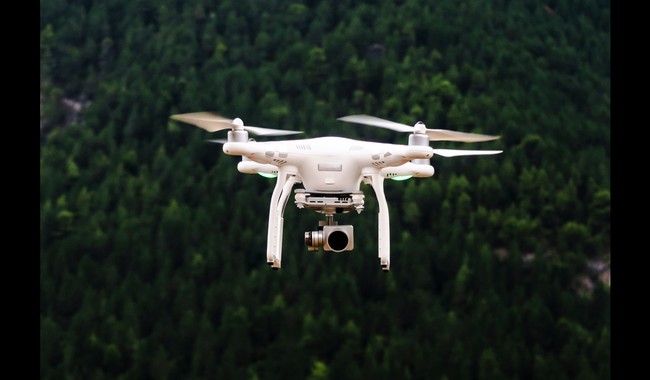
This article examines a recent near-collision between a JetBlue airliner and a drone near John F. Kennedy Airport, explains what is known from the pilot report and the FAA statement, places the event in the broader context of rising drone encounters around major airports, and looks at the safety and enforcement questions that follow. It includes verbatim quotes from the pilot report and the FAA and keeps the original embedded media markers in place for reference. The tone is direct and pragmatic, focused on facts and implications for aviation safety. No external links are included.
Monday morning at John F. Kennedy International Airport turned into a startling reminder that small, remotely piloted aircraft can create outsized risks for commercial aviation. A JetBlue flight arriving from Las Vegas reported a strike with a drone while the airliner was on final approach at about 3,000 feet. The crew stayed calm, the aircraft landed safely, and no injuries were reported, but the incident raises hard questions about detection and enforcement near busy runways.
The pilot called out the impact shortly after it happened, and the brief audio shows how sudden these events can be. The pilot reported the contact as occurring just above the cockpit area, which could have had far worse consequences if the drone had hit a window or another critical component. At the moment the crew handled the situation professionally, but the incident still exposes a vulnerability during the most critical phases of flight: takeoff and landing.
The original media release of the pilot’s remark appears alongside a short clip of the pilot announcing the event. The pilot’s calm delivery contrasts with the potential severity of the hazard and underscores how quickly an otherwise routine flight can become an incident requiring investigation. That clip is retained in its original location for readers to assess the tone and timing of the report.
A JetBlue Airways pilot reported hitting a drone as the flight was on approach for landing at JFK Airport on Monday morning. The plane, which was coming from Las Vegas, landed safely, and the airline and FAA said no damage or evidence of collision was found during the post-flight inspections. The agency will investigate the incident, it noted in its statement.
https://x.com/CBSNews/status/2071655189006766197
Federal and local agencies already log a steady stream of drone sightings near airports, an indication that the problem is widespread and recurring. Regulators receive more than 100 reports of drone activity close to airports each month, and many of those reports describe potential hazards to arriving or departing aircraft. Unauthorized drone operators can face fines or criminal penalties, but the enforcement picture is complicated when an actual strike is alleged and evidence can be limited.
Another recent close call at a nearby airport made headlines when a United Airlines 737 nearly encountered a drone on descent, illustrating that these events are not isolated. In that recorded air traffic control audio, the pilot is heard saying, “We almost hit a drone,” a blunt admission that reinforces how common and how dangerous such near-misses have become. That same pattern of close encounters shows why investigations and stronger deterrents are being pursued across aviation authorities.
The FAA issued a preliminary statement about the JetBlue incident confirming the pilot’s report of striking a drone at about 3,000 feet during final approach around 7:15 a.m. local time. According to the FAA, a post-flight inspection did not reveal any damage to the aircraft and the agency will investigate the matter. The FAA also cautioned that the information is preliminary and subject to change, which is standard during early reviews of airborne incidents.
FAA Statement
The pilot of JetBlue Airlines Flight 948 reported striking a drone at approximately 3,000 feet altitude while on final approach to John F. Kennedy International Airport around 7:15 a.m. local time on Monday, June 29. A post-flight inspection did not reveal any damage to the aircraft. The FAA will investigate. Contact the airline for more information.
This information is preliminary and subject to change.
Airports and federal partners have expanded tools to detect and mitigate rogue Unmanned Aircraft Systems, including detection sensors and, in some jurisdictions, countermeasure capabilities. Those technologies are intended to “disrupt, disable, destroy, take control of, and/or provide alternate flight instructions” under authorized circumstances, but operational deployment varies widely. If a facility does not have detection coverage or if a device fails to register a specific small drone, an aircraft could still encounter an untracked object on approach.
Investigations will need to establish whether the reported strike occurred, why any detection systems did not prevent it, and whether current enforcement and deterrence measures are adequate. Physical evidence can be scarce when damage is minimal or absent, so investigators often rely on cockpit recordings, radar data, witness statements, and any recovered drone parts. The outcomes of these inquiries shape policy, enforcement, and technology investment going forward.
For now, the JetBlue flight’s safe landing is a relief, but not a reason for complacency. Airports, regulators, and hobbyist communities all face a shared responsibility to keep airspace safe during vulnerable flight phases. Continued vigilance, improved detection coverage, and clear enforcement pathways will be essential if similar incidents are to be avoided in the future.


Add comment