
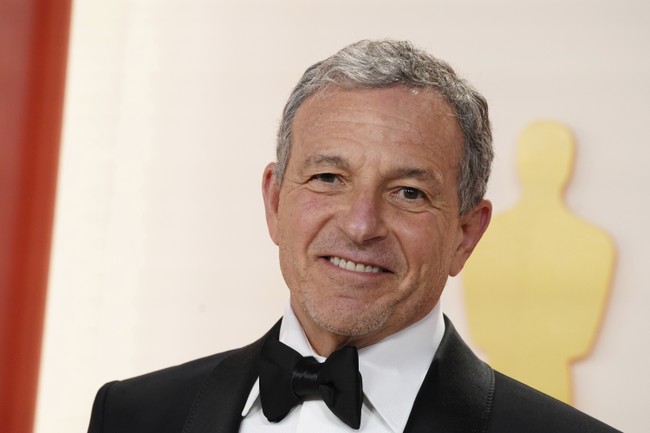
Former Disney CEO Iger Finally Admits What Everyone Knew About Jimmy Kimmel’s Toxic Charlie Kirk Rant
Bob Iger has confirmed what many suspected: Jimmy Kimmel’s comments about the shooting involving Charlie Kirk crossed a line and Disney’s actions were driven by taste and timing, not by political pressure. This article reviews the suspension, the reactions on both sides, Iger’s explanation, Kimmel’s response, and the broader debate over network responsibility and free speech.
When Jimmy Kimmel made inflammatory remarks about the attacker in the Charlie Kirk case, the backlash was immediate and intense. Critics accused networks of political bias and argued that any move against Kimmel must be capitulation to outside pressure. The reality, according to former Disney CEO Bob Iger, was much simpler: the comments were in bad taste and poorly timed.
The initial suspension of Kimmel’s show came amid heated media commentary and public outrage, but not because of a direct political order. Affiliates pulled the program and the Federal Communications Commission voiced concerns, creating a volatile environment for advertisers and executives. Iger told the Financial Times that the decision was based on judgment about content, not on bowing to political forces.
[Iger’s] approach to the Trump administration was scrutinised when Kimmel was taken off the air following his comments about the shooting of the rightwing culture warrior Charlie Kirk. That decision came hours after the Federal Communications Commission had threatened to act against the company. Iger says people mistook the move as being politically motivated. “That was not the case . . . We thought it was in bad taste.” Kimmel was asked to apologise. “We just wanted him to acknowledge that it was an ill-timed and probably inappropriate comment.”
Even so, many on the left framed the move as a concession to conservatives, while many on the right saw it as long overdue accountability for a late-night host who traffics in partisan snark. The accused shooter, Tyler Robinson, reportedly had no proven ties to the MAGA movement, yet Kimmel had suggested the murder was being portrayed or exploited in a way that tied it to “the MAGA gang.” The mismatch between fact and commentary widened the gulf between viewers and the comedian’s platform.
Kimmel returned to the airwaves fairly quickly and addressed the incident, but his remarks avoided a clear apology. In a subsequent interview he claimed his comments were misrepresented and framed the backlash as unfair to Disney. His posture on the matter did little to satisfy critics who wanted direct contrition and greater responsibility from someone with a national platform.
“It was intentionally, and I think maliciously, mischaracterized.
https://x.com/Variety/status/2069825881149997181
“I think what has happened over the last, like, three weeks, I think was very unfair to my bosses at Disney. I don’t think anyone should ever be put in a position like this. It is insane,” Kimmel said.
Arguing about whether networks should host a given voice misses the practical point that private media companies can and do set standards for what they air. The First Amendment protects speech from government censorship, not from market consequences or editorial judgment. Networks weigh risk to reputation, advertiser comfort, and audience reaction when deciding who stays on the air.
Many conservatives welcomed the suspension as a sign that media figures can face repercussions for reckless statements, while some on the left characterized any discipline as an attack on free expression. The larger debate is about standards: whether outrage alone should dictate employment outcomes, or whether there should be consistent, transparent rules that apply to everyone regardless of ideology.
Iger’s explanation underscores how corporate decisions often hinge on preserving a company’s broader brand and business relationships. When a comment threatens that equilibrium, executives act to contain fallout. That reality irritates partisans on both sides but is a basic truth of running a mass-media enterprise in a polarized era.
There are calls from some quarters for networks to be tougher and for others to demand more tolerance for edgy humor. Neither extreme answers the question of accountability versus free expression; instead, it highlights that consumers, advertisers, and shareholders all influence what remains on the schedule. Networks will keep juggling those forces while the public decides whether to turn the dial.
Editor’s Note: Hollywood, academia, and liberal elites are out of touch with the average American.


Add comment