
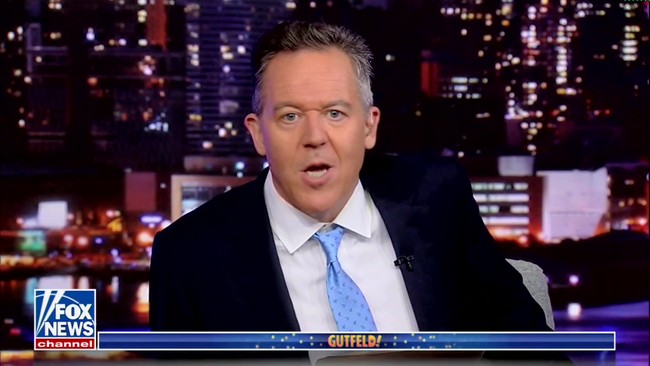
The piece examines Greg Gutfeld’s forceful rebuttal of the left’s attack on ICE and federal immigration enforcement, laying out how he connects Democratic policy choices to border chaos and violent crimes, and how he pushes back against what he calls a politicized campaign to demonize officers doing their jobs.
For months some on the left have been leveling extreme accusations at immigration agents, comparing enforcement to historic evils and painting officers as predators. That rhetoric intensified after high-profile shootings, where critics jumped to condemn enforcement before facts were known. Gutfeld argues the outrage often ignores the broader policy failures that allowed illegal border crossings to surge in the first place. He frames the story as more about partisan theater than a sober look at law, safety, and consequence.
He says the responsibility for the situation lies squarely with the policies Democrats embraced and the Biden administration’s approach to the border. According to Gutfeld, the result was an open-door reality where large numbers of illegal entrants overwhelmed systems and communities. He names victims to stress the human toll he believes followed those policy choices. That listing is meant to remind viewers there are real-world consequences beyond social media outrage.
Warning for graphic language:
“You guys didn’t give two Fs,” he said to Democrat co-host Jessica Tarlov about the Democrats not caring about the Americans killed by illegal aliens. “We had dozens of deaths where you didn’t say s***. You made the mess; this is the Democrat Party’s mess.”
Gutfeld also called out what he sees as selective memory: critics who now scream about deaths in custody but were quiet when similar incidents occurred under prior administrations. His point is not to dismiss tragedy but to question why outrage spikes only when it fits a partisan narrative. He argues consistency matters when accusations are being used to demand the rollback of federal enforcement tools.
He made a broader point about local cooperation, noting that states and localities that worked with federal officials did not experience the same degree of trouble. That contrast is presented to show enforcement can work when different levels of government coordinate. Gutfeld frames the Minnesota incidents as an example of what happens when that cooperation breaks down. For him, the remedy is straightforward: enforce the law and fix the policy gaps that invited chaos.
At one point Gutfeld told critics to take their complaints elsewhere, saying they could “do it on your own time!” He said he was there to “correct the record” and to push back against what he described as political manipulation of tragic events. The language is blunt, but it mirrors his larger argument that emotion-driven headlines should not rewrite who made the rules that led to the current state at the border. That refrain is repeated to emphasize that responsibility, not rhetoric, should drive the response.
He argues Democrats are using a child’s death that occurred in 2023 to score political points by implying it happened under a different administration. Gutfeld says that tactic shows how narratives are shaped to influence public perception rather than illuminate facts. He views those shifts as deliberate misdirection designed to weaken federal immigration enforcement. For him, that undercuts public safety and the rule of law.
The broader thrust of his critique is that the left wants outrage to negate federal authority and block deportations, which he sees as essential tools to manage illegal immigration. He insists political gamesmanship will not stop enforcement. Gutfeld’s tone is combative because he believes the stakes are high: enforcement, accountability, and the safety of communities are at issue, not merely partisan points.
He claims the left’s campaign amounts to an effort to erase the consequences of their own policy choices by redirecting blame onto front-line agents. That, he argues, is both unfair and dangerous, because it discourages officers from doing the job the law requires. His warning is that if enforcement is undermined through sustained political pressure, border problems will only grow worse and citizens will pay the price.
Gutfeld’s segment is positioned as a corrective: an attempt to reframe the debate around who created the border conditions and what the proper response should be. His remarks are meant to puncture what he describes as performative outrage and to demand a more honest accounting of policy responsibility. In his view the nation needs clear enforcement and accountability rather than opportunistic blame shifting.
He closes by insisting politics drives the critics more than concern for victims or the rule of law, and he challenges that approach as counterproductive to solving the underlying crises. Gutfeld’s commentary is unapologetic and seeks to force a conversation about policy choices, consequences, and the limits of partisan outrage in shaping how America enforces its immigration laws.


Add comment