
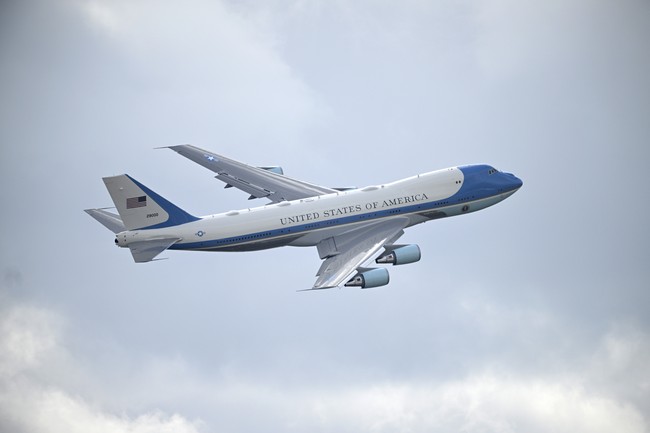
The FBI arrested a 21-year-old Chinese national, Tianrui Liang, at JFK Airport after he allegedly photographed sensitive U.S. military aircraft at Offutt Air Force Base in Nebraska; court documents say he admitted to photographing specific aircraft, was detained while trying to leave the country, and is connected to studies in aeronautical engineering in Scotland, raising concerns about deliberate intelligence-gathering rather than casual plane-spotting.
Federal authorities say the case began when someone reported seeing “a male holding a camera with a telescopic lens” near the flight line at Offutt, where high-value reconnaissance and command aircraft are parked. Offutt hosts aircraft such as the RC-135 and the E-4B “Nightwatch,” the latter often described as the military’s “doomsday plane,” which makes the presence of a camera-toting stranger especially alarming. Investigators say the suspect, identified as 21-year-old Tianrui Liang, admitted to photographing the RC-135 and the E-4B among other aircraft, which triggered a warrant and subsequent action.
The post reads in full:
A 21-year-old Chinese national, Tianrui Liang, has been arrested and is facing charges after photographing a U.S. “doomsday plane” and other military aircraft without authorization at Offutt Air Force Base in Nebraska. He was taken into custody at JFK Airport following the incident.
According to filings in the Eastern District of New York, Liang was detained on April 7 at John F. Kennedy Airport while attempting to board an international flight. Authorities say the arrest came just days after a warrant was issued in Nebraska, and that he was preparing to leave the country when taken into custody. Court records allege a violation of federal law that restricts photographing defense installations without authorization, placing this incident squarely in that legal context.
A Chinese national was arrested at New York’s John F. Kennedy International Airport after federal authorities say he photographed sensitive military aircraft near Offutt Air Force Base in Nebraska and planned to target another installation as he prepared to leave the country.
Tianrui Liang, 21, is accused of violating a federal law that restricts photographing defense installations without authorization, according to court documents filed in the Eastern District of New York.
Authorities say Liang was taken into custody April 7 while attempting to board an international flight, just days after a warrant was issued in Nebraska.
Public reporting notes that Liang is a student studying aeronautical engineering in Scotland and had booked a one-way itinerary back to Glasgow via Frankfurt. That detail complicates any simple explanation that he was just a curious aviation enthusiast traveling randomly. Traveling from Scotland to Nebraska to photograph a narrow set of high-value aircraft suggests planning and purpose, and it draws questions about possible direction or coordination.
It is hard to dismiss the specificity of the alleged photographs as mere coincidence. The RC-135 family and the E-4B are not run-of-the-mill civilian targets; their missions and configurations draw scrutiny because of the sensitive roles they fulfill in reconnaissance and national command. Photographing those airframes, especially with a telescopic lens, aligns with intelligence-collection tradecraft rather than casual hobbyist behavior.
According to an FBI affidavit, investigators were alerted after a witness reported seeing “a male holding a camera with a telescopic lens” near the base, where aircraft are stationed on the flight line.
Offutt hosts high-value reconnaissance and command aircraft, including the RC-135 surveillance plane and the E-4B “Nightwatch,” often referred to as the military’s “doomsday plane.”
Federal agents say Liang later admitted to photographing several aircraft at the base, “including the RC-135 and the E-4B.”
From a security perspective, the incident exposes gaps that merit attention: how did a foreign national access or approach the flight line area with equipment capable of detailed imaging, and what oversight allowed that movement to occur? These are operational questions for base security and intelligence services, and they feed into larger debates about foreign nationals conducting aviation-related studies and travel near critical military sites. The overlap between academic enrollment abroad and potential intelligence risk is now part of that discussion.
Observers point out that Britain and other NATO countries operate military aircraft that could satisfy an aeronautical engineering student’s curiosity without traveling to the United States, making the Nebraska stop unusual. The possibility that someone instructed Liang where to go and what to photograph cannot be ruled out by the facts that have been made public, and that scenario would raise national security flags across multiple agencies.
Law enforcement has moved this matter into the federal courts, and the legal process will determine whether the evidence supports the charges and what penalties follow. Meanwhile, the arrest is a reminder that activities near certain defense installations carry legal and security consequences, especially when they involve foreign nationals and detailed imagery of mission-critical aircraft.


Add comment