
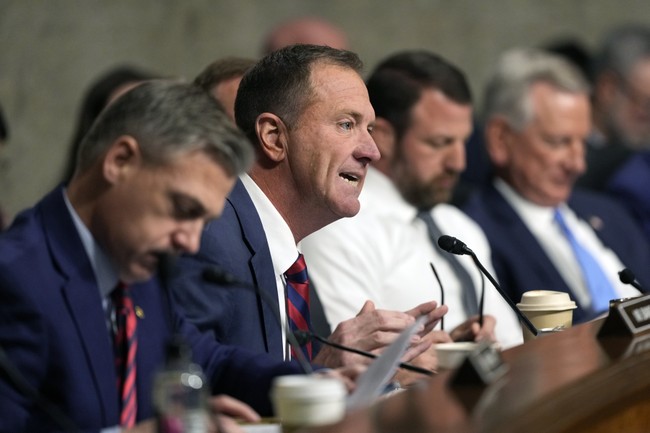
The Senate Judiciary Subcommittee hearing on politically motivated violence turned into a blunt showdown, with Chairman Eric Schmitt pressing Democrats over what he says is a pattern of ignoring or downplaying left-wing attacks. Schmitt challenged the methodology of a 2024 CSIS report and forced a debate about which incidents get counted as political violence. The exchange highlighted examples where he says Democrats equivocate or tacitly condone attacks tied to the left, and he pushed the FBI to name several leftist perpetrators of high-profile plots. Tension spiked when Schmitt called out selective counting and called for honest acknowledgment of threats to public safety and political dissenters alike.
The hearing opened against the backdrop of rising concern over politically motivated attacks and the high-profile assassination of a conservative figure last September. Schmitt framed the discussion around whether political violence is being categorized fairly, arguing that some analyses ignore clear examples of left-wing violence. He said these omissions distort the threat picture and prevent effective policy responses to protect citizens and institutions. That line of argument set the tone for a combative session with ranking Democrats.
Durbin repeatedly cited a CSIS report to emphasize far-right threats, but Schmitt accused him of cherry-picking data and applying inconsistent rules. Schmitt pointed out that, according to critics, the report excluded many protest-related incidents while making exceptions for specific events that fit a preferred narrative. This selective treatment, Schmitt argued, undercuts credibility and leaves law enforcement and lawmakers without a comprehensive understanding of politically driven violence. He wanted the committee to confront those inconsistencies openly.
To illustrate the point, Schmitt entered into the record a critical analysis that questioned CSIS methodology and highlighted apparent double standards. The analysis noted that some protest violence was omitted, yet the report included certain clashes and singled out Jan. 6 as an exception among riots. The critique flagged that violence at some demonstrations was treated differently depending on the political alignment of participants. Schmitt used that critique to demand better, more transparent research that counts incidents by behavior rather than ideology.
The chairman also pressed the FBI director to identify perpetrators in notable recent attacks, and the director confirmed several instances involving leftist actors. Schmitt emphasized specific episodes from the past decade, including attempted assassinations and violent confrontations, as evidence that the left has committed serious politically motivated crimes. Those confirmations undercut what Schmitt called “both sides” defense tactics—where Democrats insist violence is symmetric or dominated by the right. He insisted accountability requires recognizing who is responsible when politics turns violent.
Schmitt did not shy away from naming elected officials and leaders who, in his view, have failed to call out violence by their allies or have implicitly encouraged it through silence. He argued that refusing to condemn attackers or resorting to whataboutism normalizes aggression and intimidates political opponents. For Schmitt, moral clarity matters: political violence cannot be tolerated, and partisan cover-ups make the problem worse. That message framed several of his sharp exchanges with Democratic senators who tried to shift the narrative.
Part of the hearing revisited earlier incidents that drew public attention, such as attacks on private businesses and clashes at demonstrations. Schmitt referenced high-profile examples where prominent Democrats reacted tepidly or offered equivocal responses when asked about violence tied to left-leaning protesters. One exchange from April captured a moment when a top Democratic leader responded to a question about attacks by saying, “I can’t talk about Tesla, but Elon Musk is a disaster for America, and America knows it. Look at Wisconsin.” The line was used to show how rhetoric can slide into implicit endorsement of disruptive tactics.
Critics on the right framed the hearing as a broader complaint about cultural and political elites who, they say, excuse or minimize violence from their allies while calling law enforcement down on opposing activities. Schmitt and other Republicans argued the safety of citizens and the rule of law require even-handed scrutiny and refusal to validate intimidation. They pushed for investigative clarity and policy changes that would better capture the full spectrum of politically motivated crimes. The goal, Republicans said, is to ensure public safety and equal application of justice.
The exchanges underscored a deeper dispute over how researchers, media, and officials measure and describe political violence. Schmitt called for a tougher look at methods that exclude protest-related incidents and said counting rules should not hinge on political identity. He asked for consistent standards so policymakers can accurately assess risks and craft targeted responses. The committee debate left clear fault lines about evidence, accountability, and whether current institutions are willing to confront violence wherever it comes from.
Moments later, the hearing included graphic testimony and footage intended to show the human cost of political violence and the stakes of getting the facts right. Schmitt used those moments to press for legislative and investigative remedies that would deter future attacks and protect vulnerable targets. He insisted that partisan talk cannot substitute for public safety measures and that lawmakers must act with the full record in hand. His closing point to the committee was a demand for clarity, consistency, and consequences for political violence.

Add comment