
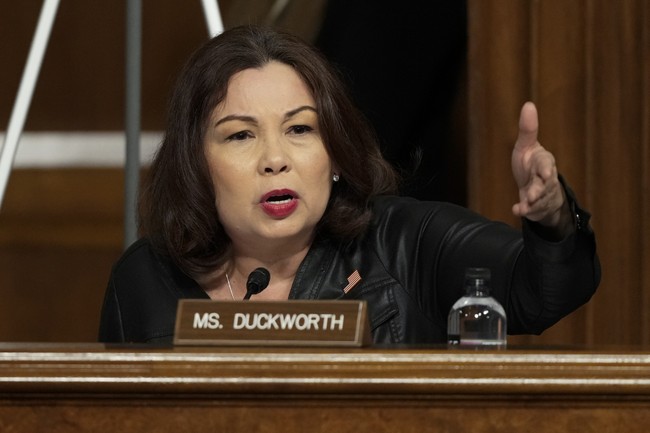
Senator Tammy Duckworth publicly claimed she had watched a classified video of a suspected narco-terrorist “double tap” strike and then quickly contradicted herself on live television, making the episode a sharp political moment that raises questions about credibility, media narratives, and the rush to condemn without first-hand evidence.
Tammy Duckworth Outs Herself As a Liar Seconds After Claiming She Saw Video of Drug Boat Strike
Senator Tammy Duckworth told CNN viewers she had personally seen a classified video of an alleged double-tap strike and called the footage “deeply disturbing.” Her initial, unequivocal statement put the accusation squarely on the table and intensified calls to hold War Secretary Pete Hegseth accountable for what she labeled as potentially criminal conduct.
The interview moved quickly into sharper territory when host Dana Bash asked Duckworth to confirm whether she had actually viewed the classified material. Duckworth responded plainly, “I have seen the video. And it is deeply disturbing,” which framed her subsequent criticism as coming from direct knowledge rather than secondhand reporting.
Less than a minute later, faced with a follow-up request to clarify, Duckworth backtracked in a way that undercuts her first claim and undercuts trust. “I just want to make sure that I get this accurate,” Bash said, prompting Duckworth to say explicitly, “No, I have just seen what’s been available in the media.”
From “I have seen the video” to “I have not seen the actual video” in under a minute, the flip left viewers and political watchers wondering whether the senator misspoke or deliberately misled the audience. That reversal made headlines because it transformed a forceful accusation into a partisan sound bite sourced only to media reports, not classified proof.
The timing of the switch is politically relevant. Duckworth had already accused Hegseth of committing “essentially murder” and suggested the act could amount to a war crime. Those are grave charges and, coming from a sitting senator, require a high bar of substantiation that, in this case, she did not meet on air.
Media outlets have circulated footage and timelines related to a counterstrike on a Venezuelan drug-running vessel earlier in the fall, and various reports offered competing accounts of who ordered a second strike and why. The administration and military officials have pushed back on some media timelines, and at least one senior officer involved said the second strike was ordered after assessing the vessel remained a threat.
Admiral Frank “Mitch” Bradley, who oversaw the operation that month, has publicly disputed the narrative that a reckless second strike was called to eliminate survivors. Military leaders maintain that the decision followed established rules and that the vessel was still operational enough to justify further action.
Despite those rebuttals, Duckworth and other critics seized on the media versions of events to demand accountability from Hegseth, echoing past efforts to force his resignation over unrelated controversies. The continued drumbeat illustrates how political actors can weaponize preliminary reporting, then cite that reportage as if it were definitive evidence.
Duckworth’s pattern of aggressive public condemnations dates back months, including an earlier demand that Hegseth “resign in disgrace” and other sharp attacks on his character. That intensity suggests a broader partisan strategy to undermine the secretary rather than a focused pursuit of verified facts in each instance.
Accusations such as “It was essentially murder with that double-tap strike,” when asserted without direct personal verification, do damage to the credibility of the accuser and to the seriousness of the claims. When senators repeat inflammatory language based on media clips rather than classified material, the public should expect clearer standards before careers are called into question.
Political debates over military decisions are inevitable, and scrutiny of commanders and civilian leaders is both normal and necessary. But the Duckworth episode is a reminder that an unchecked rush to judgment can erode trust in institutions and in the people who lead oversight efforts, especially when the initial claim is retracted on live television.

Add comment