
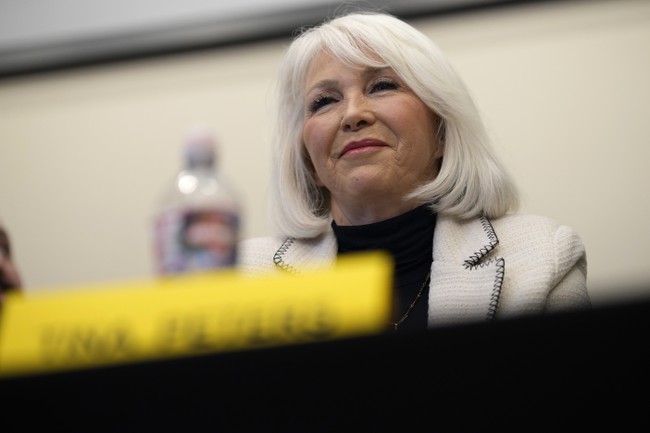
This article covers the recent push to “Free Tina Peters” after the Department of Justice opened a Civil Rights Division probe into Colorado’s prison system, a federal judge declined her habeas petition while her state appeal continues, and public pressure from conservative circles intensified amid concerns about her health and the broader fight over election integrity and judicial overreach.
Colorado is at the center of a heated national debate after Tina Peters, a former Mesa County clerk, received a nine-year sentence tied to efforts to expose alleged 2020 election problems. Many conservatives view her conviction as politically motivated and see her treatment behind bars as further proof of unfair targeting. The timing of a DOJ investigation into statewide carceral conditions only amplified those concerns and fed calls for accountability.
Colorado is finally trending for the RIGHT reason! Free Tina Peters! #copolitics#colorado#freetinapeters
“Earlier today (December 9, 2025), the U.S. Department of Justice’s Civil Rights Division, under Assistant AG Harmeet Dhillon, announced an investigation into Colorado’s entire prison system. This follows “multiple reports of unconstitutional and legally insufficient carceral conditions,” explicitly tied to complaints about 70-year-old Tina Peters’ treatment at La Vista Correctional Facility. Peters, the former Mesa County Clerk serving a nine-year sentence for breaching voting machines in a 2020 fraud scheme, has become a martyr for Trump supporters.”
The DOJ announcement, attributed to Assistant Attorney General Harmeet Dhillon, framed the probe around reports of unconstitutional carceral conditions. Conservatives framed that language as a direct response to public outcry and presidential attention on Peters’ health and incarceration. That reaction has pushed Colorado’s handling of the Peters case into the national spotlight where questions about selective enforcement and political punishment are front and center.
Peters’ federal challenge seeking release on habeas grounds hit a roadblock when a federal judge declined to intervene while state appeals are still pending. Judge Scott Varholak explicitly said the federal court would abstain while Colorado courts resolve the constitutional questions raised by Peters. That procedural decision left Peters behind bars and intensified complaints that the federal judiciary is avoiding constitutional review for political cases.
A federal judge has refused to release a former Colorado clerk who was convicted of attempting to breach voting systems in hopes of proving President Donald Trump’s claims of election malfeasance in 2020.
The former clerk, 70-year-old Tina Peters, was sentenced to nine years in prison after a state jury convicted her of participating in a scheme to breach the Mesa County voting systems. Peters filed a lawsuit seeking her release earlier this year, arguing that her free speech rights had been violated, but Judge Scott Varholak rejected the move on Monday.
“Ms. Peters raises important constitutional questions concerning whether the trial court improperly punished her more severely because of her protected First Amendment speech,” Varholak wrote. “But because this question remains pending before Colorado courts, this Court must abstain from answering that question until after the Colorado courts have decided the issue.”
Peters, the only Trump ally to face prison time for 2020 election denial, has received significant support from the president.
Outside the courtroom, voices on the right have mobilized quickly, painting Peters as a political prisoner and a symbol in the fight against what they call lawfare. Supporters argue that prosecuting speech and investigation activity connected to election doubts risks chilling political dissent. That message has driven social media campaigns and public pressure aimed at state officials and federal actors alike.
Compounding the political reaction are reports about Peters’ declining health, which many conservatives say makes the case urgent. Advocates have demanded immediate medical attention and compassionate consideration, arguing that incarceration under deteriorating health conditions amounts to inhumane treatment. The DOJ probe into prison conditions adds another layer of scrutiny to the state’s responsibilities.
Legal and political observers are watching how the interplay between state courts, federal abstention, and a federal civil rights investigation will unfold. For Republican-leaning commentators and Peters’ allies, the situation looks like a test of whether Americans tolerate what they see as unequal justice. The outcome could shape how similar cases are handled and how conservative activists approach legal strategy going forward.
These are the kinds of active judges that need to be removed!
The dispute over Tina Peters is more than one case; it has become a rallying point for conservatives who worry about partisan prosecution, judicial activism, and the treatment of political dissidents. With federal scrutiny now in play and appeals working through the system, the next moves by Colorado courts and DOJ investigators will be watched closely by a broad, skeptical audience.



Add comment