
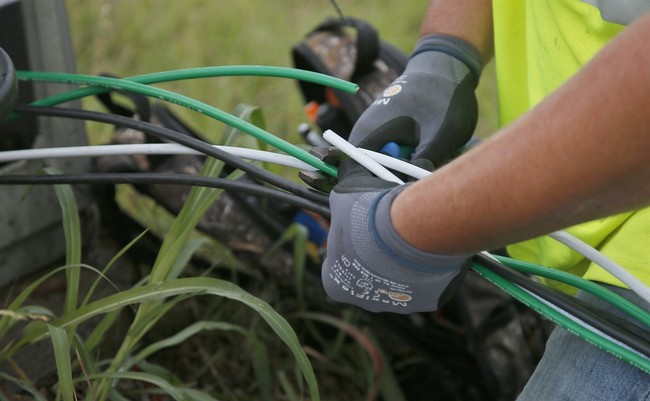
The city is losing millions to copper wire thieves who darken neighborhoods and jam up repairs while Mayor Karen Bass offers solar lights and higher fees instead of a tough approach. The Los Angeles Department of Water and Power wants authority to arm its officers and make arrests to stop the thefts that damage infrastructure and cost residents, businesses, and utilities big money. Critics say the city picked expensive solar fixtures over cheap anti-theft devices, and political frustration is feeding an appetite for candidates promising law and order. The debate now centers on whether voters and lawmakers will back a new armed utility force or stick with the same soft-on-crime strategies that left departments understaffed and neighborhoods vulnerable.
Copper wire theft across Los Angeles has become a chronic drain on public resources and private firms, leaving streetlights dark and repairs mounting into the millions. Residents see dark blocks and delayed responses while simple fixes get pushed aside for pricey alternatives that don’t address the criminal element. The LADWP argues that unarmed security personnel are ineffective because they cannot arrest suspects and rely entirely on a stretched LAPD. After years of policy choices that deprioritized enforcement, people are rightly asking for practical tools that deter theft and hold thieves accountable.
The mayor’s plan to shift toward solar lighting and to raise property assessments for streetlighting drew immediate criticism for shifting cost burdens onto homeowners and small businesses. Critics point out that installing solar units, some of which can cost thousands each, does not stop thieves from stripping wiring or vandalizing fixtures. When utilities and companies face repeated losses, those costs ultimately get passed down to ratepayers. Voters are tired of paying more while the city fails to secure its infrastructure.
Political reaction has been loud and partisan, with challengers seizing on the failure to secure neighborhoods. The city’s inability to protect property and critical infrastructure is feeding support for candidates who promise to restore law and order and push back against permissive policies. People want action, not experiments that prioritize aesthetics over safety. That shift in public sentiment is reflected in polling showing appetite for alternatives to the current leadership approach.
https://x.com/SteveGuest/status/2056198261401162028
In response, LADWP officials asked the city for permission to create an armed police force with arrest powers dedicated to protecting utility assets and responding to theft. The agency pointed to examples where transportation hubs and ports maintain their own police authorities, arguing that dedicated law enforcement reduces response times and targets criminals more effectively. Building such a force would take voter and legislative approval and would require millions to stand up and operate. Still, proponents say it would be a targeted way to stop a costly and dangerous crime spree.
The Los Angeles agency in charge of the city’s electricity wants to create its own armed police force to combat the epidemic of thieves stealing valuable copper wire from streetlights.
The LA Department of Water and Power made the request in a letter sent to the City Council, pointing out that the Port of Los Angeles and Los Angeles airports have their own police authorities.
Local security staff at the utility are already on the payroll, but they are unarmed and lack arrest powers, which leaves them unable to stop active thieves. That forces a reliance on the LAPD for criminal enforcement at a time when the police force is stretched thin. The LAPD’s ranks are at some of the lowest levels in decades, making rapid responses and proactive policing more difficult. City residents end up paying the price for decisions that weakened enforcement capacity over time.
Beyond policing, there are simple, low-cost fixes that some say were wrongly dismissed in favor of expensive upgrades. An entrepreneur proposed a $300 locking cover to protect streetlight wiring, which critics argue would be a fraction of the cost of replacing fixtures with $6,000 solar units. The city reportedly declined the cheaper fix, choosing to prioritize big-ticket projects that do not directly stop theft. That decision raises questions about fiscal responsibility and prioritization when public safety is at stake.
Keen observers say the choice reveals where the mayor’s priorities lie and why frustration is swelling. Unions and political allies often shape policy choices, and many voters feel that residents’ safety and wallets come second. With elections on the horizon, candidates who promise to reverse managed decline and impose tougher penalties are getting attention. The debate is simple: protect infrastructure and hold thieves accountable, or keep pushing expensive, indirect solutions that leave neighborhoods at risk.
The proposed armed utility force would need approval at multiple levels and a budget to match its mission, which means the fight is far from over. If lawmakers and voters want effective deterrence, they will have to authorize real enforcement tools and fund them properly. Otherwise the cycle continues: theft, darkness, repair bills, and higher fees for residents who already shoulder the burden of poor policy choices.
Karen Basura [Pratt’s nickname for the ineffective mayor] has given up on going after copper thieves, and is installing solar powered lights. That’s fine. But that doesn’t fix the problem. HP and AT&T had $87M in copper wire theft losses in ONE year, in South LA, alone. We need the heavy metals task force to crack down, immediately.
Editor’s Note: The American people overwhelmingly support President Trump’s law and order agenda.
Entrepreneurship and common-sense security measures deserve a fair hearing in the conversation about infrastructure protection. If the city wants to stop the bleeding, officials should consider affordable fixes and give officers the authority to pursue and arrest thieves. Voters will decide whether they want commanders who prioritize enforcement or managers who hand out expensive bandages that do not stop the criminals. Until then, the lights stay at risk and neighborhoods keep paying the tab.
The city rejected a low-cost locking solution in favor of costly solar streetlights, prompting questions about priorities and fiscal discipline. Critics argue that spending millions on fixtures while theft persists is not an effective strategy. The debate over how to protect public assets highlights broader concerns about accountability, budgeting, and law enforcement strategy in Los Angeles. The coming votes and council decisions will determine whether change comes or the same pattern of loss continues.
🚨LOS ANGELES REJECTS CHEAP DEVICE TO CURB STREET LIGHT COPPER THEFT
Copper wire theft has been knocking out streetlights across Los Angeles and leaving neighborhoods in the dark.
Entrepreneur Mark James of End Metal Theft proposed a $300 locking cover system, but city officials opted to focus on solar streetlights costing up to $6,000 each.
Critics say the decision raises costs while theft continues to damage infrastructure and drain millions in repair spending.

When is somebody going to arrest that foreign invader witch from hell and toss her ugly puss into GITMO for Treason, Sedition, Conspiracy, Graft, Fraud, Theft, Mayhem, Fomenting Riots and many more crimes!
Where are you Law Enforcement? Is this all a huge JOKE or GAME!