
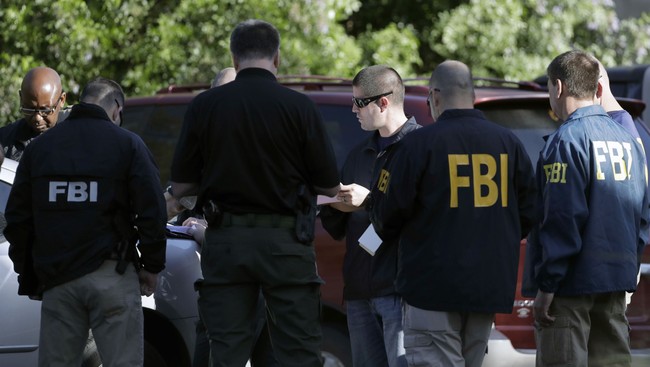
This article examines the controversy over a group of FBI agents who knelt during the 2020 George Floyd protests, the subsequent firings under Director Kash Patel, and the agents’ lawsuit claiming their actions were tactical rather than political.
The image that circulated in 2020 of uniformed FBI agents taking a knee became a flashpoint in debates over law enforcement conduct and political expression. Critics said the gesture was improper for federal agents; supporters argued it was a moment of humanity amid chaotic protests. Months later, those agents faced disciplinary action and eventual termination after a leadership change at the Bureau. The firings have now been met with a lawsuit that frames the kneeling as a de-escalation tactic, not a political statement.
The suit claims the agents were performing their duties and trying to prevent violence, and it names FBI Director Kash Patel as the official who ordered their removal. The agents’ association issued a statement that the director “again violate[d] the law by ignoring these agents’ constitutional and legal rights instead of following the requisite process.” That quote is central to their legal narrative: they say proper procedure was skipped in favor of a punitive purge. The case asks whether enforcement actions were motivated by policy or politics.
As Director Patel has repeatedly stated, nobody is above the law. But rather than providing these agents with fair treatment and due process, Patel chose to again violate the law by ignoring these agents’ constitutional and legal rights instead of following the requisite process.
In court filings the agents insist their kneeling was tactical, intended to calm a crowd that had become confrontational. They described a tense moment when protesters approached and chanted, and some agents chose the lowest-profile response available. The lawsuit contrasts this approach with the expectation that federal agents maintain order without provoking violence. That defense reframes a high-profile image as a decision made under pressure, not a political salute.
Plaintiffs were performing their duties as FBI Special Agents, employing reasonable de-escalation to prevent a potentially deadly confrontation with American citizens: a Washington Massacre that could have rivaled the Boston Massacre in 1770.
The historical comparison in the filing is dramatic and invites skepticism; calling the episode a potential “Washington Massacre” raises eyebrows and prompts questions about proportionality. Opponents say the metaphor inflates the threat to justify conduct that crossed a line for federal officers. Supporters insist the agents faced a volatile crowd and made a split-second call to avoid injury. Either way, the dispute now rests in legal argument rather than public posture.
The lawsuit also alleges inadequate protective gear during the unrest, claiming agents lacked riot shields, gas masks, helmets, and other tactical items needed to respond safely. If true, that detail shifts the story from symbolic gestures to operational shortcomings that could have shaped behavior under stress. The claim paints a picture of agents improvising in the face of danger instead of following a scripted protocol. It’s a claim meant to bolster the argument that kneeling was a practical choice, not a political endorsement.
Public reaction has split along predictable lines: some view the kneel as a breach of professional neutrality by federal personnel, while others see it as a humane attempt to defuse a swollen protest environment. For conservatives uneasy about mixing law enforcement and political gestures, the image remains a symbol of blurred boundaries. For those inclined to give the agents the benefit of the doubt, the lawsuit reads like a necessary defense against politicized discipline. That polarization colors how the court and the public will read the filings.
The remedies the agents seek include reinstatement, a formal finding that their terminations were unconstitutional, back pay, and expungement of personnel records. Beyond money and rank, the suit asks for reputational restoration, which is often the hardest thing to win back once a controversial image goes viral. If the court sides with the agents, agencies will have to reckon with how crowd dynamics and equipment shortages can inform on-scene decisions. If the court sides with the Bureau, the message will be that Federal employees who visibly align with protest movements may face career consequences.
Whichever way the legal fight goes, the case raises broader questions about how law enforcement should act in highly charged public settings and how leadership changes affect internal discipline. The episode will likely become a reference point for future debates about agency neutrality, officer safety protocols, and the line between crowd management and political signaling. Legal rulings aside, the image and the lawsuit will continue to shape the conversation about what is acceptable behavior for federal agents in public crises.

Add comment