
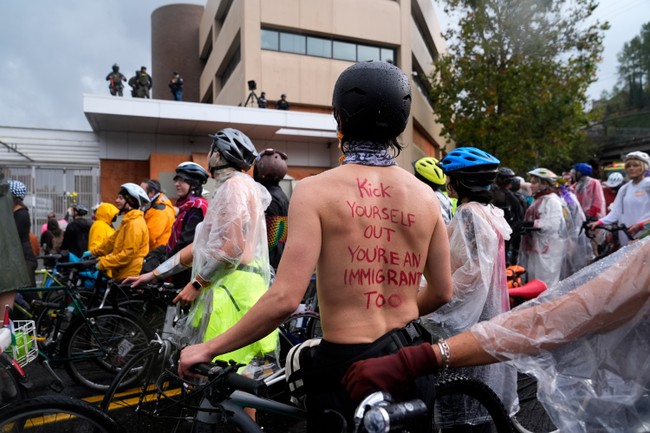
The piece examines claims about paid protesters and a legitimate crowd-for-hire operator who refuses to take part in illegal street actions in Minneapolis, arguing that violent and chaotic demonstrations undermine law enforcement and public safety while doing more harm than good to any stated cause.
For months we’ve seen organized chaos on city streets in places like Minneapolis and Portland, and many conservatives suspect some of that action is staged or funded. Professional-looking signs and coordinated tactics suggest a level of orchestration beyond spontaneous civic anger, and that raises real questions about who is behind the scenes. Conservatives who believe in law and order worry that orchestrated disruption is being used to substitute noise for policy.
There are also legitimate businesses that provide crowds for hire, and not all of them operate the same way. One CEO, Adam Swart of Crowds on Demand, has drawn a bright line: his company will not participate in unlawful blockades or confrontations. That position matters because it separates commercial event organizing from the street-level chaos that endangers citizens and officers alike.
Adam Swart, chief executive officer of Crowds on Demand, told Fox News Digital his firm “would not touch the Minneapolis protests with a 10-foot pole,” citing blocked roadways, obstruction of federal agents, and threats against authorities following a fatal shooting during an ICE enforcement operation.
“Blocking roadways, obstructing federal agents, and threatening authorities are illegal, and we don’t engage in any form of illegal protest,” Swart said, warning the chaos playing out on city streets will have the opposite effect demonstrators claim to want. “The impact of these protests will actually be to increase ICE operations, not decrease them.”
Swart’s point echoes what many Republicans and supporters of law enforcement have been saying: illegal tactics sabotage the message and invite tougher enforcement. When streets are blocked and agents impeded, the public doesn’t see grievance or policy; they see danger and disorder. That only strengthens the case for stricter action to restore safety and the rule of law.
Beyond legal concerns, Swart warns that violent participants pose a direct threat to peaceful demonstrators and the public. “A lot of the people protesting on the streets are actually violent,” he said. “They are unhinged, unstable people who pose a risk to peaceful protesters. That’s why we’re staying out.”
Those words reflect a distinction between protest as civic speech and protest as tactic-driven spectacle. Actions like obstructing federal officers or blocking exits during an enforcement operation cross into direct interference with law enforcement duties. That interference can create life-threatening situations for officers and bystanders, which makes it irresponsible and counterproductive.
“When you block the ability of federal agents to get in and out of a scene, you are putting them at risk from a violent mob,” he said. “That ability to enter and exit safely is fundamental to law enforcement.”
From a conservative standpoint, supporting peaceful assembly does not mean endorsing lawbreaking or the endangering of agents carrying out legal duties. The focus must remain on preserving public order while respecting constitutional rights. When protests veer into physical obstruction, the state has both the right and the duty to respond to protect citizens and ensure the law is upheld.
Swart also commented on how illegal tactics strip credibility from protesters’ messages. “When protesters commit illegal activity, what’s lost is the substance of the message,” he said. “People don’t hear what you’re protesting, they just see the blocked street.”
That observation is key for anyone who actually wants persuasion or reform. If the goal is to change minds or policy, alienating bystanders and provoking police responses is a lousy strategy. For conservatives who prioritize effective, lawful action, this dynamic proves that chaos is a poor substitute for debate and reform through legitimate channels.
Many of the street actors seem uninterested in persuasion or reasonable debate; their goal is disruption, not dialogue. This makes them unpredictable and dangerous, and it undermines any claim they might have to represent a broader public interest. Cutting off funding for organized disruption may change the incentives and reduce the spectacle that masks real problems.
Recognizing the difference between lawful protest and orchestrated illegal action helps clarify public response and policy. Upholding the rule of law, supporting officers who protect public safety, and insisting that advocacy remain nonviolent are practical Republican principles that guide a responsible approach. The conductor of a crowd-for-hire drawing his own ethical line highlights how clear boundaries can preserve both safety and credibility.
Ward Clark hails from Alaska’s Susitna Valley, where he maintains his rural household in one of America’s last free places. Ward is a twelve-year veteran of the U.S. Army, including service in Operation Desert Storm and in Germany in support of Operation Joint Endeavor, and today is a staunch minarchist libertarian, author, self-employed small businessman, woods worker, and semi-professional bad influence. Follow his writing and commentary through his own channels.
Add comment