
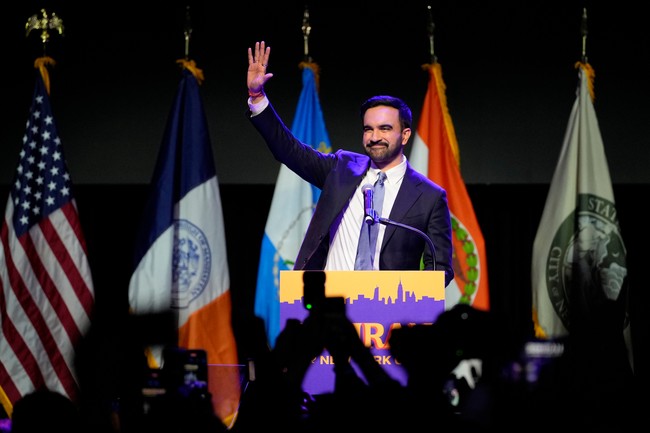
I’ll walk through the election fallout, why Zohran Mamdani won, what his agenda means for New York, the generational split behind the vote, the fiscal math that worries conservatives, and why experienced hands will be forced to fix the consequences.
The election night results delivered surprises that shouldn’t have surprised anyone paying attention to trends. Beyond a few Democratic victories elsewhere, New York’s mayoral outcome stands out because it puts a young avowed Democratic Socialist in charge of the nation’s largest city. His rise was powered by a wave of youthful enthusiasm and media hype, not by a track record of effective governance.
Mamdani is the youngest mayor in a century, and that youth was his political engine. Voters under 45 propelled him into office while older cohorts leaned the other way, revealing a generational divide on policy risk tolerance and experience. Electing someone with little professional experience to manage a complex municipal apparatus invites fiscal and operational shocks.
The promises that won support are familiar populist fare: big giveaways, free services, and redistribution framed as fairness. He wants free public transportation, city-run grocery alternatives, lower rents, and massive childcare expansions, all supposedly funded by taxing the wealthiest. Those ideas sound appealing in campaign speeches, but they raise immediate questions about sustainability and unintended consequences.
Many of these proposals assume revenue that may not materialize and savings that rarely appear in real life. A municipal tax targeted at billionaires sits on top of state taxes and can prompt capital flight or relocation of high earners, shrinking the very base needed to fund expansive programs. When revenue forecasts are optimistic and budget gaps already exist, the math becomes dangerous for service levels and bond ratings.
His childcare plan is a clear example of how promises collide with budgets. Campaign numbers suggest costs could reach $20,000 per child and about $6 billion to run annually, consuming a huge share of the new revenue he projects. With the city already operating multi-billion-dollar deficits in recent years, prioritizing one massive program over fiscal balance risks cuts elsewhere or future tax hikes that chase away businesses and residents.
Free transit and city-run grocery experiments have mixed track records in other places. Systems that are underfunded quickly degrade, and transit can become less about moving workers and more about shelter for those without options when operations are strained. City-run retail projects have failed in some municipalities after large investments, showing that good intentions and complex logistics are poor substitutes for market-tested solutions.
Beyond budgets, Mamdani brings a history of statements and associations that concern many voters, particularly regarding support or praise for extremist factions in past remarks. During the campaign he adopted a strategy of softening or rephrasing past views, and a fair number of voters accepted that evolution as genuine. Conservatives remain skeptical that such shifts are merely electoral tactics rather than sustained change.
Exit poll coverage highlighted the stark age breakpoint that decided the race. “The thing that makes that so volatile is this the cutoff line, and we see this in the exit poll, is about 45 years of age. Voters over 45 are a pro-Cuomo demographic. We see him winning those voters. Voters under 45. Cuomo falls off an absolute cliff. ” That quote captures how dramatically preferences shifted across generations and why the city elected someone who represents a new political posture more than a tested record.
What happens next will be determined by the gap between campaign rhetoric and municipal reality. If promised revenues fall short, the city will face hard choices: cut services, raise taxes more broadly, or borrow more with long-term costs for future taxpayers. Those outcomes will test both Mamdani’s policy realism and the willingness of the electorate to live with the consequences of ambitious experiments.
Conservative observers worry that the adults in government will ultimately be called on to fix the fallout when ideological experiments collide with urban complexity. Managing a huge city requires seasoned judgment, institutional know-how, and an honest accounting of trade-offs—qualities that a surge of youthful enthusiasm can’t substitute for. The political lesson for those on the right is to prepare to hold leaders accountable and to offer practical alternatives when good intentions meet fiscal realities.
Editor’s Note: The Schumer Shutdown is here. Rather than put the American people first, Chuck Schumer and the radical Democrats forced a government shutdown for healthcare for illegals. They own this.
Media explanations for forgiving past comments often center on growth and maturity, but forgivable or not, voters deserve clarity on where a candidate truly stands and how those positions will translate to policy. Mamdani’s campaign offered upbeat visions, and now the city will see whether those visions survive the test of budgets, service delivery, and legal constraints.
Some pundits claim a swift ideological moderation has occurred, pointing to changed rhetoric as evidence. That shift helped enough young voters to hand him the keys, but it does not erase prior statements or the hard choices that await. If the promises prove unaffordable or impractical, responsibility will land on whoever holds power when reality presses in.
Now that the election is decided, practical governance will replace campaign theater, and New Yorkers of all ages will feel the results. Those who warned about the risks will press for accountability, and conservative voices will emphasize fiscal discipline and practical problem-solving as the remedies the city will need.



Add comment