
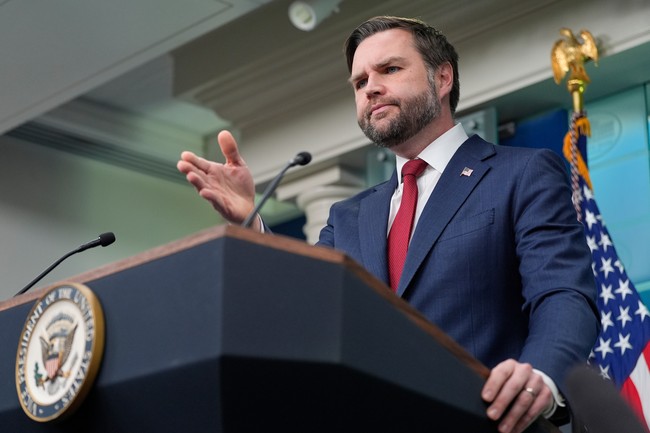
Vice President JD Vance returned from 21 hours of talks in Islamabad with a blunt conclusion: the negotiations with Iran failed. He said Iran would not commit to forgoing future nuclear weapons development, and U.S. officials judged the regime unwilling to accept the terms offered. The American team presented a final set of redlines and concessions, but Iran declined to agree. The outcome leaves policymakers weighing whether diplomacy was adequately tested or merely a formality before tougher measures resume.
Vance told reporters the discussions were substantive and prolonged, but ultimately fruitless. He emphasized that the United States made its allowable compromises clear while also delineating nonnegotiable demands. Those demands centered on preventing Iran from rebuilding nuclear capabilities after they had been degraded by Operation Epic Fury. That operation, Vance noted, destroyed much of Iran’s capacity to pursue a bomb in the near term.
VANCE: We have been at it now for 21 hours, and we’ve had a number of substantive discussions with the Iranians. That’s the good news. The bad news is that we have not reached an agreement, and I think that’s bad news for Iran much more than it’s bad news for the United States of America. So we go back to the United States having not come to an agreement. We’ve made very clear what our redlines are, what things we’re willing to accommodate them on, and what things we’re not willing to accommodate them on, and we’ve made that as clear as we possibly could. And they have chosen not to accept our terms.
When pressed, Vance said the Iranians would not provide credible long-term guarantees about their nuclear intentions despite what he described as an accommodating posture from the U.S. team. He stressed that President Trump had instructed negotiators to act in good faith and try to secure a deal, and that they had followed that directive. The refusal to commit leaves a clear policy choice: accept a shaky, unverifiable arrangement or return to pressure and military options. From a Republican perspective, credibility and deterrence come first.
Observers on the ground noted the talks felt like a check-the-box exercise to some in Washington, rather than a serious chance for a binding, verifiable agreement. President Trump has a history of making deals, but he also refuses to tolerate humiliation or concessions that would appear to reward bad actors. Letting Tehran walk away while retaining leverage and military readiness was, for many, preferable to a headline deal that left U.S. interests exposed.
VANCE: But again, we just could not get to a situation where the Iranians were willing to accept our terms. I think that we were quite flexible. We were quite accommodating. The President told us, “You need to come here in good faith and make your best effort to get a deal.” We did that, and unfortunately, we weren’t able to make any headway.
The larger context matters: since the so-called ceasefire was announced, Tehran has repeatedly acted in ways that undermined confidence in its intentions. Iranian forces and proxies have continued provocations, and social-media posture has been used to promote narratives of victory. Those actions undercut the diplomatic picture and made it harder to secure enforceable commitments that would satisfy U.S. security needs.
Meanwhile, U.S. forces have been active at sea, ensuring freedom of navigation and keeping pressure on Iran’s options. The Navy’s movement through the Strait of Hormuz and the reopening of shipping lanes reduced Tehran’s ability to leverage maritime chokepoints in bargaining. Restoring commercial traffic and normalizing routes strips the regime of one of its most tangible levers, increasing the costs of continued aggression.
Republican policymakers watching these developments see a predictable pattern: diplomacy is tried when it can be, but it must be backed by force and the credible threat of escalation. Allowing a nuclear-capable Iran to remain unchecked is not acceptable, and an agreement that can’t be verified or enforced is worse than no agreement at all. That calculus explains why negotiators returned home without a deal and why the administration has kept pressure on multiple fronts.
Domestic politics play into this, too, because any appearance of weakness would be exploited by opponents and emboldened adversaries alike. President Trump’s team appears willing to pursue a diplomatic off-ramp if it actually secures U.S. security guarantees, but not at the cost of American credibility. For conservatives, that balance matters: we prefer a strong negotiating position backed by the option of decisive action rather than risky concessions that leave Iran with a pathway to a bomb.
As tensions between diplomacy and pressure continue, the likely near-term outcome is renewed confrontation if Tehran refuses to change course. The regime can either take a realistic path toward verifiable restraint or persist in brinkmanship and suffering more consequences. If it chooses the latter, the U.S. will be positioned with military and economic tools to push back and protect American interests and allies in the region.



Add comment