
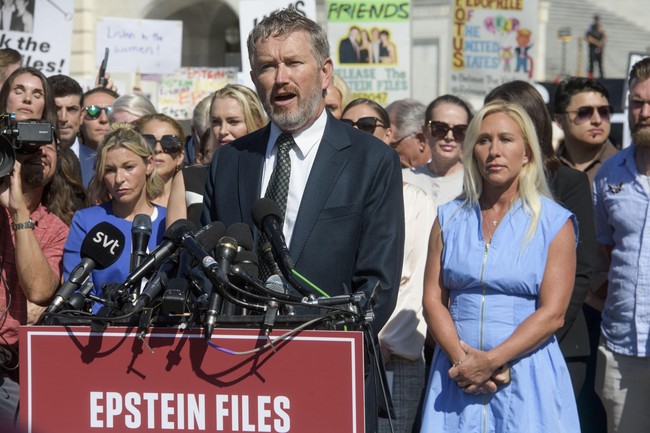
This article examines Representative Thomas Massie’s contentious 2026 GOP primary in Kentucky’s 4th District, the coalition arrayed against him, key accusations about his stances on Israel and foreign policy, the role of former President Trump and major outside spending, and how polls and spending shaped a matchup that became the most expensive House primary in history.
On Tuesday, Republican voters in Kentucky’s 4th District decided between seven-term incumbent Rep. Thomas Massie and challenger Ed Gallrein, a farmer and retired Navy SEAL with four Bronze Stars. Massie has long presented himself as a Libertarian-leaning conservative, pairing a strict small-government philosophy with socially conservative positions. His record and rhetoric have made him a polarizing figure within his party and beyond.
Massie’s rocky relationship with Donald Trump is a central element of this contest and has driven much of the outside involvement. Trump publicly demanded Massie’s removal from the party after Massie blocked fast-track pandemic relief measures, and their feud intensified when Massie opposed the president’s tax and spending package over debt concerns. That animosity translated into major pro-Trump spending against Massie in the primary.
Trump and Massie’s contentious relationship dates back to Trump’s first term, when Massie blocked swift passage of a Covid relief bill during the pandemic. Trump then demanded that Massie be thrown out of the Republican Party, calling the congressman a “third rate Grandstander.” That didn’t come to pass in 2020. But the tension grew worse through Trump’s second term. Massie was one of only two House Republicans to vote against Trump’s “big, beautiful bill,” his signature tax and spending package, citing concerns about the national debt.
Massie’s willingness to break with party lines is another frequent source of controversy, and his voting record has shown a pattern of independent, and sometimes contrarian, decisions. Analysis of the most recent Congress tracked dozens of instances where he opposed the GOP majority on key measures. Those votes have drawn sharp criticism from party leaders who say a slim majority requires consistent support for the conference agenda.
On other fronts, Massie has advanced provocative claims tied to the Jeffrey Epstein files that critics say are unsubstantiated and inflammatory. He promoted theories implicating public figures and suggested that government actors were shielding names, language that fuelled accusations and coverage framing him as courting conspiracy narratives. Those remarks increased scrutiny and alienated some conservative and independent supporters.
Massie’s criticism of pro-Israel organizations and his sponsorship of legislation targeting the pro-Israel group AIPAC under the Foreign Agents Registration Act amplified accusations of antisemitism. Critics contend he mischaracterizes U.S.-Israel ties and downplays the bilateral benefits in intelligence and defense cooperation. Opponents also pointed to statements linking Epstein-related claims to foreign intelligence as further evidence of his problematic rhetoric.
https://x.com/RedWhiteBlueJew/status/2056354639239315949?s=20
At the same time, commentators noted an odd inconsistency in Massie’s focus on foreign influence while appearing less concerned about other figures with ties to foreign regimes. Those contrasts were raised as politically and substantively relevant when evaluating his legislative priorities and public statements. Observers argued this selective attention suggested deeper ideological motives rather than even-handed policy enforcement.
Outside money flooded the race, turning a local primary into a national spectacle. The contest reached historic levels, topping $32 million in total spending, with pro-Israel groups putting more than $9 million into efforts to unseat Massie and pro-Trump super PACs contributing nearly $7 million. Massie himself raised over $5.5 million, and allied PACs added several million on his behalf, creating a high-dollar slugfest for the seat.
Polling in the closing stretch showed a competitive, but unfavorable, picture for Massie according to multiple firms. Several surveys had challenger Ed Gallrein leading by margins in the mid-single digits, while at least one poll favorable to Massie showed a narrow edge for the incumbent. Analysts highlighted turnout among older voters as a decisive factor working against Massie’s unconventional approach.
Vice President JD Vance captured the frustration of party leaders who argued Massie’s repeated opposition to conference priorities justified current efforts to replace him. “It’s not one issue or 3 issues, it’s every single issue. Every time we’ve needed Thomas (Massie) for a vote he has been unwilling to provide it. When you always vote against the party, you can’t expect the party to back you.”
Supporters of Massie pointed to his long tenure and independent streak as virtues, arguing that he represents a principled, limited-government conservatism. Detractors focused on the political cost of his dissent and the way his rhetoric and votes complicated Republican unity at a moment of tight margins in the House. The primary effectively became a referendum on whether ideological independence or party cohesion mattered more to Kentucky GOP voters.
Editor’s Note: The 2026 Midterms will determine the fate of President Trump’s America First agenda. Republicans must maintain control of both chambers of Congress.
Political spending and national attention transformed a local primary into a test case for intra-party discipline and the limits of maverick politics. Voters weighed Massie’s record, his rhetoric on foreign policy and Israel, the magnitude of outside spending, and the strategic arguments from both camps before casting ballots in a race with outsized national consequences.
Add comment