
Checklist: explain the buoy barrier plan, note its history under both administrations, quote Border Patrol Chief Mike Banks, describe operational goals like early detection and deterrence, and place the project in the wider border-security effort.
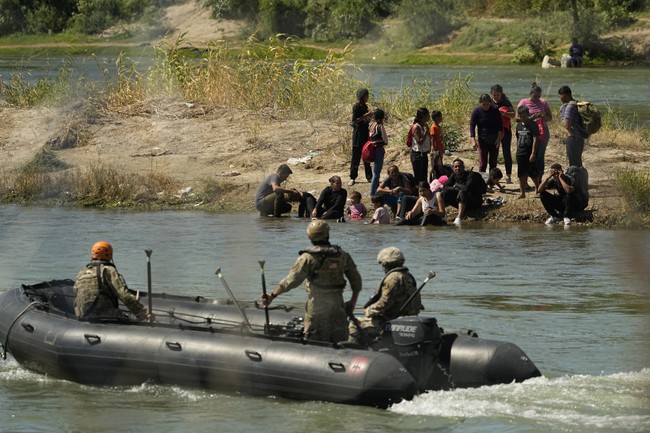
The Trump administration is moving to extend border security into the Rio Grande by deploying a long string of buoys to mark and defend the international line. Officials describe it as a 500-mile defensive system intended to push enforcement to the actual river boundary and deliver early detection for illegal crossings. The project builds on earlier pilot runs in Texas and is slated to begin deployment in early 2026 with contracts already in place. This approach is presented as part of a broader push to restore and strengthen physical barriers where they make operational sense.
Border Patrol Chief Mike Banks says the buoy idea dates back to the first Trump term and stalled under the Biden administration. He explains that contracts were ready to execute before federal policy shifted away from that type of infrastructure. Banks later worked with Texas leadership to test the buoys on a state level and reports the results were convincing as a deterrent. That real-world testing provided the evidence federal authorities are now using to justify a nationwide deployment along the Rio Grande.
Banks frames the buoys as more than markers; they are an enforcement tool that reclaims the actual international boundary. “What they really do is they push our border right to the border,” he said, noting that flood plains often leave physical walls miles north of the true line. The buoy line sits down the center of the river, where it can serve as an early detection point for crossings. In his description, the system gives agents the first chance to identify and respond to people attempting to enter illegally.
Officials emphasize the project will be integrated into a wider border wall system rather than replacing other defenses. The buoy strings are meant to complement hard infrastructure in areas where ground walls are impractical because of river geography. Banks told reporters, “Texas proved what U.S. border patrol believed under Trump 45 that this would be an effective barrier as part of our total border wall system.” That endorsement signals confidence in combining mobile, water-based measures with fixed, land-based barriers.
Deployment logistics are already in motion, with Banks saying, “We’re going to start laying the first string of those buoys down in the Rio Grande Valley in the first part of 2026.” He added that contracts are signed and prework is underway, calling the buoys “very effective.” The administration emphasizes speed and scale, aiming to cover extensive stretches of river to deny easy crossing points and make enforcement more predictable. The early-detection capability is a major selling point for agents and commanders who want to respond before crossings reach dry land.
The buoy plan also reflects political priorities that favor tangible, physical solutions to border challenges. Support from the president and senior Homeland Security leadership is described as unprecedented by Border Patrol leaders. “He listens to us, and he supports us,” Banks said, praising both the president and Secretary of Homeland Security Kristi Noem for their backing. That level of executive attention appears to be driving resources and urgency for projects that stalled in the past.
Texas’ separate effort under Governor Greg Abbott offered a proof-of-concept that federal officials found persuasive. After leaving Border Patrol, Banks worked with the state’s border team and saw firsthand how buoys affected crossings on a localized scale. The administration now plans to scale that model to federal operations along multiple stretches of the Rio Grande, claiming a coordinated approach will close gaps that natural terrain creates. By aligning state and federal efforts, officials say they can deploy a consistent line of detection and deterrence.
Critics will certainly raise concerns about environmental impacts, river navigation, and international coordination with Mexico, and those debates are likely to play out publicly as deployment moves forward. For supporters, the primary argument is straightforward: put a clear, effective barrier on the international boundary so enforcement can happen where it matters most. The buoy barrier is framed as one component in a return to robust, physical border security designed to stop illegal crossings before they reach U.S. soil.

Add comment