
Checklist: Call out the main claim, explain the context of the Minnesota water system hack, present President Trump’s comments and quoted remarks unchanged, examine cybersecurity and possible Iranian ties, and note political implications for Minnesota leadership.
President Trump addressed the recent cyberattack on a Minnesota water system during a press conference at Camp David, and he didn’t mince words. Rather than accept a straightforward foreign attribution, he pointed a finger at state-level failures and political corruption as the more likely culprit. His comments landed hard and fast, framing the incident as part technical failure and part political mess. That framing shifts attention from external actors back to local governance and basic cybersecurity practices.
The original assessment by some federal and state agencies hinted at Iranian-affiliated actors targeting similar infrastructure, which raised alarms. Those same agencies warned that Iranian-linked hackers have been probing and, in some cases, exploiting internet-connected equipment protected by default or nonexistent passwords. That history makes foreign involvement plausible, but it does not rule out glaring local security lapses that would make exploitation trivial.
https://x.com/RapidResponse47/status/2083230767363084316
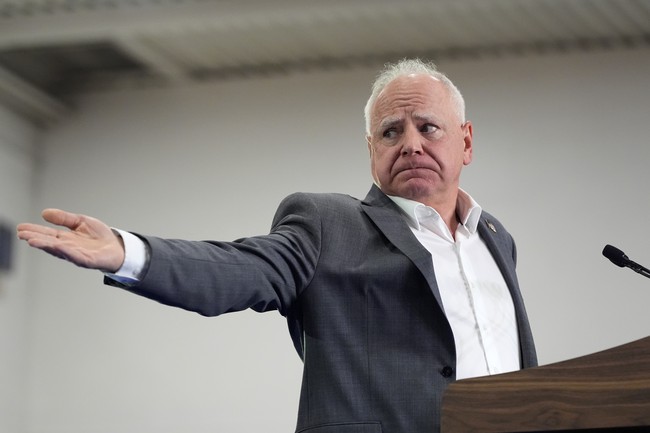
At Camp David, the president delivered a blunt alternative: he blamed Minnesota’s own incompetence and alleged corruption for enabling the attack. He suggested the state’s mismanagement left systems exposed and that political problems there are broader than this single incident. His approach was unapologetic and aligned with a view that good governance starts with local responsibility, not immediate assumptions of foreign malice.
That someone? .
.@POTUS: “You know who’s behind it? Minnesota — because they’re grossly incompetent… I don’t think there was an Iranian cyber attack. I think that Minnesota ought to get its act together. It’s one of the worst-run states—@VP will tell you. He found tremendous corruption in Minnesota. And by the way, just gave me a report — MASSIVE future things having to do with corruption in Minnesota are happening right now.”
The president expanded on that in response to a reporter’s question, repeating his skepticism about an Iranian plot and doubling down on accusations of state-level incompetence. His remarks named the governor as politically responsible for what he called poor oversight and systemic corruption. That’s a political hammer swing aimed squarely at Minnesota leadership, using this security failure as evidence. It’s a classic prioritization: fix your house before blaming others.
Question: Can you rule out that Iran was behind the water attack? Can you rule out that Iran was behind that cyber-attack?
President Trump: No, I think Minnesota is behind it. You know who’s behind it? Minnesota, because they’re grossly incompetent. I think the governor’s behind it. I don’t think there was an Iranian cyber-attack. I think that Minnesota ought to get its act together. It’s one of the worst-run states… JD will tell you. In fact, tremendous corruption in Minnesota. And by the way, just gave me a report, massive, massive future things having to do with corruption in Minnesota are happening right now.
To be clear, blaming the governor directly for a hack implies political responsibility more than criminal complicity, and that distinction matters. The practical point is simple: municipalities still run critical infrastructure with weak defaults and few modern protections, and that invites trouble. Whether an Iranian group exploited those weaknesses or local negligence did, the fix starts with stronger security practices at the municipal level.
There’s historical precedent for Iran-linked hackers targeting water utilities and similar systems, using known tactics that exploit weak credentials and exposed control equipment. That history means investigators must examine both foreign fingerprints and local misconfigurations. From a Republican perspective, the right response is to demand accountability, tighten defenses, and stop reflexively deferring to federal blame when state failures are obvious.
The political fallout will play out in Minnesota and beyond, with opponents using the episode to highlight governance failures and supporters arguing for a measured investigation. Either way, the incident underscores a national weakness: critical public infrastructure remains vulnerable, and leadership at every level needs to prioritize basic cybersecurity. Until that happens, these messy blame games will be the background noise every time an outage or breach hits the headlines.

Add comment