
The House is headed toward a high-stakes fight over whether to extend the expiring Obamacare premium tax credits after four Republicans joined Democrats to force a discharge petition, setting up a likely floor vote when Congress returns from its holiday recess.
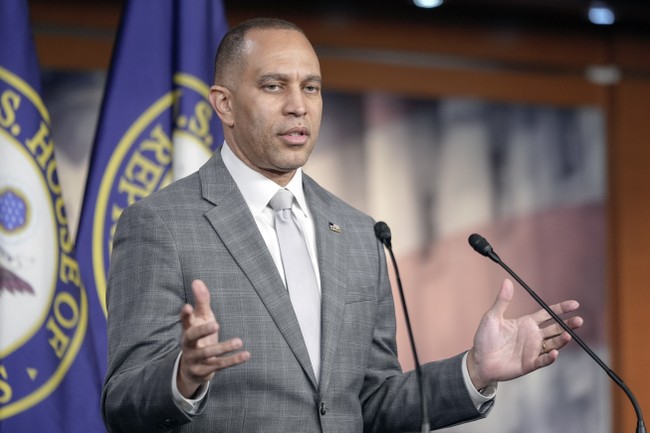
On Wednesday, Reps. Brian Fitzpatrick, Ryan Mackenzie, Rob Bresnahan, and Mike Lawler signed a discharge petition backed by House Democratic Leader Hakeem Jeffries to compel a vote on continuing the Affordable Care Act tax credits that were enlarged during the COVID-era relief measures. A discharge petition bypasses leadership and needs a majority of the House to bring legislation to the floor, so the four GOP defectors pushed the process past Speaker Mike Johnson’s initial refusal to allow a straight up-or-down vote. By siding with the Democrats they supplied the 218 signatures necessary to force the issue into the open chamber.
The dispute centers on temporary enhancements to ACA tax credits that Democrats increased and expanded in 2021, measures scheduled to expire at the end of 2025. Democrats prefer a “clean extension” that simply continues the larger subsidies and eligibility rules, while Republican leadership has declined that route and instead supports an alternative package focusing on different coverage expansions. That split left rank-and-file members to decide whether to back leadership strategy or press for a direct vote on the expiring subsidies.
Speaker Johnson argued against a clean extension and promoted a GOP plan that emphasizes new options for small businesses and self-employed workers rather than preserving the COVID-era subsidy expansion unchanged. Critics inside and outside the conference said the speaker’s approach avoided a clear choice, prompting some members to view the discharge petition as the only way to force transparency. When voters and constituents want a simple decision on their own premiums, backbenchers felt they needed to demand a recorded vote to show where colleagues stand.
Senate Republican aides quickly pointed out obstacles in the upper chamber, noting a similar clean-extension measure failed there recently. Ryan Wrasse, a spokesman for Senate Majority Leader John Thune, highlighted the Senate defeat to underline the uncertain prospects of a House-passed clean extension clearing the upper chamber. The procedural realities in the Senate mean that even if the House approves a clean extension, it faces an uphill climb to become law without bipartisan cross-chamber negotiation.
The four Republicans who backed the petition defended their decision as necessary to give members a direct say. Lawler said, “Leadership left us no choice. From my perspective, this issue is too important to f*** around with. You have people’s health care at stake, and it requires a vote. Ultimately, this will pass the House, and I bet you there will be a lot more people voting for it than you expect.” That blunt assessment framed the move as one driven by constituent pressure and urgency over coverage costs.
Bresnahan expressed frustration with the amendment process and the failure of various proposals to reach the floor, saying, “I would have preferred to have seen this go through the amendment process. It was incredibly frustrating to see all three different variations of the amendment not make it to the House floor.” His comments reflect broader irritation among members who wanted the chance to debate tweaks rather than accept a single leadership path.
Mackenzie, who recently appeared with Vice President JD Vance to highlight economic policy, said he supports bipartisan solutions to make healthcare affordable and pushed for votes on measures that would extend the credits for either one or two years. His stance illustrates the crosspressure many Republicans face: balancing party strategy with constituent demands for affordable coverage and predictable premiums as the year turns. House members who represent districts with large numbers of ACA enrollees feel especially vulnerable to premium shocks if the credits lapse.
Timing complicates the issue: the House will enter its Christmas recess this week, so any forced vote is unlikely until early January when members return. That calendar leaves a narrow window for negotiating any compromise before the subsidies formally expire, and raises the odds that political posturing will intensify over the break. With both sides staking out firm positions, the new year could bring a raw test of whether bipartisan pressure or party discipline wins out in the House.



Add comment