
The Pentagon has quietly formalized a Major Defense Cooperation Partnership with Indonesia focused on the Strait of Malacca, framing the move as part of an “America First Defense Partnership” that aligns with the Trump administration’s push to counter Beijing while U.S. naval forces manage pressure in the Persian Gulf.
With U.S. warships enforcing a naval blockade off Iran, the Department of War announced a new strategic pact with Indonesia that strengthens bilateral military ties in the Indo-Pacific. The timing underscores an effort to balance attention between the Persian Gulf and long-term competition with China, reinforcing key maritime chokepoints. Officials call the arrangement an “America First Defense Partnership,” tying it to a broader posture of flexible realism and forward deterrence.
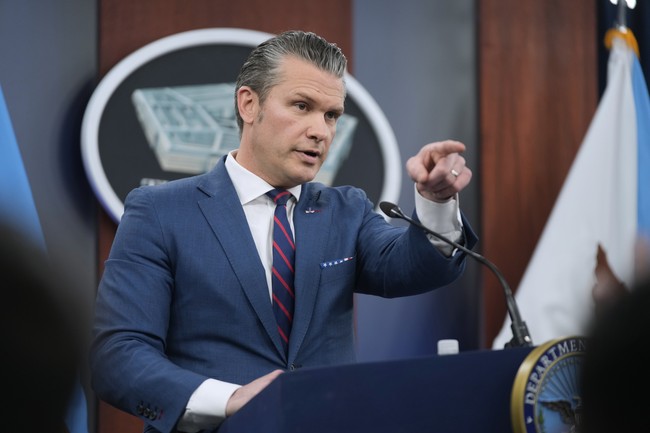
Secretary of War Pete Hegseth has been a leading voice inside the administration on China policy, and his public warnings help explain the drive behind this deal. In American Crusade he described Communist China as “literally the villains of our generation” and warned that “if we don’t stand up to communist China now, we will be standing for the Chinese anthem someday.” Those lines have translated into concrete policy choices intended to deny opportunities for future Chinese coercion.
The pact establishes three core pillars: military modernization and capacity building, professional military education and training, and expanded joint exercises and operational cooperation. It places special emphasis on maritime security, subsurface operations, and special forces collaboration, all of which map directly to the realities of protecting sea lanes in and around the Indonesian archipelago. These priorities are meant to fortify Indonesia’s ability to defend critical approaches and to enhance coordinated U.S.-Indonesia responses in a crisis.
Negotiators are also working a parallel arrangement to secure overflight access for U.S. military aircraft through Indonesian airspace, which would boost surveillance and rapid-response reach over the Strait of Malacca. The strait carries roughly 40 percent of global seaborne trade and the overwhelming majority of China’s energy imports from the Middle East, making access and situational awareness there strategically vital. Securing air routes and surveillance rights would materially improve deterrence and crisis management in the region.
Critics in some outlets argued that the U.S. focus on blockading Iran would pull resources away from Asia and delay the promised pivot to counter China. Those critiques have been countered by steady, lower-profile moves like this partnership that expand presence and influence without fanfare. Pentagon planners say the agreement demonstrates that long-term competition with Beijing remains central to U.S. defense planning even while the military handles simultaneous crises elsewhere.
Analysts point out that China has been actively mapping the ocean floor around Southeast Asia and deploying research vessels and sensor arrays to protect its maritime approaches and submarine operations. Those efforts are interpreted in Washington as steps to avoid a potential “Hormuz moment” in Asia and to harden Beijing’s ability to project power undersea. Formalizing a Major Defense Cooperation Partnership with Indonesia gives the United States and its partners a clearer foothold to monitor and, if necessary, contest those moves in contested waters.
U.S. officials emphasize that this elevated partnership builds on decades of cooperation and mutual interest in stability across the Indo-Pacific. The agreement is pitched not as confrontation for its own sake but as a defensive and stabilizing posture aimed at preserving free commerce and deterring coercive behavior. By aligning modernization, training, and joint exercises, the pact seeks to raise Indonesia’s capability while creating persistent interoperability with U.S. forces.
The shift also reflects a doctrinal bent toward forward deterrence and flexible realism, an approach leaders say prevents complacency in the face of a rising peer competitor. Practically, that means more joint drills, intelligence sharing, and coordinated planning for maritime contingencies that could threaten the global economy. Keeping chokepoints like the Strait of Malacca open and secure has implications that ripple through global trade and energy security.
Domestic messaging around the deal ties it to a broader administration narrative about rebuilding military strength and reasserting U.S. resolve. Pentagon officials highlight Secretary Hegseth’s role in pushing the talks forward and frame the pact as evidence that long-term competition strategy can proceed even while the Navy and other services address crises elsewhere. Those officials see the partnership as a concrete example of putting strategic principles into action.
For the Indo-Pacific, the new arrangement emphasizes shared interests in maritime security, capacity building, and crisis response rather than permanent basing or overt escalation. The aim is to strengthen partnerships that make coercion more costly and less likely, while preserving room for diplomacy and regional cooperation. In that light, the Major Defense Cooperation Partnership with Indonesia is being presented as a deliberate, capability-focused response to the evolving security environment.



Add comment