
The Israel Defense Forces carried out a precision airstrike that Israeli officials say hit Hezbollah’s command and leadership centers across Lebanon, an operation they compared to the dramatic 2024 pager explosions in scope and effect, and this article examines what was struck, how it compares to the earlier “beeper” operation, and why the psychological impact matters as much as the physical damage.
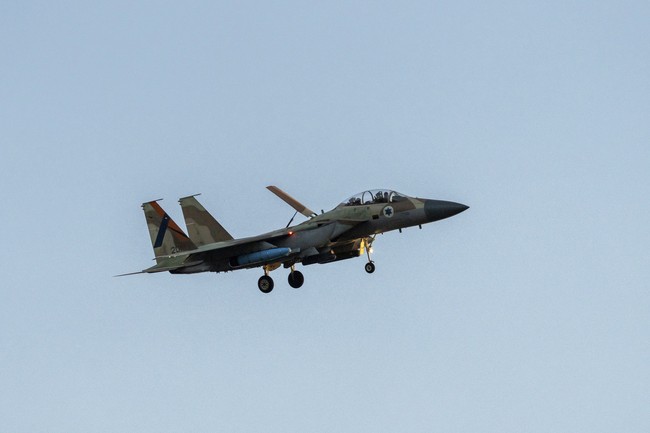
Israeli forces focused this recent campaign on people and command hubs rather than purely on weapons or supply lines. Officials described strikes on command rooms, intelligence headquarters and planning offices, signaling a deliberate push to disrupt decision-making rather than just logistics. The operation took place amid widespread explosions across Beirut, the Beqaa Valley and southern Lebanon on April 8. About 50 Israeli aircraft reportedly struck more than 100 Hezbollah targets in a near-simultaneous wave.
That’s serious stuff.
Hezbollah, an Iran-backed terrorist group, saw its command structure across Lebanon come under what Israeli officials described as one of the most devastating blows of the war April 8.
Nearly simultaneously, explosions tore through Beirut, Lebanon, the Beqaa Valley and southern Lebanon as roughly 50 Israeli aircraft struck more than 100 Hezbollah targets.
The targets were not rocket launchers or weapons depots, according to the Israel Defense Forces (IDF), but the nerve centers of the organization — command rooms, intelligence headquarters and offices where Hezbollah commanders planned the next stage of the fight.
Targeting leadership is a classic tactic when the goal is to paralyze an adversary quickly, since commanders coordinate operations and control communications. Removing those nodes can create confusion and slow enemy response times, especially for a hierarchical group that relies on centralized planning. The IDF framed this as one of the most devastating blows to Hezbollah’s command structure during the conflict. Tactical results aside, hitting leaders has a strategic ripple effect beyond the immediate casualties and destroyed infrastructure.
The attack was compared directly to September 2024’s “beeper” operation, an unconventional blow to Hezbollah’s communications and morale. In that earlier incident thousands of pagers and walkie-talkies reportedly exploded almost simultaneously across Lebanon and Syria after being intercepted and rigged. The pager blasts killed more than 40 people and wounded roughly 4,000, while Hezbollah later acknowledged about 1,500 fighters were taken out of action as communications collapsed and chaos followed.
The strike drew a comparison to the “beeper” operation in September 2024, when thousands of pagers and walkie-talkies used by Hezbollah operatives exploded almost simultaneously across Lebanon and Syria in an operation widely attributed to Israel.
The blasts killed more than 40 people and wounded roughly 4,000, according to Lebanese authorities, while Hezbollah later acknowledged that about 1,500 fighters were taken out of action. The operation shattered Hezbollah’s communications network and became the benchmark in Israel for a strike that fundamentally changed the battlefield.
Physically, the April 8 strikes may have inflicted heavier damage on leadership figures than the pager campaign, but the beeper operation set a new psychological standard. The pager attacks forced Hezbollah to confront a pervasive vulnerability inside its own supply chains and daily routines, ripping trust out of civilian-looking equipment. When the devices people carry to communicate become potential bombs, the fear factor multiplies, and operational normalcy collapses in ways that pure kinetic strikes rarely achieve.
That psychological magnification is hard to overestimate. Walkie-talkies and pagers were chosen precisely because they were perceived as low-tech, reliable means of communication after phones were compromised, and the sudden revelation that those devices were weaponized undermined basic assumptions. Once fighters and commanders view ordinary gear as potential threats, logistics and movement become riskier, and paranoia replaces routine coordination. This kind of anxiety affects morale and cohesion as much as any destroyed command room.
The methods behind the pager attack showed a layered approach: intelligence gathering, supply-chain interdiction, clandestine modification and synchronized execution. Intercepting shipments and turning everyday equipment into a weapon requires patience and deep infiltration, and the result was an operation that struck at both body and mind. That operation has become the benchmark in Israeli planning because it combined lethal effect with long-term disruption to enemy behavior.
Similarly, the recent strikes aimed at leadership nodes reflect a strategic choice to remove the brain rather than just the arms of the organization. Knocking out headquarters and intelligence centers can render remaining units less effective and slow the tempo of operations across a theater. When planners and communications hubs vanish, so does the adversary’s ability to strike back in coordinated fashion, buying time and leverage for the attacking side.
Psychological operations, supply-channel disruption and precision strikes are increasingly blended into modern campaigns, and the Israel-Hezbollah exchanges show how those tools can be sequenced. Targeted assaults on leadership, paired with prior operations that undermined communications, create compounded effects that outsize the number of immediate casualties. Warfare today rewards ingenuity and long-term planning as much as munitions, and both sides learn quickly which innovations matter.
Let your plans be dark and impenetrable as night, and when you move, fall like a thunderbolt.



Add comment