
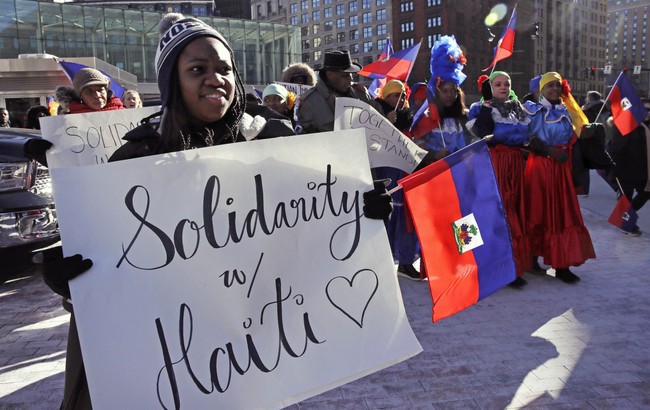
The House saw a small but symbolically loud revolt when six Republicans joined Democrats to keep Temporary Protected Status for roughly 330,000 Haitians, a move critics call a threat to immigration sovereignty and the rule of law. This article lays out who crossed, the legal and political backstory of Haitian TPS, the courtroom obstacles the administration has faced, and why GOP dissent matters for Speaker Johnson and President Trump’s agenda.
Six House Republicans voted with Democrats to block the Trump administration’s effort to end Temporary Protected Status for Haitian nationals. The crossing of the aisle by Don Bacon, Maria Salazar, Carlos Gimenez, Brian Fitzpatrick, Mike Lawler, and Nicole Malliotakis drew sharp criticism from conservatives who argue the decision rewards illegal long-term residency disguised as temporary aid.
That vote was the product of a discharge petition that forced the issue onto the floor despite leadership objections. The petitionary tactic let a majority sidestep the speaker and bring the measure to a vote, but moving a bill onto the calendar is not the same as making it law.
Final passage in the House was possible but by no means guaranteed, and the Senate’s willingness to act was even more doubtful. For anyone watching from the White House, the threat that the president would sign such a bill was practically nonexistent, making the whole episode a political theater that nonetheless undercuts GOP cohesion on immigration.
TPS for Haitians began after the 2010 earthquake, a humanitarian response that was meant to be temporary. Over time, repeated extensions and litigation turned a short-term relief measure into a large, ongoing program that critics say invites fraud and long-term dependency.
The program’s legal footing comes from the Immigration Act of 1990, which created TPS to shield people from return to nations facing severe disruption. In practice, however, TPS has been extended for years in many cases, creating a pool of residents who arrived under temporary terms but have effectively remained indefinitely.
President Trump tried to end several of those extensions, and courts repeatedly intervened, blocking administration moves at various points. Conservative officials argue these judicial roadblocks turned a policy dispute into a procedural stalemate, allowing opponents to use the courts to freeze executive action.
Biden extended TPS for Haiti through February 3, 2026, and the administration’s efforts to revoke that extension ran into multiple injunctions from lower courts. The legal fight reached the Supreme Court, which agreed to hear arguments, raising the odds that the high court would finally resolve the balance of power between the presidency and the judiciary on immigration matters.
The political case for making a large temporary population permanent relies on pragmatic-sounding claims about labor needs and caregiving. Supporters say many TPS holders work in essential jobs, including health care, and that abrupt termination of protections would disrupt hospitals and elder care facilities in districts with high Haitian populations.
“I have one of the largest Haitian populations in the country in my district,” said Rep. Michael Lawler (R-New York), who voted Wednesday push the bill to the House floor. “… If you end [temporary protections] without addressing work authorization, it will cause a huge crisis in our health care system, especially in an area like mine, where a lot of our Haitian TPS holders are nurses.”
That argument resonates locally, but it does not answer broader policy concerns about precedent and border incentives. Opponents warn that turning TPS permanent would encourage more arrivals who expect eventual legalization and would further strain federal welfare systems and housing markets.
Many conservatives see the vote as an assault on the speaker’s authority and on the broader Trump immigration agenda. Labeling these moves as betrayals, critics singled out the six Republicans for breaking ranks and, in some cases, for jeopardizing vulnerable seats ahead of tough primaries.
There is also a cultural argument wrapped into the policy fight: lawmakers worry that mass legalizations without assimilation requirements reward noncompliance with lawful pathways. The Republican critique frames TPS extensions as a step toward creating a parallel, permanent immigrant class rather than encouraging naturalization through established legal channels.
The TPS story for Haiti is a case study in how a tool designed for emergencies can become a long-term policy controversy. With courts and Congress both playing major roles, the outcome will shape not only Haitian nationals’ futures but also the legal contours of executive authority over immigration for years to come.
Beyond the law and local electoral politics, this fight highlights a larger partisan split: whether temporary humanitarian relief should ever morph into broad permanent residency without new legislative guardrails. That question now sits at the crossroads of the Supreme Court docket, House maneuvering, and a GOP base demanding firmer borders and clearer rules.
For conservatives watching the debate, the core grievance remains straightforward: temporary programs should stay temporary, and unilateral extensions undermine the separation of powers while creating incentives that encourage future waves of irregular migration. The stakes are both legal and political, and the coming months will reveal whether Republican leaders can translate outrage into law or merely into talking points.

Add comment